
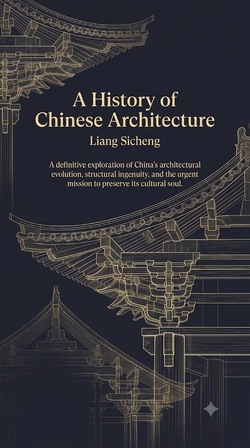
A History of Chinese Architecture
Loading…

A History of Chinese Architecture

Liang Sicheng

4814 learners

Written by Liang Sicheng, the pioneer of modern Chinese architectural studies, *A History of Chinese Architecture* is the definitive exploration of China’s 5,000-year architectural legacy. It unpacks the defining traits of China’s unique building system—from its iconic wooden framework and dougong bracket assemblies to its sweeping curved roofs—while linking architectural evolution to cultural values, social norms, and environmental needs across dynasties. The book traces key eras: pre-Qin foundational designs, grand Han and Tang imperial complexes, intricate Song Dynasty craftsmanship, and the opulent Ming and Qing imperial palaces. It also compares two pivotal official building manuals, the *Yingzao Fashi* (Song Dynasty) and *Gongcheng Zuofa Zeli* (Qing Dynasty), and examines how traditional structures reflect Chinese philosophy, ethics, and daily life. Plus, it covers modern preservation efforts and the future of merging traditional wisdom with contemporary design, making it essential for anyone curious about China’s cultural heritage through architecture.
Great WallWooden FrameworkDougong Bracket SystemYingzao FashiGongcheng Zuofa Zeli
Country Driving
Loading…

Country Driving

Peter Hessler

4.1545 learners

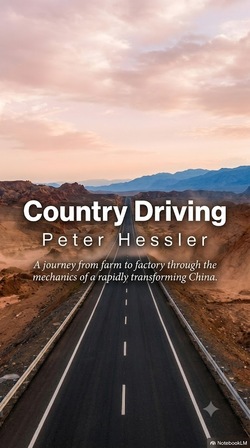
Peter Hessler’s *Country Driving* takes readers on a vivid, eye-opening road trip across early 2000s China, using his newly obtained driver’s license as a key to unlock the nation’s hidden corners. Split into three interconnected parts, the book begins with a meandering journey along the Great Wall, where Hessler encounters rural villagers, crumbling historical sites, and the quiet erosion of traditional life amid desertification. Next, he dives into China’s burgeoning auto industry, shadowing Chery’s test drives and meeting young engineers eager to build a domestic car brand from scratch. Finally, he settles in Sancha Village, documenting a farmer’s transition to running a guesthouse, and later explores southern industrial zones—from bra adjuster factories to art “workshops” churning out paintings for export. Through intimate portraits of ordinary people, Hessler captures the chaos, hope, and contradictions of a country racing toward modernity, offering a nuanced alternative to Western stereotypes of China.

Migrant WorkersEconomic TransitionRural ChinaGreat WallChinese Auto Industry
Scenario

Wei Ziqi's Great Wall Inn

Wei Ziqi turned his home into 'Great Wall Inn' for tourists. Activities like climbing the wall doubled his family's income.

TourismGreat WallRural Business
View

Structure Follows Strategy

Chandler’s theory: A company’s structure must adapt to its strategy. For example, Lenovo’s 'trade-industry-tech' strategy emphasizes marketing, while Great Wall’s 'tech-industry-trade' focuses on R&D.

StrategyStructureChandler’s Theory
Insight

Great Wall as Ecological Witness

Hessler notes the Great Wall shows ecological decay—desertification buries it, a sign of human and environmental changes.

EcologyDesertificationGreat Wall
Scenario

Great Wall for Mobile Signal

Villagers in Xingwuying stand on the Great Wall to get mobile signal—ancient structure meets digital age.

Rural ChinaDigitalGreat Wall
Scenario

Ming Dynasty Great Wall

The most complete surviving section of the Great Wall, it faced the originally earthen wall with solid bricks, added hundreds of watchtowers, forming a complete, highly functional ancient military defense system.

Ming DynastyMilitary Architecture
Scenario

Great Wall Auto's SUV Success

Great Wall Auto shifted from scattered multi-category layout to focus on low-cost SUV, grew from 8B RMB revenue to 100B RMB in 9 years, with profit margin close to Porsche.

Great WallSUVChinese Brand
Scenario

Great Wall in Desert

In the northwest desert, parts of the Great Wall are buried under sand. Herders say you once walked it, now dig to find traces.

EcologyDesertGreat Wall
No more