Light of Civilization
Loading…

Light of Civilization

Wu Jun

3.31286 learners

Journey through the pivotal milestones of human civilization in *Light of Civilization*, a sweeping exploration of how ancient innovations and cross-cultural exchanges shaped the modern world. From the Rosetta Stone’s decoding that unlocked ancient Egypt’s secrets to the Sumerians’ invention of cuneiform and the wheel, the book traces foundational breakthroughs across continents. It delves into China’s imperial examination system and advanced agricultural techniques, Greece’s mathematical and scientific revolutions, Rome’s enduring legal legacy, and the global spread of porcelain. The narrative also covers the Renaissance’s artistic and scientific flourishing fueled by the Medici family, the Age of Discovery’s transformative voyages, and Isaac Newton’s groundbreaking work that laid the groundwork for modern science. By connecting these threads, the book reveals how civilizations’ triumphs, collaborations, and even failures have woven the fabric of human progress, offering a vivid portrait of our shared historical heritage.
RenaissanceImperial Examination SystemRosetta StoneAncient Egyptian PyramidsCuneiform Script
The Constitution of a Great Country
Loading…

The Constitution of a Great Country

Su Li

3.71018 learners

This book challenges the Western-centric view of constitutions as static written documents, offering a groundbreaking exploration of China’s unique constitutional legacy forged over millennia. Instead of focusing on legal texts, it frames China’s constitution as a dynamic, evolving system of institutional integration centered on three interconnected layers: *Qijia* (village governance), *Zhiguo* (state administration), and *Pingtianxia* (multi-ethnic empire management). Drawing on historical practices—from primogeniture and the county system to the imperial examination and the Great Wall’s strategic role—it unpacks how these institutions emerged to address existential challenges like river floods, nomadic threats, and resource scarcity. Contrasting with social contract theory, it argues China’s constitution is rooted in functional pragmatism, designed to sustain a vast, multi-civilizational community. By bridging historical analysis and contemporary relevance, the book not only illuminates China’s governance logic but also invites a rethinking of constitutional studies globally, emphasizing that effective constitutions must adapt to a nation’s unique context.

Constitutional LogicQijia-Zhiguo-PingtianxiaPrimogenitureCounty SystemImperial Examination
Biography of Zeng Guofan
Loading…

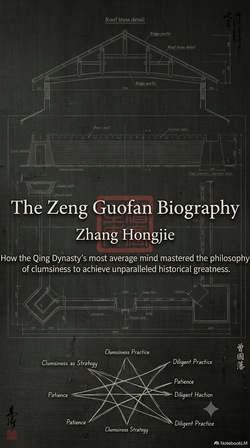
Biography of Zeng Guofan

Zhang Hongjie

4.8896 learners

This biography traces the extraordinary life of Zeng Guofan, a late Qing Dynasty statesman who rose from a humble rural family to become one of China’s most revered historical figures. Starting with his grueling journey through imperial examinations—failing seven times before finally securing a position in the capital—Zeng’s story is defined by relentless self-improvement. He transformed his unruly habits through rigorous daily reflection and discipline, ascending rapidly in the imperial bureaucracy before facing political setbacks that pushed him to build the formidable Hunan Army. Leading this force, he crushed the Taiping Rebellion, saving the Qing Dynasty from collapse, yet strategically retreated from power to avoid imperial suspicion. Later, he pioneered China’s early Westernization efforts, founding military factories and launching the first student exchange program to the U.S. His life embodies the clash of traditional Confucian values and modernizing forces, offering timeless lessons on resilience, leadership, and navigating unprecedented change.

Late Qing DynastyTaiping RebellionZeng Guofanself-cultivationofficial career
The Architectonics Of Power
Loading…

The Architectonics Of Power

Wang Yanan

3.4549 learners

This book delivers a groundbreaking exploration of bureaucratic politics—an often-overlooked system compared to aristocratic, autocratic, and democratic governance. Drawing on sharp comparisons with European, American, and fascist bureaucratic models, it unpacks China’s unique 2,000-year history of bureaucratic rule, from its Qin Dynasty origins to its modern transformation after the Opium War. Unlike Western bureaucracies that served as transitional phases between feudalism and capitalism, China’s bureaucracy was deeply intertwined with feudal landlord economies, Confucian doctrine, and centralized autocracy, boasting three defining traits: unbroken continuity, cultural inclusivity, and pervasive social control. It examines how this system stifled social progress, fueled cycles of corruption, and perpetuated peasant exploitation, while tracing its evolution into 20th-century bureaucratic capitalism. Ultimately, it argues that China’s bureaucratic politics can only be eradicated by uprooting its feudal economic foundations and empowering grassroots movements, offering a critical lens to understand China’s past and present.

Bureaucratic PoliticsFeudal Landlord EconomyTwo-Tax SystemImperial Examination SystemModern Bureaucratic Capital
Concept

Imperial Examination System

A centuries-old Chinese civil service exam system that selected officials via standardized tests, aimed to centralize imperial power and bind intellectual minds to the official ruling rules.

Civil ServicePolitical SystemAncient China
Concept

Imperial Examinations

A Chinese system to select officials via exams, starting from Sui Dynasty. It allowed commoners to enter bureaucracy, breaking aristocratic monopoly and influencing East Asia/Europe.

bureaucracyImperial ExamsSocial Mobility
Insight

Hunan’s Talent Boom Reason

Hunan’s sudden talent boom in modern history roots in the 18th century imperial examination quota separation, which gave local students far more fair promotion opportunities.

HistoryEducationHunan
No more