
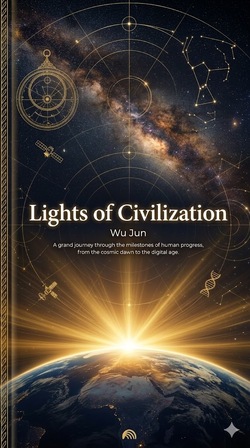
Light of Civilization
Loading…

Light of Civilization

Wu Jun

3.31284 learners

Journey through the pivotal milestones of human civilization in *Light of Civilization*, a sweeping exploration of how ancient innovations and cross-cultural exchanges shaped the modern world. From the Rosetta Stone’s decoding that unlocked ancient Egypt’s secrets to the Sumerians’ invention of cuneiform and the wheel, the book traces foundational breakthroughs across continents. It delves into China’s imperial examination system and advanced agricultural techniques, Greece’s mathematical and scientific revolutions, Rome’s enduring legal legacy, and the global spread of porcelain. The narrative also covers the Renaissance’s artistic and scientific flourishing fueled by the Medici family, the Age of Discovery’s transformative voyages, and Isaac Newton’s groundbreaking work that laid the groundwork for modern science. By connecting these threads, the book reveals how civilizations’ triumphs, collaborations, and even failures have woven the fabric of human progress, offering a vivid portrait of our shared historical heritage.
RenaissanceImperial Examination SystemRosetta StoneAncient Egyptian PyramidsCuneiform Script
The Architectonics Of Power
Loading…

The Architectonics Of Power

Wang Yanan

3.4545 learners

This book delivers a groundbreaking exploration of bureaucratic politics—an often-overlooked system compared to aristocratic, autocratic, and democratic governance. Drawing on sharp comparisons with European, American, and fascist bureaucratic models, it unpacks China’s unique 2,000-year history of bureaucratic rule, from its Qin Dynasty origins to its modern transformation after the Opium War. Unlike Western bureaucracies that served as transitional phases between feudalism and capitalism, China’s bureaucracy was deeply intertwined with feudal landlord economies, Confucian doctrine, and centralized autocracy, boasting three defining traits: unbroken continuity, cultural inclusivity, and pervasive social control. It examines how this system stifled social progress, fueled cycles of corruption, and perpetuated peasant exploitation, while tracing its evolution into 20th-century bureaucratic capitalism. Ultimately, it argues that China’s bureaucratic politics can only be eradicated by uprooting its feudal economic foundations and empowering grassroots movements, offering a critical lens to understand China’s past and present.

Bureaucratic PoliticsFeudal Landlord EconomyTwo-Tax SystemImperial Examination SystemModern Bureaucratic Capital
Concept

Imperial Examination System

A centuries-old Chinese civil service exam system that selected officials via standardized tests, aimed to centralize imperial power and bind intellectual minds to the official ruling rules.

Civil ServicePolitical SystemAncient China
No more