
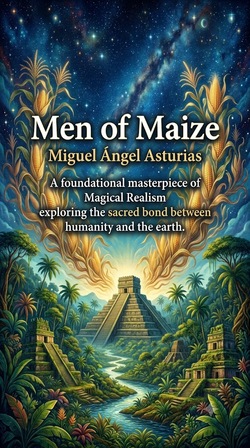
Men of Maize
Loading…

Men of Maize

Miguel Angel Asturias

4.71036 learners

Set in Guatemala’s mist-shrouded highlands, *Men of Maize* spins a mesmerizing magical realist saga rooted in K’iche’ Indigenous traditions. At its heart lies the sacred, unbreakable bond between the land and its people—threatened by greedy outsiders who clear ancient forests, drain the earth’s vitality, and chase quick corn profits at the cost of long-term survival. Gaspar Ilom, a warrior whose soul is stitched to the soil, rises to fight these exploiters, only to be trapped by the chains of daily life and the land’s wrathful, serpentine manifestation. The story unfolds through interconnected tales: a young suitor lost to fire and myth, a healer who shifts into a seven-point deer, a blind man searching for his runaway wife, and a postman who transforms into a wolf to navigate the spirit world. Each journey reflects the Indigenous belief in nagualism—where humans and animals share souls—and the land’s role as both judge and savior. As curses unfold, spirits intervene, and traditions persist, the novel delivers a powerful message about ecological balance, cultural resilience, and the devastating price of severing ties with the earth that sustains us.
Maize cultivationIndigenous resistanceNagualismLand spiritualityShape-shifting
Open Veins of Latin America
Loading…

Open Veins of Latin America

Eduardo Galeano

3.5997 learners

Eduardo Galeano’s *Open Veins of Latin America* lays bare 500 years of systemic plunder that has defined the region’s tragic fate. Starting with Columbus’s 1492 arrival, the book traces how Spanish and Portuguese colonizers drained Latin America of gold and silver, decimating indigenous populations through forced labor and violence. Later, British free trade policies crushed fledgling local industries, turning the continent into a raw material supplier and consumer of European goods. In the 20th century, U.S. corporations and political interference took over, controlling key sectors like mining, oil, and manufacturing while extracting massive profits that never benefited local communities. Galeano weaves together harrowing stories of indigenous uprisings, enslaved laborers, and exploited workers, exposing how neocolonial structures perpetuate poverty, inequality, and dependency. A landmark work of critical scholarship, it reveals why Latin America remains trapped in a cycle of resource wealth and widespread deprivation, making it essential reading for anyone seeking to understand global economic injustice.

Resource ExtractionEconomic DependencyIndigenous resistanceNeocolonialismSugar plantations
No more