Big History, Small World
Loading…

Big History, Small World

Cynthia Stokes Brown

3.81271 learners

Spanning 13.8 billion years, *Big History, Small World* delivers a sweeping, interdisciplinary narrative that weaves cosmic origins, biological evolution, and human civilization into a single cohesive story. Starting with the Big Bang and the formation of stars and planets, it traces life’s emergence on Earth—from the first single-celled organisms to cyanobacteria that oxygenated the atmosphere. The book follows human evolution from early hominids like Lucy to the global spread of Homo sapiens, exploring pivotal shifts: the Agricultural Revolution, the rise of ancient civilizations, and the Industrial Revolution. It delves into globalization’s impacts, from interconnected supply chains to cultural fusion, and concludes with a forward-looking examination of 21st-century challenges: climate change, biotech ethics, and AI’s role in shaping our future. Framing humanity as both a product of cosmic chance and a steward of the planet, this book invites readers to see their place in history’s grand tapestry and how small choices ripple across time and space.
GlobalizationArtificial IntelligenceIndustrial RevolutionClimate ChangeCosmic microwave background
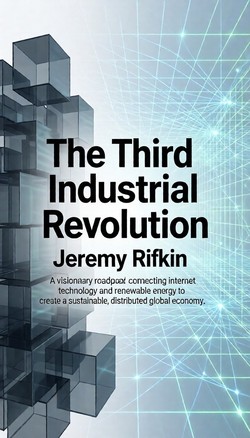
The Third Industrial Revolution
Loading…

The Third Industrial Revolution

Jeremy Rifkin

4.31102 learners

Jeremy Rifkin’s *The Third Industrial Revolution* exposes the fatal flaws of the fossil fuel-reliant Second Industrial Revolution, tracing its collapse through recurring oil crises, the 2008 financial meltdown, and accelerating climate change. Rifkin argues that humanity’s only path forward lies in integrating digital communication technology with renewable energy systems, outlining five core pillars: transitioning to renewables, converting buildings into micro-power plants, storing energy via hydrogen, building smart shared grids, and adopting electric/fuel-cell transport. Through global case studies—from EU policy shifts to San Antonio’s green city initiative—he demonstrates how this model fosters distributed capitalism, replacing top-down corporate control with collaborative, community-driven networks. The book also explores how this revolution reshapes political alliances, economic paradigms rooted in thermodynamics, and education systems focused on biosphere stewardship, framing it as a necessary shift to avoid civilizational collapse and build a sustainable, equitable future.

Third Industrial Revolutionrenewable energysmart gridhydrogen storagedistributed capitalism
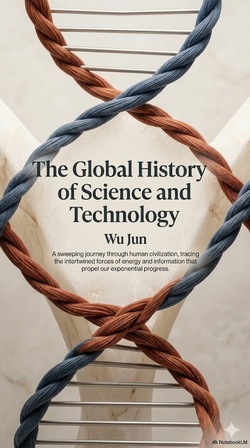
The Global History of Science and Technology
Loading…

The Global History of Science and Technology

Jun Wu

3.41039 learners

Spanning from humanity’s first stone tools to cutting-edge gene editing and quantum communication, *The Global History of Science and Technology* traces how technological breakthroughs have shaped every era of human civilization. Starting with the 1.76-million-year-old Acheulean handaxe and controlled fire use that let early humans expand beyond Africa, it moves through agricultural revolutions, the rise of metallurgy, and the birth of systematic scientific methods in ancient Greece and the Islamic Golden Age. The book highlights pivotal moments like the Industrial Revolution’s steam engines, Einstein’s relativity, the atomic age, and the digital revolution’s computers and internet. It also explores emerging technologies—CRISPR, quantum communication, artificial photosynthesis—and their ethical implications. More than a timeline, it connects tech advancements to social shifts, from early settlement to modern globalization, showing how science has always been intertwined with human survival, progress, and ambition.

Industrial RevolutionNuclear EnergyQuantum mechanicsAgricultural RevolutionQuantum Communication
Empire of Cotton
Loading…

Empire of Cotton

Sven Beckert

4.41027 learners

Sven Beckert’s *Empire of Cotton* unspools the sweeping, brutal history of how a humble fiber reshaped global capitalism over five centuries. Starting with cotton’s independent domestication across India, Peru, and East Africa, the book traces how European powers seized control through 'war capitalism'—a system built on slavery, colonial plunder, and militarized trade. It reveals how the U.S. South’s slave-driven cotton plantations fueled Britain’s Industrial Revolution, creating an interdependent global network that enriched elites while exploiting millions of enslaved people, child laborers, and colonized farmers. The U.S. Civil War shattered this system, forcing Europe to diversify cotton sources and paving the way for industrialization in the Global South. Beckert exposes how state power, corporate greed, and worker resistance shaped every phase of the cotton empire, from its 19th-century peak to its modern iteration, where inequality and exploitation persist in global supply chains.

Industrial RevolutionColonialismCotton GinWar CapitalismChattel Slavery
The Shortest History of Europe
Loading…

The Shortest History of Europe

John Hirst

4.5503 learners

This concise, engaging history unpacks Europe’s chaotic, world-shaping journey from its three foundational roots—Greek-Roman intellectual legacy, Christian faith, and Germanic warrior culture—to the modern European Union. John Hirst traces how these clashing elements fused into the medieval world, then fractured through the Renaissance, Reformation, Scientific Revolution, and Enlightenment, sparking secularization, political upheaval, and the rise of democracy. He explores feudalism’s evolution into constitutional governance, the Industrial Revolution’s social divides, and the catastrophic world wars that reshaped the continent. Hirst highlights Europe’s unique power fragmentation as the secret to its innovation, while also confronting its dark legacy of nationalism and genocide. Perfect for readers seeking a clear, accessible overview, this book reveals how Europe’s messy, contradictory past created the global systems and ideas we live with today.

Industrial RevolutionRenaissanceChristianityWorld War IWorld War II
ReOrient
Loading…

ReOrient

Andre Gunder Frank

4.3437 learners

In Andre Gunder Frank’s *ReOrient*, we dismantle the centuries-old Eurocentric myth that’s shaped Western historical thought. Frank argues that from 1400 to 1800, Asia—not Europe—was the true core of the global economy. Led by China and India, Asian nations boasted larger populations, higher productivity, and far more robust trade networks than their European counterparts. China, in particular, acted as the world’s ultimate 'silver sink,' drawing massive amounts of silver from the Americas and Japan to fuel its economic expansion. Europe, by contrast, was a marginal player, relying on stolen American silver to even participate in the Asian-dominated trade system. Frank debunks false claims about European 'superiority' in technology, institutions, and culture, showing that Europe’s later rise stemmed from global economic shifts, not inherent greatness. This book is a call to abandon narrow, Europe-focused narratives and embrace a truly global perspective to understand the world economy’s evolution.

Industrial RevolutionEurocentrismWorld Economic SystemAsian Economic DominanceAmerican Silver
View

Slavery Fuels Industrial Revolution

British industrialization relied on cheap cotton from US slaves. Without this supply, factories would have lacked raw material—slave labor and industrial capitalism were interdependent.

Industrial RevolutionSlaveryCotton Supply
View

Nation-State's Shortcomings

Nation-states can’t fully explain history. UK’s Reformation came from NW Europe, Parliament from outside ideas, Industrial Revolution from cross-regional tech—they’re part of larger civilizations.

LimitationsHistoryNation-State
Insight

Comms + Energy = Revolution

Every big economic revolution pairs new communication tech with new energy systems. First: steam print + coal; second: telecom + oil; third: internet + renewables. This combo enables new economic structures.

Industrial RevolutionsTech-Energy PairingEconomic Shift
Insight

Fossil Fuels Ended Slavery

Fossil fuels made slave labor uneconomical. Steam power replaced human work, so Wilberforce's anti-slavery bill could actually work.

Industrial RevolutionSlaveryFossil Fuels
Scenario

India's Textile Dominance

India’s textiles dominated the global market until the 19th century—Britain used colonial policies to replace Indian cotton with industrial products.

Industrial RevolutionColonialismIndian Textiles
Scenario

British Textile Innovation

British textile innovations (spinning jenny, steam engine) were responses to competition from cheap Indian cotton—aiming to cut labor costs.

Industrial RevolutionGlobal CompetitionTextile Tech