
In the Wilderness
Loading…

In the Wilderness

Liu Qing

3.4943 learners

Set in the sweltering summer of 1951, just two years after the founding of the People’s Republic of China, *In the Wilderness* follows Zhu Mingshan, a tough, idealistic cadre from northern Shaanxi who leaves a comfortable regional government post to take charge of a rural county in the Wei River Plain. Tasked with leading a desperate fight against a devastating cotton aphid infestation that threatens farmers’ livelihoods and national industrial supply, Zhu must navigate simmering tensions between old revolutionary cadres struggling to adapt to peacetime governance and young, educated officials eager to impose top-down solutions. Alongside coordinating grassroots pest control efforts—using homemade remedies like chili water and tobacco infusions—he grapples with personal struggles: his wife’s fading revolutionary zeal, old comrades’ crises of purpose, and bureaucratic clashes with a stubborn county mayor more focused on grand speeches than on-the-ground action. Through vivid, intimate scenes of rural life, the novel captures the grit, idealism, and messy realities of building a new nation from the fields up.

Revolutionary IdealismCotton aphid controlRural grassroots governance1950s Chinese cadresHomemade pest remedies
Resurrection
Loading…

Resurrection

Leo Tolstoy

4.5885 learners

Leo Tolstoy’s *Resurrection* is a searing, timeless masterpiece set in late 19th-century Russia, exploring guilt, redemption, and systemic decay. When complacent aristocrat Prince Dmitri Nekhlyudov serves as a juror, he is jolted into a spiritual awakening by recognizing Katya Maslova—a young woman he once seduced and abandoned—wrongfully on trial for murder. Her conviction to four years of hard labor shatters his privileged bubble, driving him to embark on a relentless quest for atonement: fighting to overturn her sentence, renouncing his inherited land to empower oppressed peasants, and following her into Siberian exile. As Maslova finds solace and purpose among political prisoners, both undergo profound transformation—Nekhlyudov shedding his hypocrisy to confront institutional injustice, and Maslova reclaiming her dignity after years of trauma. Tolstoy’s unflinching critique of Russia’s corrupt legal system, dehumanizing prisons, and aristocratic indifference makes this a powerful exploration of renewal amid despair.

Land ReformRedemptionSocial CritiqueDmitri NekhlyudovKatya Maslova
Urban and Rural China
Loading…

Urban and Rural China

Qiren Zhou

3.5598 learners

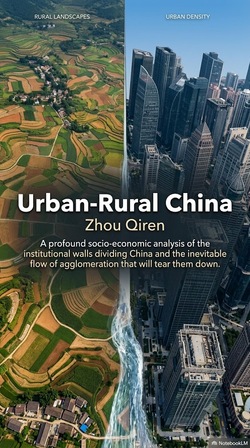
Zhou Qirun’s *Urban-Rural China* delivers a rigorous, accessible exploration of the historical, systemic, and economic forces shaping China’s urban-rural divide. Starting with a comparative analysis of global urbanization drivers—using Tokyo and Seoul as benchmarks—it unpacks why China’s industrialization outpaced its urbanization, fueled by mid-20th century policies restricting rural migration. The book traces the evolution of migration rights, from the 1954 Constitution’s initial recognition of free movement to the 1958 hukou system that entrenched a rigid, hereditary urban-rural hierarchy. It further examines the lopsided "land urbanization" phenomenon, where city expansion outpaces rural-to-urban population integration, rooted in state-controlled land ownership and compulsory land acquisition. Through on-the-ground case studies of Chengdu’s "empowerment through property rights" reform, Chongqing’s innovative land ticket system, and Shenzhen’s urban renewal efforts, Zhou illustrates grassroots and policy-driven solutions. He also debunks common misconceptions about land supply, property rights, and urban governance, arguing that balanced, sustainable development hinges on market-oriented land reform and restoring equitable property rights for rural residents.

Land ReformProperty RightsHukou Systemrural-urban migrationLand Urbanization
Scenario

Shenzhen's First Land Lease

Luo Jinxing used Engels' quote to justify leasing land, signed with Liu Tianzhu for Donghu Liyuan. Pre-sold houses sold out in 3 days.

Land ReformShenzhenReal Estate
View

People's Livelihood Priority

Sun believed people's livelihood was foundation. He proposed land reform (average land rights) and capital control to reduce inequality, wanting everyone to have a good life.

Sun Yat-senPeople's LivelihoodLand Reform
Quote

Farmers Still Depend on Sky

Zhu laments: 'Even after land reform, farmers still depend on the sky for harvests.'

Land ReformDependencyRural Development
Scenario

Land Reform Idea

Sun proposed 'average land rights'—fix land price, any increase goes to state. He wanted to end land monopoly so farmers could have land and reduce poverty.

Sun Yat-senLand ReformAverage Land Rights
Concept

Three Principles of the People

Sun Yat-sen's core ideology: Nationalism (overthrow Qing, anti-imperialism), Democracy (end monarchy, people's rights), People's Livelihood (land reform, fair wealth). It guided China's revolution.

Sun Yat-senIdeologyThree Principles
Golden Sentence

Be Poor By Choice

The smart doctor Shiping sold all his big land and luxury house in 1948, became a poor farmer right before land reform. He laughed and said he just wanted to be a 'good-for-nothing' for fun by chance.

WisdomLife ChoiceForesight
Concept

Bolivia 1952 Revolution

A 1952 uprising led by miners and native farmers in Bolivia, which abolished serfdom, nationalized US-controlled tin mines and gave land to poor farmers, attracting global left-wing activists.

RevolutionLand ReformBolivia
Scenario

Guatemala Arbenz Reform

President Arbenz of Guatemala launched land reform in 1952, seizing unused land from US-owned United Fruit Company and distributing it to 100,000+ landless local farmers.

Land ReformUS ImperialismGuatemala
View

Private Land Ownership Is Evil

Tolstoy argues that private land ownership is the root of most social evil. Farmers who work on the land get nothing, while landlords who never farm take all the harvest and live a wealthy, idle life.

Land ReformTolstoySocial Justice
Scenario

Nekhludoff Gives His Land

Nekhludoff gave all his inherited land to local farmers. He only charged very low rent, and all the rent was used for villagers' public affairs instead of going into his own pocket.

Land ReformAtonementNekhludoff
Insight

Land Reform Eliminates Revolution Risk

Material reforms like land distribution satisfy peasants' practical demands, turning them into conservative pro-government groups. But reform for urban middle class intellectuals will only raise their higher unmeetable expectations.

RevolutionLand ReformSocial Stability
Method

3 Steps For Successful Land Reform

1. Concentrate enough executive power to bypass conservative landlord-controlled parliaments. 2. Assign dedicated administrative teams to handle land transfer and paperwork. 3. Organize local farmer associations to enforce reform rules on the ground.

Land ReformRural Developmentpolicy implementation
Method

Land Reform for Common Prosperity

Land reform steps: equalize rural and urban land rights, allow cross-region land index trading, and increase farmers' property income.

Land ReformRural DevelopmentProperty Income
No more