
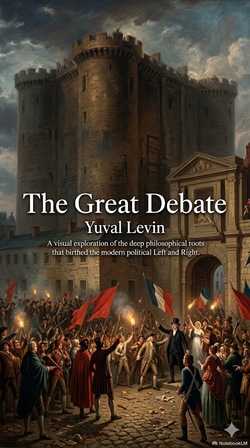
The Great Debate
Loading…

The Great Debate

Yuval Levin

3954 learners

Set against the roiling backdrop of late-18th-century transatlantic revolutions—from America’s fight for independence to France’s seismic upheaval—*The Great Debate* unpacks the defining clash between Edmund Burke and Thomas Paine, two titans whose ideas forged modern political thought. Burke, a pragmatic British statesman, championed traditional order, gradual reform, and the wisdom of collective historical experience, warning that radical revolution would unravel society’s organic bonds. Paine, a fiery radical and American independence icon, argued for natural rights, rational governance, and the right of people to overthrow tyrannical systems to build just, egalitarian societies. Their debate spanned core political tensions: justice vs. order, reason vs. convention, revolution vs. incremental change. More than a historical showdown, this clash laid the foundation for the modern left-right political spectrum, shaping debates over governance, equality, and societal change that resonate in contemporary policy fights.

French RevolutionEdmund BurkeThomas PaineConservative ThoughtRadical Liberalism
Anna Karenina
Loading…

Anna Karenina

Leo Tolstoy

4.2579 learners

Leo Tolstoy’s *Anna Karenina* weaves two parallel tales of love, duty, and self-discovery in 19th-century imperial Russia. On one thread, Anna, a married aristocrat, risks everything for a passionate affair with Count Vronsky, defying the rigid social norms that condemn her. Trapped between her love for Vronsky, her guilt over abandoning her son, and the judgment of high society, her journey spirals into tragedy. On the other, Levin, a thoughtful landowner, grapples with existential questions, struggling to reconcile his intellectual doubts with the quiet wisdom of rural life. His path leads him to find purpose in love with Kitty—who heals from her own heartbreak—and in the simple, honest labor of his farm. Tolstoy masterfully explores the chasm between societal expectations and personal desire, asking timeless questions about what it means to live a meaningful life.

Rural Lifespiritual questAnna KareninaLevinCount Vronsky
Scenario

Levin And Kitty Get Engaged

At Oblonsky’s dinner party, Levin and Kitty use letters to guess each other’s mind, finally confirm that they still love each other, and decide to get married soon.

romanceHappy EndingPlot
Concept

Levin’s Rural Utopia

Levin’s ideal lifestyle: he abandons meaningless urban social events, devotes himself to farm work, and seeks life value through down-to-earth labor and sincere connections with local peasants.

personal growthLiteratureRussian Novel
View

True Happiness Needs No Vanity

Core claim: True happiness never comes from social status or luxury materials, but from trivial daily warmth, stable family bond and sincere pursuit of kindness. Tolstoy proves this through Levin’s rural life.

HappinessLife Philosophyclassic book
Scenario

Levin Meets Kitty On Ice

When Levin returns to Moscow to pursue Kitty, he finds her skating in the zoo. He rents skates to skate with her, and accidentally says a nervous sweet line that confuses Kitty.

CharacterromancePlot
Scenario

Levin Mows Grass With Peasants

After arguing with his brother about public affairs, Levin joins local peasants to cut grass in the field. He gets totally immersed in the labor, and temporarily forgets all his troubles.

CharacterCountry LifePlot
Scenario

Kitty Gives Birth To Son

When Kitty is in labor, Levin panics and runs around to find doctor and medicine. After hours of suffering, Kitty gives birth to a healthy baby boy, and Levin finally feels real peace.

FamilyLifePlot
Scenario

Levin Finds Life Meaning

Levin chats with an old peasant, and hears the line "live for the soul, remember God". All his confusion about life meaning disappears, and he finally finds his inner peace.

SpiritualityCharacter GrowthPlot
Yuval Levin

Yuval Levin

Author
No more