
Asking the Right Questions
Loading…

Asking the Right Questions

M. Neil Browne;Stuart M. Keeley

4.51193 learners

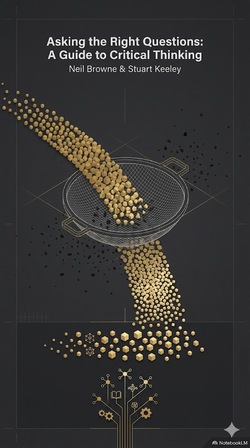
Living in a world flooded with conflicting claims and biased information, it’s easy to feel overwhelmed or misled—experts contradict each other, advertisers hide flaws, and our brains default to quick, emotional judgments. *Asking the Right Questions* by Neil Browne and Stuart Keeley is your essential guide to building robust critical thinking skills. This book breaks down how to move beyond passive 'sponge-style' learning to active 'gold-panning' thinking, where you engage with information by asking targeted, critical questions. It teaches you to distinguish between weak and strong critical thinking, identify the core components of any argument (thesis, conclusion, reasons), spot hidden assumptions and logical fallacies, and evaluate the reliability of evidence from research reports to surveys. You’ll also learn to navigate common cognitive traps like confusing correlation with causation, avoiding binary thinking, and overcoming biases like belief persistence. Packed with practical exercises and real-world examples, this book empowers you to take control of your beliefs, make rational decisions, and avoid being manipulated by persuasive but flawed arguments. It’s not about being argumentative—it’s about becoming a thoughtful, independent thinker who can cut through the noise to find credible answers.
Critical thinkingSponge-style thinkingGold-panning thinkingStrong critical thinkingLogical fallacies
Beyond Feelings
Loading…

Beyond Feelings

Vincent Ruggiero

4.7723 learners

Beyond Feelings: A Guide to Critical Thinking is a foundational text that empowers readers to break free from cognitive biases, emotional reactions, and societal conditioning. Using relatable, American-centric examples—from political spin and advertising manipulation to the pitfalls of 'mine is better' thinking—it unpacks how external forces shape our beliefs, from childhood upbringing to modern social norms. The book systematically breaks down common thinking errors, including confirmation bias, hasty generalization, and straw man fallacies, while providing actionable frameworks for cultivating independent thought. It guides readers through key steps: recognizing personal cognitive blind spots, conducting rigorous research on controversial issues, evaluating evidence objectively, forming balanced judgments, and persuading others with respect and logic. Ideal for students, professionals, and anyone navigating today’s misinformation-saturated world, it emphasizes that critical thinking isn’t just an academic skill—it’s a lifelong practice for making wiser decisions and understanding the world more clearly.

Critical thinkingLogical fallaciesEvidence evaluationCognitive BiasesTruth
Concept

Common Logical Fallacies

Fallacies are flawed reasoning: ad hominem (attack person not argument), slippery slope (exaggerate chain reactions), appeal to public (popularity = truth), straw man (distort opponent’s view).

Critical thinkingLogic
No more