
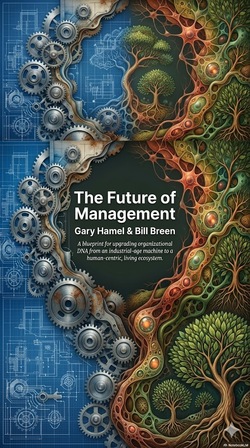
The Future of Management
Outdated industrial-era management—rooted in 19th-century principles, optimized for 20th-century efficiency—has hit a wall in the fast-paced, unpredictable 21st century. In *The Future of Management*, Gary Hamel and Bill Breen argue that rigid hierarchies, top-down control, and efficiency-obsessed processes are stifling creativity and adaptability, leaving businesses vulnerable to disruption. Drawing on real-world case studies from trailblazers like Whole Foods, W.L. Gore, and Google, the book outlines a radical shift toward human-centered, adaptive management models. It explores how decentralized decision-making, trust in frontline employees, systematic creativity cultivation, and dynamic resource allocation can build resilient organizations. The authors introduce Management 2.0, a network-driven framework where power flows from contribution, not title, and every team member becomes an innovator. Packed with actionable strategies and eye-opening insights, this book is a blueprint for leaders ready to ditch outdated practices and build organizations built for long-term success in an era of constant change.