
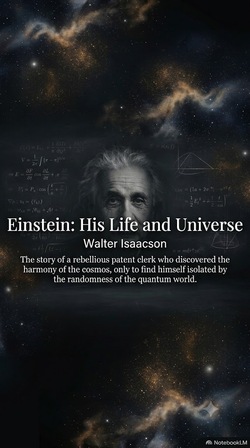
Einstein: His Life and Universe
Loading…

Einstein: His Life and Universe

Walter Isaacson

4.71139 learners

Walter Isaacson’s *Einstein: His Life and Universe* delivers a rich, humanizing portrait of history’s most iconic scientist, weaving groundbreaking physics with the messy, relatable story behind the genius. From his curious childhood—captivated by a compass and Mozart’s violin—to his 1905 “miracle year,” where four papers redefined quantum theory, atomic science, and relativity, Isaacson traces Einstein’s relentless pursuit of cosmic truth. The book explores his turbulent personal life: his marriages to Mileva Marić and Elsa Einstein, complicated relationships with his children, and struggles with global fame. It also delves into his bold political stances—opposing Nazism, advocating for a world government to prevent nuclear war, and fighting for racial equality. Readers witness his fiery debates with Bohr over quantum mechanics, lifelong quest for a unified field theory, and quiet acceptance of death while still scribbling equations. This biography humanizes the icon, showing how his rebellious spirit, childlike curiosity, and unwavering faith in the universe’s order drove his revolutionary discoveries.
Albert EinsteinGeneral RelativitySpecial RelativityQuantum mechanicsManhattan Project
Surely You're Joking, Mr. Feynman!
Loading…

Surely You're Joking, Mr. Feynman!

Richard P. Feynman

4.2999 learners

Surely You're Joking, Mr. Feynman! is a vibrant collection of autobiographical essays from Nobel Prize-winning physicist Richard P. Feynman, offering an unfiltered, hilarious look at his extraordinary life. From his mischievous boyhood tinkering with home labs and fixing radios for neighbors during the Great Depression to his groundbreaking work on the Manhattan Project and quantum electrodynamics, Feynman’s stories brim with wit, curiosity, and a refusal to play by the rules. He recounts pranking colleagues at Princeton, cracking top-secret safes at Los Alamos, learning samba drums in Brazil, taking up painting later in life, and skewering flawed education systems. Beyond the laughs, the book reveals his unwavering commitment to scientific integrity, disdain for academic pretension, and belief that great science thrives on playfulness and relentless questioning. It’s a celebration of a brilliant mind that refused to be boxed in, perfect for science lovers and anyone who craves stories of authenticity and curiosity.

Manhattan ProjectPaintingNobel PrizeRichard Feynmanquantum electrodynamics
Freedom From Fear
Loading…

Freedom From Fear

David M. Kennedy

4982 learners

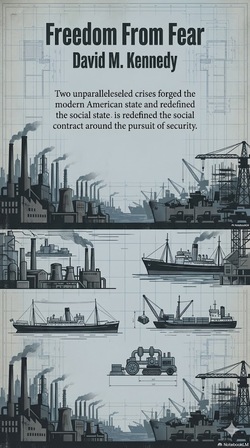
David M. Kennedy’s *Freedom From Fear* delivers a sweeping, immersive account of America’s defining journey through the Great Depression and World War II. Starting with the 1920s’ simmering tensions—Jim Crow’s racial oppression, rural poverty, urban cultural upheaval, and educational progress—the book traces how unregulated capitalism and global instability ignited the 1929 stock market crash. It dissects Herbert Hoover’s failed laissez-faire responses, then chronicles Franklin D. Roosevelt’s transformative New Deal: the 100 Days of urgent legislation, the rise of labor unions, the birth of the social safety net, and the political battles that exposed its limits. The narrative shifts to America’s reluctant pivot from isolationism to war, detailing the Lend-Lease Act, the Pearl Harbor attack, and the nation’s industrial mobilization that turned it into the Allies’ "arsenal of democracy." Kennedy explores how war resolved the Depression, sparked early civil rights gains, and redefined America’s global role, revealing how a nation conquered fear to reimagine its identity and future.

Great DepressionWorld War IINew DealFranklin D. RooseveltSocial Security Act
Scenario

Manhattan Project

WWII US project to build atomic bombs. 1945 test and Japan bombings ended the war but sparked nuclear age debates.

HistoryWWIINuclear Science
No more