
Successes and Failures of Historical Economic Reforms
Loading…

Successes and Failures of Historical Economic Reforms

Wu Xiaobo

4.21305 learners

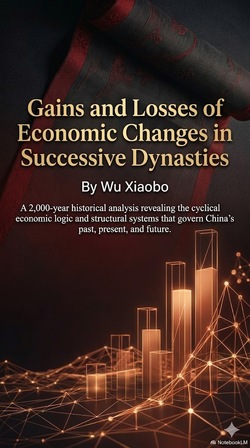
This book traces 2,000 years of Chinese economic reforms, starting with Guan Zhong’s groundbreaking pro-commerce policies in the Spring and Autumn Period and contrasting them with Shang Yang’s state-led, agriculture-focused reforms that laid the groundwork for Qin’s unification. It unpacks the enduring cycle of Chinese economic governance: balancing growth through liberalizing private sectors and maintaining stability via centralization, exemplified by Emperor Wu of Han’s state monopolies, Wang Anshi’s controversial state-led reforms, and the stagnation of Ming-Qing isolationism. Moving to modern times, it analyzes the failures of the late Qing’s Self-Strengthening Movement, the Nationalist government’s state capitalism, and the radical experiments of planned economy, before diving into the pragmatic 'crossing the river by feeling the stones' of China’s reform and opening up. Through these case studies, it reveals the recurring tensions between state control and market freedom, offering critical lessons for understanding China’s economic trajectory and its ongoing challenges.
Guan ZhongShang YangSalt-Iron FranchiseState-Owned MonopolyEconomic Governance Cycle
Turbulent Thirty Years
Loading…

Turbulent Thirty Years

Wu Xiaobo

3.3623 learners

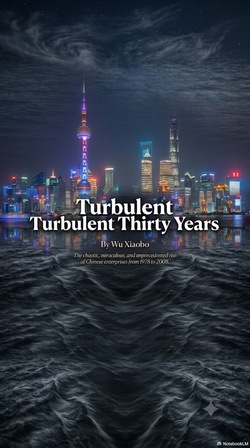
"Turbulent Thirty Years" is a definitive narrative of China’s unprecedented economic transformation from 1978 to 2008, tracing the chaotic, exhilarating rise of its business landscape amid sweeping reform and opening-up. Authored by Wu Xiaobo, this immersive account chronicles the birth of iconic enterprises—from Lenovo and Huawei to Vanke and Mengniu—and the larger-than-life entrepreneurs who navigated uncharted waters, breaking rigid state rules, seizing risky opportunities, and enduring dramatic failures. It captures the era’s contradictions: state-owned giants clashing with scrappy private startups, speculative bubbles bursting amid rapid growth, and the tension between traditional values and global market forces. More than a business history, it offers a front-row seat to how a closed, agrarian nation evolved into a global economic powerhouse, revealing the grit, luck, and systemic upheaval that shaped modern China’s commercial identity. For readers seeking to understand China’s rise through its business leaders and pivotal events, this book is an indispensable guide.

State-owned EnterprisesMarket LiberalizationChina’s Reform and Opening-UpPrivate EnterprisesEntrepreneurial Pioneers
Concept

Washington Consensus

A set of 1980s policy guidelines for developing countries, with three core pillars: strict fiscal austerity, full privatization, and total unregulated market liberalization.

EconomicsDevelopmentGlobal Policy
No more