
12 Rules for Life
Loading…

12 Rules for Life

Jordan B. Peterson

4.21223 learners

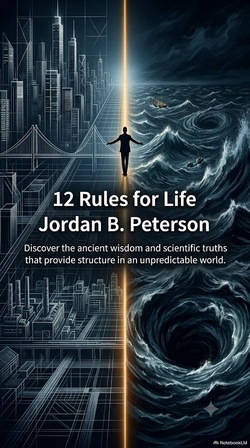
Jordan B. Peterson’s *12 Rules for Life* weaves evolutionary biology, clinical psychology, and timeless philosophical insights into actionable guidance for navigating life’s chaos and cultivating meaningful existence. Using vivid examples—from lobster dominance hierarchies to childhood observations of territorial birds—Peterson dismantles three common misconceptions about nature: that it’s static, purely dynamic, or disconnected from human culture. He explains how our brains are wired to assess social status, linking low serotonin levels to helplessness and high status to confidence and resilience. The book dives into practical strategies: breaking free from negative feedback loops by addressing small, fixable problems first; setting clear boundaries to avoid toxic relationships; practicing honest communication to build trust; and applying balanced parenting principles to foster resilient children. Peterson emphasizes that meaning isn’t about avoiding suffering, but confronting it with courage, taking personal responsibility, and making incremental improvements—starting with the simple act of cleaning your room. By following these 12 rules, readers learn to transform chaos into order, reclaim control, and find purpose in life’s struggles.
Truth-TellingSelf-ImprovementMeaning-MakingDominance hierarchySerotonin regulation
Man's Search for Meaning
Loading…

Man's Search for Meaning

Viktor E. Frankl

4951 learners

Based on Viktor E. Frankl’s firsthand experience surviving Auschwitz and other Nazi concentration camps, *Man’s Search for Meaning* blends harrowing personal memoir with groundbreaking psychological insight. Frankl documents the three stages of prisoners’ mental responses to camp life—terror, emotional numbness, and the fight to cling to purpose—and reveals how those anchored to a specific goal (reuniting with loved ones, finishing a manuscript, upholding moral values) were far more likely to survive. From this extreme "living laboratory," he developed logotherapy, a framework centered on humanity’s primary motivation: the pursuit of life’s meaning, not pleasure or instinctual drives. He explores how existential vacuum (modern society’s pervasive sense of meaningless) fuels psychological distress, and shares practical tools like paradoxical intention to break cycles of anxiety and neurosis. More than a story of suffering, this book is a timeless guide to finding purpose in adversity, empowering readers to reclaim control by identifying their unique "why."

LogotherapyViktor E. FranklAuschwitz Concentration CampExistential VacuumTragic Optimism
The World as Reference Answers
Loading…

The World as Reference Answers

Liu Qing;Yan Fei

3.3546 learners

From the shores of Walden Pond to Harvard’s hallowed halls, scholars Liu Qing and Yan Fei engage in intimate, thought-provoking dialogues during their year as visiting fellows at the Harvard-Yenching Institute. Drawing on personal reflections, classic works like *Walden* and *The World of Yesterday*, and cutting-edge social theory, they unpack the quiet crises of modern life: the suffocating grip of hustle culture, the erosion of humanistic education, the persistent ache of nostalgia in a rapidly changing world, and the struggle to confront pain instead of avoiding it. They also tackle urgent public issues, from anti-intellectualism’s rise to the moral duty of scholars in public discourse. More than academic debates, these conversations offer actionable wisdom for anyone feeling adrift in chaos—teaching readers to find meaning in daily moments, rebuild genuine human connections, and reclaim their sense of purpose amid modernity’s noise.

NostalgiaWalden PondHenry David ThoreauMeaning-MakingHumanistic Education
No more