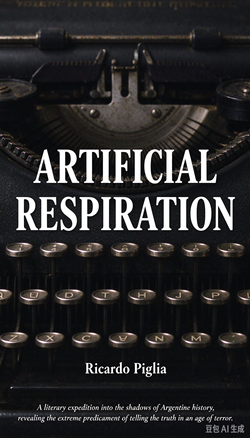
Artificial Respiration
Loading…

Artificial Respiration

Ricardo Piglia

4.11392 learners

Ricardo Piglia’s *Respiración Artificial* (Artificial Respiration) is a labyrinthine postmodern novel that weaves fragmented letters, personal monologues, and forgotten archival texts to blur the line between history and fiction in Argentina. Through writer Emilio Renzi’s correspondence with his enigmatic uncle Marcelo Maggi, exiled patriot Enrique Ossorio’s memoirs, and Polish philosopher Taduesz’s reflections, the book unpacks buried truths of Argentina’s turbulent past—from the Rosas dictatorship to Peronist upheavals, and the lives of displaced European intellectuals. Piglia explores how history is often a constructed narrative, manipulated by those in power, while literature acts as "artificial respiration": a desperate attempt to revive forgotten voices, even as it acknowledges the futility of recapturing unfiltered truth. Blending literary criticism of Borges, Arlt, and European thinkers with fictionalized historical accounts, the novel challenges readers to question what we accept as "fact" and how storytelling shapes our understanding of the past.

Enrique OssorioArtificial BreathingHistorical FictionArgentine ExilesJorge Luis Borges
Station Eleven
Loading…

Station Eleven

Emily St. John Mandel

4.21301 learners

Set against the backdrop of a devastating global flu pandemic that collapses modern civilization, *Station Eleven* weaves interconnected stories across time and space. On the night the world ends, actor Arthur Leander collapses mid-performance of *King Lear* in Toronto, leaving a young Kirsten Raymonde adrift in a chaotic new reality. Twenty years later, Kirsten is a core member of the Traveling Symphony, a ragtag group that roams the Great Lakes region performing Shakespeare and classical music to sustain hope among survivors. Parallel threads follow Arthur’s ex-wife Miranda, whose sci-fi comic *Station Eleven* becomes a post-apocalyptic touchstone, and Clark Thompson, who builds a fragile community at a Michigan airport turned sanctuary. The novel explores how art, memory, and human connection endure even when all else is lost, framing survival not just as staying alive, but as clinging to the fragments of the world that make life worth living.

Georgia FluTraveling Symphony*Station Eleven* ComicArthur LeanderKirsten Raymonde
Imagined Communities
Loading…

Imagined Communities

Benedict Anderson

4.21297 learners

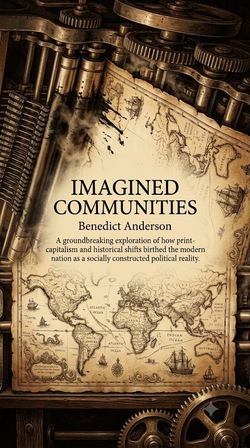
Benedict Anderson’s *Imagined Communities* redefines the nation as an “imagined political community—limited and sovereign,” a groundbreaking framework that reshaped global understandings of nationalism. Anderson traces this modern cultural artifact’s origins to late 18th-century shifts: print capitalism, which forged shared linguistic bonds among dispersed readers; the decline of religious authority and dynastic legitimacy, creating a vacuum for secular collective belonging; and the rise of “homogeneous, empty time” through novels and newspapers, fostering simultaneous connection between strangers. The book dissects distinct waves of nationalism—from early American colonial movements to European linguistic nationalism, conservative official nationalism adopted by empires, and post-WWII anti-colonial struggles. It also distinguishes nationalism from racism, emphasizing the former’s rootedness in inclusive, affective belonging rather than hierarchical fear. A core text across disciplines, it offers a critical lens to unpack how imagined bonds shape global politics and identity.

SovereigntyNation-StateHistorical MemoryImagined CommunitiesPrint Capitalism
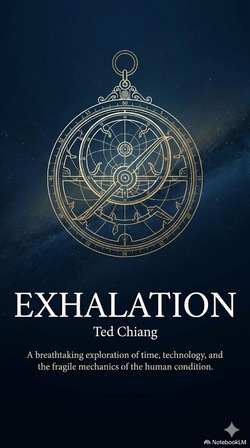
Exhalation
Loading…

Exhalation

Ted Chiang

4.21224 learners

Ted Chiang’s *Exhalation* is a groundbreaking collection of speculative short stories that weaves hard science, philosophical inquiry, and deeply human narratives to challenge our most fundamental assumptions about time, consciousness, and existence. From the haunting cosmic revelation in “Exhalation”—where a mechanical race discovers their universe’s inevitable end as air pressure equalizes—to the time-bending parable of “The Merchant and the Alchemist’s Gate,” which explores fate and the beauty of unplanned moments, each tale invites readers to rethink reality. Stories like “The Lifecycle of Software Objects” confront AI ethics and what it means to care for artificial life, while “The Great Silence” highlights humanity’s blindness to non-human intelligence right under our noses. Chiang’s prose is precise yet lyrical, turning abstract concepts into intimate, thought-provoking journeys that linger long after the final page.

Time TravelFree WillPressure-Driven UniverseDigital EntitiesMemory Recording Tech
Make It Stick
Loading…

Make It Stick

Peter C. Brown;Henry L. Roediger III;Mark A. McDaniel

4.51078 learners

Based on decades of cognitive science research, *Make It Stick* dismantles pervasive myths about learning—like the false belief that cramming or repetitive reading builds lasting knowledge. Authors Peter C. Brown and Henry L. Roediger III reveal counterintuitive, evidence-backed strategies that transform how we retain and apply information. From retrieval practice (self-quizzing) and spaced repetition to interleaved learning and embracing 'desirable difficulties,' the book uses real-world examples—from pilots and surgeons to students and athletes—to show how these methods strengthen memory, build flexible mental models, and foster a growth mindset. It also addresses cognitive illusions like the fluency effect and metacognitive biases that lead us to overestimate our knowledge, equipping readers with tools to calibrate their learning and turn effort into lasting expertise.

Growth MindsetMental ModelsRetrieval practiceSpaced practiceInterleaved practice
The Poetics of Space
Loading…

The Poetics of Space

Gaston Bachelard

4.41064 learners

In Gaston Bachelard’s seminal work *The Poetics of Space*, we move beyond the cold geometry of physical spaces to explore their profound emotional and existential resonance. Rejecting objective architectural descriptions, Bachelard uses phenomenology to unpack how spaces like the home—with its contrasting attic (a realm of reason) and cellar (a den of irrationality)—become anchors of safety, belonging, and memory. He delves into everyday objects: drawers, cabinets, and boxes as extensions of our inner lives, storing not just belongings but unspoken emotions and hidden desires. Natural shelters like nests and shells mirror humanity’s primal longing for protection and wholeness, while corners, miniatures, and vast landscapes reveal how imagination shapes our relationship to space. Blending philosophy, literature, and psychology, Bachelard argues that spaces are not mere backdrops; they are living entities weaving together past, present, and future to nurture our deepest sense of being and happiness.

Spatial phenomenologyHome as inner anchorImaginative shelterMemory-space fusionCircular being
Why We Sleep
Loading…

Why We Sleep

Matthew Walker

4.41046 learners

In Matthew Walker’s eye-opening book *Why We Sleep*, he pulls back the curtain on one of humanity’s most overlooked vital functions. As sleep deprivation reaches epidemic levels across developed nations—with two-thirds of adults skipping the recommended 8 hours—Walker lays bare the catastrophic toll: doubled cancer risk, heightened Alzheimer’s vulnerability, disrupted metabolism, and even increased mortality from fatigue-related accidents. He breaks down the science of sleep, explaining how our circadian rhythm and sleep pressure work in tandem to regulate rest, and demystifies the two core sleep stages: NREM, which handles memory consolidation and physical repair, and REM, the dream-filled phase that processes emotions and sparks creativity. Walker also explores sleep’s evolution, its changing role from fetal development to old age, common sleep disorders like insomnia and sleepwalking, and the dangerous myth that prescription sleeping pills are a safe fix. With actionable insights and rigorous research, this book isn’t just a guide to better rest—it’s a wake-up call to prioritize sleep as the foundation of long-term health.

Memory consolidationCircadian RhythmSleep CyclesMelatoninREM Sleep
The Order of Time
Loading…

The Order of Time

Carlo Rovelli

4.2992 learners

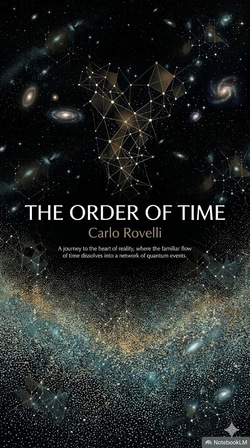
Carlo Rovelli’s *The Order of Time* shatters our everyday assumptions about time, revealing a far stranger, more nuanced reality than the steady tick of a clock. Starting with Einstein’s relativity, he proves time isn’t universal—gravity slows its flow near massive objects, speed warps it at high velocities, and no single "now" exists across the cosmos. He then turns to thermodynamics, explaining how entropy (the measure of disorder) creates time’s irreversible arrow, rooted in Ludwig Boltzmann’s groundbreaking work linking entropy to molecular chaos. Moving to quantum gravity, Rovelli argues time is discrete, made of tiny "time atoms" called Planck time, and the universe is a network of fleeting events rather than static objects. Finally, he bridges cosmic physics and human experience, exploring how memory, perception, and our limited perspective shape the time we feel every day.

MemoryEntropyTime DilationGeneral RelativityQuantum Gravity
Austerlitz
Loading…

Austerlitz

W. G. Sebald

4.5974 learners

Spanning decades of chance encounters, W.G. Sebald’s *Austerlitz* follows the quiet, obsessive journey of its eponymous protagonist, an art historian haunted by a fragmented past. What begins as meandering conversations about architecture—from Antwerp’s grand colonial-era train station to London’s labyrinthine subway systems—unfolds into a profound reckoning with identity. Austerlitz, raised in Wales by Calvinist missionaries, gradually uncovers his hidden origins: a Jewish boy sent to Britain on a Kindertransport during WWII, separated from his parents who perished under Nazi rule. Sebald weaves together architectural analysis, philosophical meditations on time, and raw, suppressed trauma, framing buildings as silent witnesses to history’s atrocities. The novel blurs the line between memory and reality, inviting readers to confront the lingering weight of unspoken grief and the ways the past infiltrates the present. More than a story of personal discovery, it’s a haunting exploration of how history is etched into the spaces we inhabit and the lives we lead.

Time PerceptionTraumatic MemoryArchitectural HistoryNazi PersecutionIdentity Reclamation
The Ministry of Pain
Loading…

The Ministry of Pain

Dubravka Ugrešić

4.2834 learners

Set in 1990s Amsterdam, *The Ministry of Pain* follows a Croatian literature professor exiled from war-torn Yugoslavia as she teaches Serbian-Croatian to a ragtag group of fellow exiles—refugees, draft dodgers, and survivors clinging to legal residency. Together, they navigate the disorientation of displacement: grappling with shattered identities, the absurdity of a language split into three official tongues overnight, and the quiet trauma of a lost nation. Through classroom conversations, late-night café gatherings, and shared memories of Yugoslavia’s everyday joys and wartime horrors, the group confronts the weight of their past—from Uroš’s devastating suicide tied to his father’s war crimes trial to the hollow justice of the Hague Tribunal. As the professor clashes with her student Igor and faces her own unraveling, the novel lays bare the messy, painful reality of exile: how memory binds and breaks, how language becomes both a lifeline and a weapon, and how survivors carry the scars of a shattered home long after the guns fall silent.

Identity CrisisYugoslav exileswar traumalanguage fragmentationcollective memory
The Interpretation of Dreams
Loading…

The Interpretation of Dreams

Sigmund Freud

4.3770 learners

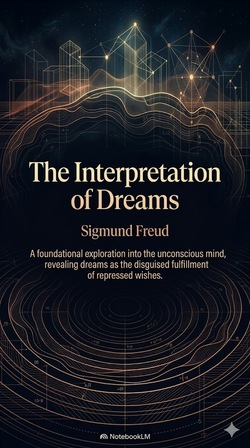
Sigmund Freud’s seminal work *The Interpretation of Dreams* revolutionizes the study of dreams by rejecting outdated, superstitious or superficial approaches to unlock the hidden workings of the human subconscious. Freud introduces his groundbreaking theory that dreams are not random, meaningless occurrences but disguised fulfillments of repressed wishes—often rooted in childhood memories, sexual instincts, or unacknowledged conflicts. Using his own 'Irma’s Dream' as a case study, he demonstrates how to decode dreams through free association, breaking down key mechanisms like condensation (compressing complex ideas into simple images), displacement (shifting emotional intensity to trivial details), and symbolism (using universal or personal imagery to represent hidden desires). He also analyzes common 'typical dreams'—such as nudity, falling, or losing teeth—revealing their deep psychological roots. More than a guide to dream analysis, this book lays the foundation for psychoanalysis, offering a transformative lens to understand human behavior, unresolved trauma, and the quiet forces shaping our waking lives.

Oedipus ComplexWish FulfillmentSubconscious DesireDream InterpretationDream Condensation
The Whole-Brain Child
Loading…

The Whole-Brain Child

Daniel J. Siegel;Tina Payne Bryson

4.5719 learners

Written by child development experts Daniel J. Siegel and Tina Payne Bryson, *The Whole-Brain Child* translates cutting-edge neuroscience into accessible, actionable parenting strategies. At its core is the concept of 'brain integration'—helping kids coordinate the different regions of their developing brains to foster emotional regulation, sound decision-making, and strong social connections. The book breaks down key brain functions: left-right brain coordination to balance logic and emotion, upper-lower brain integration to manage impulsive reactions, and bridging implicit and explicit memories to heal past hurts. It also introduces the 'Seven Senses' and 'Wheel of Awareness' tools to help kids build self-awareness and empathy, guiding them from a self-focused 'me' mindset to a collaborative 'we' perspective. Packed with real-life parenting anecdotes, this book empowers caregivers to understand their child’s behavior through a brain-based lens, turning daily challenges into opportunities to shape a resilient, mentally healthy child.

Emotional RegulationMirror NeuronsBrain IntegrationLeft-Right Brain CoordinationUpper-Lower Brain Integration
The Only Story
Loading…

The Only Story

Julian Barnes

4.6709 learners

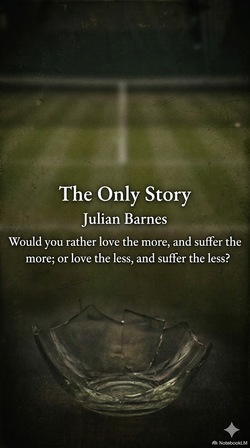
Set in 1960s suburban England, *The Only Story* centers on 19-year-old Paul’s reckless, forbidden love affair with Susan, a married woman nearly three decades his senior. Defying the judgment of family, friends, and their tight-knit community, the pair find solace in each other—Paul escaping his suffocating, rule-bound upbringing, Susan fleeing a loveless, abusive marriage to Gordon. What begins as a passionate, rebellious refuge soon unravels as Susan spirals into alcoholism and crippling depression, her trauma and self-destruction testing their bond beyond repair. Decades later, Paul reflects on the chaos of that defining love, his lingering guilt, and the quiet, unassuming life he’s built selling cheese at a local market. Julian Barnes crafts a raw, intimate portrait of love as both salvation and ruin, exploring how unhealed pain can erode even the most intense connections, and how we carry the ghosts of our past long after they’ve faded.

SusanMay-December romanceescape funddomestic abusealcoholism
Solaris
Loading…

Solaris

Stanislaw Lem

4.5676 learners

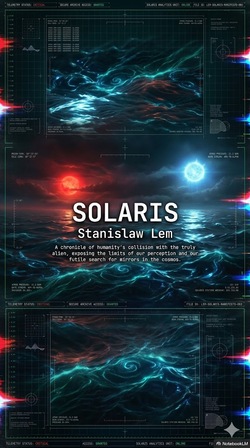
Sent to investigate the unraveling chaos aboard the Solaris space station, psychologist Kris Kelvin arrives to find his colleagues fraying—and a ghost from his past waiting: Hari, his late wife, materialized by the planet’s sentient ocean. As Kelvin grapples with conflicting longing and terror toward this uncanny replica, he uncovers the ocean’s terrifying ability: it digs into the crew’s deepest, repressed memories and brings them to life as physical entities. What follows is a haunting exploration of human guilt, grief, and the futility of trying to understand an alien intelligence that operates beyond all human frameworks. Stanisław Lem’s sci-fi classic challenges our assumptions about interstellar communication, forcing readers to confront that some mysteries may never be solved—and that the greatest alien we’ll ever encounter might be the one we carry within ourselves.

alien intelligenceSolaris OceanMemory ProjectionsSpace Station CrewKris Kelvin
The Rings of Saturn
Loading…

The Rings of Saturn

W.G. Sebald

4.5667 learners

Set against the windswept coast of Suffolk, W.G. Sebald’s *The Rings of Saturn* unfolds as a meandering, meditative walk through time, memory, and decay. As Sebald traverses desolate marshes, crumbling manors, and ghostly coastal towns, his journey weaves together fragments of forgotten history, literary ghosts, and intimate encounters. He delves into the life of Thomas Browne, whose skull was exhumed and reburied decades after death; Joseph Conrad’s formative years in Lowestoft, where he found his voice in English; and Edward FitzGerald’s reclusive life translating the Rubaiyat. Along the way, he confronts the collapse of herring populations, the scars of war and colonialism, and the quiet erosion of nature—from dying forests to abandoned radar stations. Blending travelogue, biography, and philosophical reflection, the book captures the haunting weight of time, where the past lingers in every ruin, every fading memory, and every stretch of desolate shore.

Silk Industrycollective memorySuffolk CoastThomas BrowneJoseph Conrad
Night Submarine
Loading…

Night Submarine

Chen Chuncheng

3.5549 learners

Night Submarine, the debut short story collection from Chinese writer Chen Chuncheng, weaves intimate, surreal tales that blur the line between dream and everyday life. Each story is a quiet dive into the hidden corners of human imagination: a boy who spends his nights commanding a tiny submarine through the rivers of his mind, an elderly scribe guarding a lost language buried in ancient texts, a man who stumbles upon a temple holding secrets tied to his forgotten childhood. Rooted in lyrical prose and gentle whimsy, these narratives explore themes of memory, time, and the quiet magic that lingers in ordinary moments. Perfect for readers who crave stories that feel like half-remembered dreams, it invites you to slow down and rediscover the wonder hiding in the mundane.

MemoryTime PerceptionImaginationNight SubmarineZhufeng Temple
Only the Paranoid Survive
Loading…

Only the Paranoid Survive

Andy Grove

4546 learners

In *Only the Paranoid Survive*, legendary Intel CEO Andy Grove distills decades of high-stakes leadership into a playbook for navigating business and personal upheaval. Grove argues that complacency is a company’s greatest enemy—paranoia, paired with relentless vigilance, is the key to spotting "strategic inflection points": seismic shifts in industry rules, technology, or customer demand that can catapult an organization to new heights or seal its fate. Drawing on Intel’s near-death experience in the 1980s, when Japanese memory chipmakers forced the company to abandon its core business and pivot to microprocessors, he breaks down how to identify early warning signals, cut through organizational inertia, and execute painful but necessary strategic changes. Beyond corporate strategy, Grove extends the framework to personal careers and health, urging readers to act as their own CEOs: scan for disruptive trends, test new paths, and make bold decisions before crisis hits. This book isn’t just about surviving—it’s about turning chaos into competitive advantage.

core competenceStrategic Inflection PointsParanoia in ManagementHorizontal Industry ModelIntel’s Memory-to-Microprocessor Pivot
Gulag: A History
Loading…

Gulag: A History

Anne Applebaum

4.2509 learners

Anne Applebaum’s *Gulag: A History* is a definitive, unflinching account of the Soviet Union’s sprawling forced labor camp system, tracing its origins from post-1917 revolutionary repressions to its collapse in the late 20th century. Starting with repurposed WWI POW camps and Lenin’s directives to detain "unreliable elements," the book chronicles the Gulag’s evolution from a political tool to a core pillar of Stalin’s industrialization drive—epitomized by the deadly White Sea Canal project, where over 2.5 prisoners died. It exposes the horrors of the Great Purge, where millions were arbitrarily arrested, tortured, and sent to remote camps, as well as the system’s expansion during WWII, when foreign POWs and occupied-region civilians were added to its ranks. Applebaum also details the Gulag’s decline after Stalin’s death, driven by reforms, prisoner uprisings, and international pressure, and explores its enduring legacy in Russian society’s fractured memory of totalitarianism.

Historical MemoryTotalitarianismPolitical PrisonersGulag SystemSoviet Forced Labor
Insight

Identity is a Pattern

Your identity isn’t tied to body atoms—it’s the pattern of memories, beliefs, traits. This pattern can live in others (like loved ones in your mind).

MemoryIdentityPattern