
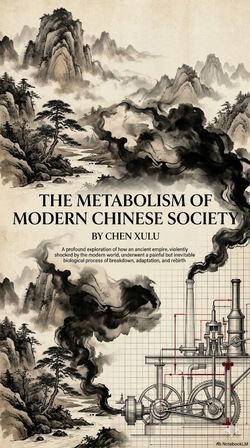
The Metabolism of Modern Chinese Society
This book dissects the profound 'metabolism' of Chinese society from the late feudal era through the turbulent 19th and early 20th centuries. Starting with a deep dive into the rigid yet resilient structure of China’s 2,000-year feudal system—its small-scale peasant economy, centralized bureaucracy, and Confucian ideology—it contrasts China’s stagnation with Western Europe’s rapid capitalist rise. It then traces how the Opium War shattered the old order, triggering a cascade of transformations: the Taiping Rebellion’s challenge to feudal norms, the Self-Strengthening Movement’s tentative modernization efforts, the Hundred Days’ Reform’s push for institutional change, and the Xinhai Revolution’s overthrow of the monarchy. The narrative culminates in the New Culture Movement’s intellectual awakening and the eventual rise of Marxism, explaining how each wave of change interacted with foreign pressures and internal uprisings to reshape China’s social fabric. Packed with vivid historical details and sharp analysis, it reveals the complex, often contradictory forces that drove China’s transition from a traditional empire to a modern nation.