The Ego and the Id
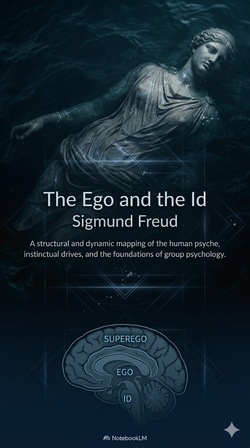
Sigmund Freud’s *Ego & Id* lays the foundational framework for modern psychoanalytic theory, unpacking the hidden structures of the human mind and the primal forces driving behavior. Freud breaks down mental life into three interconnected components: the id, the raw, pleasure-seeking reservoir of instincts; the ego, the rational mediator between the id’s demands and external reality; and the superego, the internalized moral compass shaped by childhood experiences. Beyond this tripartite model, the book explores the tension between the pleasure principle and the compulsion to repeat, delves into the libido-fueled dynamics of group psychology, and examines how repressed instincts and unconscious conflicts manifest in neuroses. Drawing on clinical case studies and evolutionary insights, Freud challenges conventional views of consciousness, arguing that most mental activity operates outside our awareness. This seminal work not only revolutionized psychology but also provided a lens to understand human motivation, relationships, and the roots of psychological distress.