Sex For Dummies, 3rd Edition
Loading…

Sex For Dummies, 3rd Edition

Ruth K. Westheimer;Pierre A. Lehu

4.11414 learners

Sex For Dummies, 3rd Edition (2006) is your go-to, no-nonsense guide to navigating every aspect of sexual health, intimacy, and relationships. Packed with accessible, evidence-based insights, it breaks down complex topics—from the Masters & Johnson four-stage sexual response cycle to safe sex practices, sexual orientation, and aging-related sexual changes—into easy-to-understand language. Whether you’re exploring your own body, addressing common concerns like erectile dysfunction or vaginal dryness, debunking myths (such as the obsession with penis size), or learning to strengthen relationship intimacy, this book empowers you to make informed, confident choices. It also covers critical areas like disability and sexuality, legal boundaries around sex, and healthy communication with partners, balancing practical advice with empathy to ensure no question feels off-limits.
Sexual OrientationSexual Response CycleSafe Sex PracticesKegel ExercisesSexually Transmitted Infections (STIs)
The Metamorphoses of Ovid, Vol. I: Books I-VII
Loading…

The Metamorphoses of Ovid, Vol. I: Books I-VII

Ovid

4.21401 learners

Dive into the first seven books of Ovid’s timeless epic *The Metamorphoses*, a sweeping tapestry of Greek and Roman mythology that weaves tales of creation, divine wrath, tragic love, and irreversible transformation. Witness the primordial chaos give way to a structured universe, where gods separate sky, land, sea, and air before shaping the first humans through Prometheus and Minerva. Trace humanity’s decline across four ages—from the idyllic Golden Age to the corrupt Iron Age—culminating in Zeus’s devastating flood that leaves only Deucalion and Pyrrha to repopulate the world by throwing stones that become people. Explore iconic stories: Apollo’s unrequited love turning Daphne into a laurel tree, Narcissus’s fatal obsession with his reflection becoming a flower, Medea’s ruthless revenge against Jason, and Perseus’s heroic defeat of Medusa. Ovid uses shape-shifting to probe power dynamics, passion, and the thin line between gods and mortals, creating a narrative that has enthralled readers for over two millennia.

Golden AgeMetamorphosisOlympian GodsPrometheusDeucalion
Bryce Courtenay (5)
Loading…

Bryce Courtenay (5)

Bryce Courtenay

41389 learners

Bryce Courtenay’s fifth installment delivers a warm, unflinching dive into the later chapters of his extraordinary life. Drawing from his South African childhood, his transformative move to Australia, and decades as a beloved storyteller, this collection weaves intimate memoirs and reflective tales that capture the quiet triumphs and gentle heartaches of growing older. Courtenay’s signature vivid prose brings to life moments of family bonding, creative struggle, and hard-won wisdom, inviting readers to see their own life journeys through a new, compassionate lens. Whether you’re a long-time fan or discovering his work for the first time, this book offers heartfelt insights that resonate with anyone navigating change, cherishing memories, or seeking meaning in life’s unscripted moments.

life wisdomBryce CourtenaySouth African childhoodAustralian lifeFamily memoirs
Freakonomics
Loading…

Freakonomics

Steven D. Levitt;Stephen J. Dubner

4.51372 learners

Freakonomics, by Steven D. Levitt and Stephen J. Dubner, upends conventional wisdom by applying data-driven economic analysis to everyday mysteries. The book unpacks hidden motives behind seemingly ordinary behaviors: why a $3 daycare fine doubled late pickups (replacing moral guilt with a cheap "service"), how Stetson Kennedy dismantled the KKK by exposing its secret rituals to the public, and why low-level drug dealers earn less than minimum wage despite the gang’s violent reputation. It also dives into counterintuitive truths—like how 1973's Roe v. Wade contributed to the 1990s crime drop, and why parenting "hacks" have far less impact on kids than peer groups do. Blending quirky case studies with rigorous research, Freakonomics teaches readers to look beyond surface-level assumptions and recognize the incentives shaping every choice, big or small.

Parenting MythsInformation AsymmetryMotive AnalysisIncentive StructuresCrime Rate Trends
Notes from a Small Island
Loading…

Notes from a Small Island

Bill Bryson

4.41370 learners

After over two decades calling the UK home, Bill Bryson sets off on a hilarious, bittersweet farewell tour across the small island that stole his heart—starting with the awkward foggy night he first arrived in Dover back in 1973, broke and sleeping on a bench. From London’s chaotic streets and quirky taxi drivers to the rolling hills of the Cotswolds, the wild beauty of the Lake District, and the remote corners of northern Scotland, Bryson captures every weird, wonderful, and deeply human detail of British life. He rants about baffling bus schedules, homogenized high streets, and the eternal mystery of Marmite, while celebrating quiet acts of kindness, stubbornly preserved traditions, and the unshakable charm of a nation that’s equal parts frustrating and endearing. This is more than a travelogue; it’s a love letter to the UK, packed with laugh-out-loud anecdotes and heartfelt observations that will resonate with anyone who’s ever fallen for a place that feels like home.

George OrwellTravel MemoirLake DistrictSalisbury CathedralBritish Humor
Low-Risk Entrepreneurship
Loading…

Low-Risk Entrepreneurship

Fan Deng

3.11369 learners

"Low-Risk Entrepreneurship" by Fan Deng pulls back the curtain on why so many entrepreneurs fall into unnecessary high-risk traps, starting with how childhood experiences and personality traits unconsciously drive self-sabotaging decisions. It lays out a practical framework for building sustainable, profitable businesses by focusing on elegant solutions to real social problems—turning customer complaints into actionable opportunities, distinguishing true pain points from superficial needs, and avoiding the inventor’s trap of prioritizing tech over user demand. The book emphasizes building uncopyable "core secrets" as competitive barriers, designing antifragile structures to thrive amid uncertainty, and adopting biological team management to unlock collective creativity. It also introduces the MGM (Member Gets Member) model for organic customer growth and breaks down strategies for exponential scaling by leveraging zero-marginal-cost operations and shared resources. Packed with real-world case studies from Tencent, Google, and Airbnb, this guide equips aspiring and existing entrepreneurs to build successful ventures without gambling their livelihoods.

AntifragilityExponential GrowthLow-Risk EntrepreneurshipValue HypothesisMGM Growth Model
The Metamorphosis
Loading…

The Metamorphosis

Franz Kafka

4.51343 learners

Franz Kafka’s *The Metamorphosis* is a haunting, surreal masterwork that lays bare the quiet cruelty of alienation and family duty. When traveling salesman Gregor Samsa wakes up one morning trapped in the body of a giant beetle, his world collapses—not just because of his physical transformation, but because of his family’s shifting reactions. At first, his mother, father, and sister show tentative concern, but as Gregor can no longer work to support their debt-ridden household, their care curdles into disgust and resentment. Trapped in his room, Gregor grapples with his loss of identity, his unfulfilled dreams (like sending his sister to music school), and the slow erosion of the love he once took for granted. Kafka’s sparse, visceral prose turns this absurd premise into a raw meditation on what it means to be seen, valued, and discarded in a world that reduces people to their productivity. By the story’s tragic end, Gregor’s death brings his family a twisted sense of relief, forcing readers to confront the harsh truth of how easily we can become invisible to those we love most.

Alienationexistential despairGregor SamsaMetamorphosisFamily Obligation
The Science of Distributing Wealth
Loading…

The Science of Distributing Wealth

Bian Zhihan

41328 learners

The Science of Distributing Wealth by Bian Zhihan demystifies the complex economic and social mechanisms shaping how wealth is divided across societies. Blending rigorous data analysis, historical case studies, and actionable policy insights, this book moves beyond ideological debates to present evidence-based approaches to balancing economic efficiency and social equity. It examines successful models from around the world—from Nordic welfare systems to targeted U.S. policy reforms—while dissecting root causes of growing wealth gaps, including inheritance structures, tax policies, and access to education. Designed for both economics enthusiasts and policymakers, it breaks down technical concepts into accessible language, offering practical strategies to build more sustainable and fair wealth distribution systems. Whether you’re curious about reducing inequality or understanding the science behind equitable growth, this book provides a comprehensive roadmap to navigate one of today’s most pressing global challenges.

Social MobilityWealth Distribution ModelsProgressive TaxationGini CoefficientInheritance Tax
Quit
Loading…

Quit

Annie Duke

3.91322 learners

Annie Duke’s *Quit* upends the cultural myth that persistence equals success, arguing that knowing when to walk away is the unsung skill of high achievers. Drawing on real-world examples—from 1996 Everest climbers who survived by abandoning their summit goal to Stewart Butterfield’s pivot from failed games to create Slack—Duke breaks down the cognitive biases that trap us in unproductive paths: loss aversion, sunk cost fallacy, endowment effect, and the fear of losing our identity tied to a project or role. She provides actionable tools to make rational quitting decisions, including calculating expected value, setting pre-defined ending criteria, and using the 'Monkey & Pedestal' model to focus on core, unsolvable problems first. Duke also emphasizes the power of active exploration, urging readers to avoid complacency and keep backup options open, so they can pivot proactively instead of waiting for crisis to force a change. This book is a roadmap to navigating uncertainty, cutting losses, and redirecting energy toward opportunities that truly align with your goals.

Loss AversionExpected Value CalculationSunk Cost FallacyEnding CriteriaMonkey & Pedestal Model
The Aquariums of Pyongyang
Loading…

The Aquariums of Pyongyang

Chol-hwan Kang;Pierre Rigoulot

4.41318 learners

In The Aquariums of Pyongyang, Kang Chol-Hwan shares his searing firsthand account of growing up in 1960s Pyongyang—where his family lived in luxury as privileged Japanese-Korean returnees, revering Kim Il-sung as a god-like figure—before their world collapsed. At 11, his grandfather was falsely accused of treason, and the entire family was sent to Yodok, North Korea’s brutal political prison camp. For 10 years, Kang endured starvation, forced labor, psychological torture, public executions, and a dehumanizing system that pitted prisoners against each other to survive. He vividly describes the slow erosion of his childhood innocence and the unyielding will to live that kept him going. After his release in 1987, he navigated a broken North Korean society, eventually risking everything to escape to China and then South Korea. This memoir is a powerful testament to the horrors of totalitarian oppression and the human spirit’s relentless quest for freedom.

FreedomPolitical PersecutionTotalitarianismfamily separationYodok Concentration Camp
A Man for All Markets
Loading…

A Man for All Markets

Edward O. Thorp

4.11307 learners

Edward O. Thorp’s memoir, *A Man for All Markets*, is a riveting journey of how a numbers-obsessed kid turned math into a superpower—first beating Las Vegas casinos at their own game, then revolutionizing Wall Street with the first quantitative hedge funds. Raised during the Great Depression, Thorp honed his love for experiments and critical thinking early on, cracking 21-point with a card-counting strategy that proved the “unbeatable” game could be won with logic. He teamed up with Claude Shannon to build a wearable computer predicting roulette outcomes, then brought his data-driven approach to finance, founding Princeton-Newport Partners, a hedge fund that delivered consistent returns even during market crashes. Along the way, he exposed Bernie Madoff’s Ponzi scheme years before it collapsed, shared hard-won lessons on compound interest, index funds, and risk management, and reflected on using wealth to fund stem cell research and education. More than a memoir, it’s a playbook for rational decision-making, showing how math and discipline can turn odds in your favor—whether at the casino or in the stock market.

Index FundsQuantitative InvestingCompound interestPonzi SchemeCard Counting
The Realm of the Heart
Loading…

The Realm of the Heart

Ji Qi

3.61306 learners

From a mechanical engineering student who delved into Western philosophy before embracing Eastern thought in mid-life, Ji Qi shares a profound fusion of cross-cultural wisdom, hard-won entrepreneurial insights, and intimate life reflections in *The Realm of the Heart*. Tracking his journey founding three publicly traded giants—Ctrip, Home Inns, and H World Group—he unpacks the core logic of building scalable, resilient businesses, from navigating market gaps to balancing speed and strength. Beyond boardrooms, he bridges scientific principles (from relativity to entropy) with philosophical ideas (Buddhism, Taoism, Western existentialism) to explore life’s deepest questions: the interconnectedness of all beings, the illusion of time, and the pursuit of a peaceful, purposeful existence. Blending practical business strategies with spiritual introspection, this book offers a unique lens for anyone seeking to align professional success with personal fulfillment.

Gödel’s Incompleteness TheoremLife PurposeH World GroupEast-West Philosophical FusionEntrepreneurial Strategy
Everything is a Contract
Loading…

Everything is a Contract

Nie Huihua

3.81306 learners

"Everything is a Contract" redefines how we navigate the world by framing every economic and social relationship as a contract—from job offers and corporate mergers to marriages and government regulations. Drawing on relatable real-world examples, from Tesla’s CEO compensation structure to Haidilao’s failed KPI experiments and Geely’s successful Volvo acquisition, this book breaks down core contract theory concepts like information asymmetry, incentive compatibility, and moral hazard. It explains why cash rewards sometimes kill intrinsic motivation, how to fix unfair performance ratcheting in the workplace, and why most corporate mergers fall apart. Whether you’re navigating office politics, running a business, or managing personal relationships, this book provides a rational decision-making framework to cut through complexity and make smarter choices aligned with your goals.

Moral HazardInformation AsymmetryContract TheoryIncentive CompatibilityAdverse Selection
Successes and Failures of Historical Economic Reforms
Loading…

Successes and Failures of Historical Economic Reforms

Wu Xiaobo

4.21305 learners

This book traces 2,000 years of Chinese economic reforms, starting with Guan Zhong’s groundbreaking pro-commerce policies in the Spring and Autumn Period and contrasting them with Shang Yang’s state-led, agriculture-focused reforms that laid the groundwork for Qin’s unification. It unpacks the enduring cycle of Chinese economic governance: balancing growth through liberalizing private sectors and maintaining stability via centralization, exemplified by Emperor Wu of Han’s state monopolies, Wang Anshi’s controversial state-led reforms, and the stagnation of Ming-Qing isolationism. Moving to modern times, it analyzes the failures of the late Qing’s Self-Strengthening Movement, the Nationalist government’s state capitalism, and the radical experiments of planned economy, before diving into the pragmatic 'crossing the river by feeling the stones' of China’s reform and opening up. Through these case studies, it reveals the recurring tensions between state control and market freedom, offering critical lessons for understanding China’s economic trajectory and its ongoing challenges.

Guan ZhongShang YangSalt-Iron FranchiseState-Owned MonopolyEconomic Governance Cycle
Great by Choice
Loading…

Great by Choice

Jim Collins;Morten T. Hansen

4.11303 learners

Over 9 years, Jim Collins and Morten Hansen analyzed companies that flourished amid extreme uncertainty—from market crashes and 9/11 to rapid tech disruption—to uncover what sets "10x companies" apart: firms that outperformed their industry by 10x or more, even when chaos seemed unavoidable. Shattering myths that success depends on visionary foresight, relentless innovation, or sheer luck, their research reveals that 10x leaders rely on three core pillars: strict discipline, evidence-based creativity, and constructive paranoia. They break down actionable strategies like the 20 Mile March (steady, consistent growth regardless of conditions), the Bullet-Then-Cannon approach (low-risk tests before big bets), and SMaC Methods (specific, consistent operating rules). This playbook proves excellence isn’t about predicting the future, but about building resilience and making disciplined, data-driven choices to take control of your destiny in an unpredictable world.

10x Companies20 Mile MarchSMaC MethodBullet-Then-Cannon StrategyConstructive Paranoia
Muskets and Ledgers
Loading…

Muskets and Ledgers

Li Boyong

31303 learners

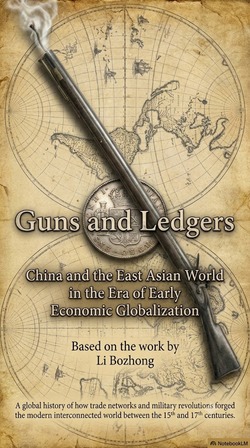
From the rise of global history as a field to the untold story of early economic globalization, *Muskets and Ledgers* redefines how we view pre-17th-century East Asia. Moving beyond traditional nation-state narratives, this book weaves together two powerful forces: the spread of firearm technology (the "muskets") and interconnected global trade networks built on silver and merchant enterprise (the "ledgers"). It debunks the myth of Ming-era Chinese isolationism, revealing China as the linchpin of early global commerce—by the 18th century, half the world’s silver flowed into its coffers. The text explores shifting East Asian cultural spheres, the crippling border crises facing the late Ming, and the mixed successes of its military reforms: innovations that later propelled the Qing Dynasty to dominance, only to stagnate and set the stage for 19th-century decline. Packed with vivid case studies, from the Manila Galleon trade to the Sino-Japanese Korean War, it offers a sharp, timely look at globalization’s dual nature of opportunity and conflict.

Qing DynastyEarly Economic GlobalizationFirearm TechnologySilver TradeLate Ming Dynasty
Station Eleven
Loading…

Station Eleven

Emily St. John Mandel

4.21301 learners

Set against the backdrop of a devastating global flu pandemic that collapses modern civilization, *Station Eleven* weaves interconnected stories across time and space. On the night the world ends, actor Arthur Leander collapses mid-performance of *King Lear* in Toronto, leaving a young Kirsten Raymonde adrift in a chaotic new reality. Twenty years later, Kirsten is a core member of the Traveling Symphony, a ragtag group that roams the Great Lakes region performing Shakespeare and classical music to sustain hope among survivors. Parallel threads follow Arthur’s ex-wife Miranda, whose sci-fi comic *Station Eleven* becomes a post-apocalyptic touchstone, and Clark Thompson, who builds a fragile community at a Michigan airport turned sanctuary. The novel explores how art, memory, and human connection endure even when all else is lost, framing survival not just as staying alive, but as clinging to the fragments of the world that make life worth living.

Georgia FluTraveling Symphony*Station Eleven* ComicArthur LeanderKirsten Raymonde
New Structural Economics
Loading…

New Structural Economics

Justin Yifu Lin

4.41300 learners

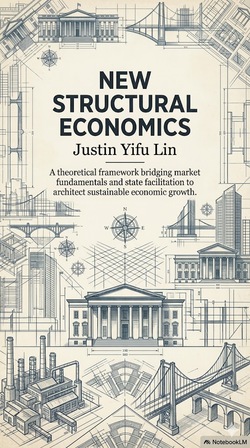
Developed by Justin Yifu Lin, *New Structural Economics* redefines how developing nations achieve sustainable, inclusive growth by moving past failed ideologies of either heavy government intervention or unfettered market liberalization. At its core, the theory argues that a country’s optimal industrial structure is determined by its unique factor endowment structure—land, labor, capital, and infrastructure. By aligning industries with these inherent strengths, firms gain competitive viability, generate economic surpluses, and accelerate capital accumulation to drive gradual industrial upgrading. The book introduces the Growth Identification and Facilitation Framework (GIFF), a step-by-step tool for governments to identify promising industries, address bottlenecks like poor infrastructure or limited financing, and support pioneer firms without distorting markets. Real-world case studies, including Nigeria’s economic transition and East Asia’s rapid growth, illustrate how balancing market efficiency with targeted government guidance can unlock catch-up advantages, reduce poverty, and create stable employment.

Comparative AdvantageFirm ViabilityIndustrial UpgradingFactor Endowment StructureDevelopment Strategy
Good to Great
Loading…

Good to Great

Jim Collins

4.41300 learners

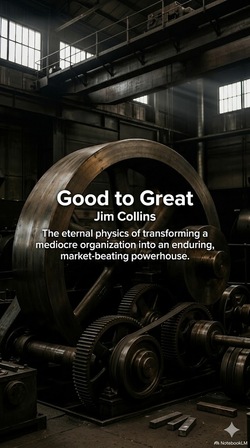
Over five years, Jim Collins and his team analyzed 1435 Fortune-ranked companies to uncover why most businesses stay trapped in "good" instead of reaching "great." Their research shatters common myths—like hiring celebrity CEOs or chasing flashy tech as quick fixes—and proves that lasting transformation starts from within. Key game-changing frameworks drive the shift: Level 5 Leaders, humble yet fiercely determined executives who prioritize organizational success over personal glory; the "First Who Then What" principle, which places hiring the right people before setting strategy; the Stockdale Paradox, balancing unwavering faith with brutal honesty about reality; the Hedgehog Concept, focusing on the intersection of what you can do best, what drives profit, and what ignites passion; and the Flywheel Effect, building momentum through consistent, aligned actions until breakthrough hits. This actionable playbook gives any organization the tools to ditch complacency and build enduring excellence.

Stockdale ParadoxCore CompetenciesLevel 5 LeadershipFirst Who Then WhatHedgehog Concept
How Forests Think
Loading…

How Forests Think

Eduardo Kohn

4.31299 learners

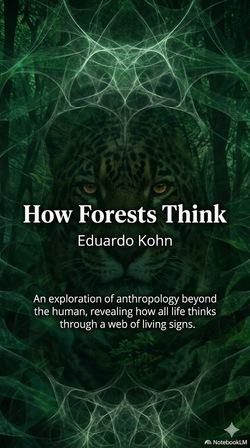
Drawing on years of immersive fieldwork with the Runa people of the Ecuadorian Amazon, Eduardo Kohn’s *How Forests Think* dismantles long-held human-centric assumptions by exploring the semiotic lives of non-human beings. Rooted in Charles Peirce’s theory of iconic, indexical, and symbolic signs, Kohn argues that thinking isn’t a uniquely human trait: forests, animals, plants, and even ancestral spirits engage in dynamic semiotic processes to construct selves, navigate relationships, and shape the world around them. He unpacks core concepts like "constitutive absence," where meaning emerges from what’s not present, and examines the Runa’s animist worldview, their nuanced cross-species communication with dogs and jaguars, and how colonial history has reshaped their interactions with the natural world. Blending anthropology, philosophy, and ecology, this book invites readers to step beyond human boundaries, recognize the interconnected web of all life, and rethink what it means to "think" in an era of escalating ecological crisis.

Peircean semioticsRuna peopleconstitutive absenceforest thoughttrans-species communication