From the Opium War to the May Fourth Movement
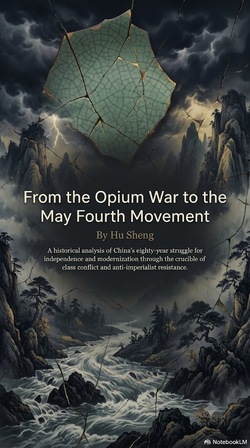
This sweeping narrative traces China’s turbulent transformation from a stagnant feudal empire to a nation grappling with semi-colonial rule, spanning from the 1840 Opium War to the 1919 May Fourth Movement. Hu Sheng dissects pivotal events: the Opium War that shattered imperial isolation, the Taiping Rebellion’s radical peasant uprising, the Self-Strengthening Movement’s failed efforts to modernize without systemic change, the First Sino-Japanese War’s devastating defeat that fueled partition fears, the short-lived Hundred Days’ Reform, the Boxer Rebellion’s violent anti-foreign backlash, and the Xinhai Revolution that toppled the Qing Dynasty. Culminating in the May Fourth Movement—where workers, students, and intellectuals united to demand national sovereignty and cultural renewal—the book illuminates how each crisis pushed China closer to awakening, laying the groundwork for the country’s revolutionary turn toward communism. It offers a rigorous, accessible account of how external aggression and internal upheaval reshaped China’s identity and set the stage for 20th-century revolution.