
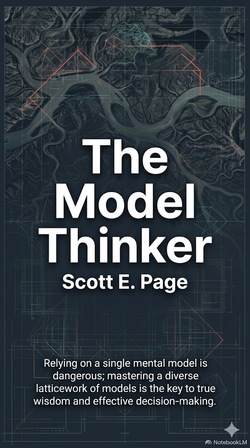
The Model Thinker
Loading…

The Model Thinker

Scott E. Page

41168 learners

Written by Scott E. Page, *The Model Thinker* introduces a transformative framework for navigating the world’s complexity: multi-model thinking. Rejecting the limitations of single perspectives, Page argues that combining diverse models—spanning economics, statistics, game theory, and social sciences—unlocks a more nuanced understanding of real-world problems. The book guides readers through foundational concepts, core models (from normal distributions to system dynamics), and practical applications, using case studies like the U.S. opioid crisis and income inequality to demonstrate how multiple models can reveal hidden mechanisms and inform smarter decisions. It outlines seven key uses of models, from explanation to prediction, and addresses both the strengths and limitations of multi-model thinking, emphasizing that even a dozen well-chosen models can enhance reasoning, communication, and decision-making. Page also provides actionable strategies for integrating these models into daily life, making this book an essential toolkit for professionals, students, and anyone seeking to cut through confusion and make more informed choices.

Path DependenceCollective ActionReinforcement LearningGame TheorySystem Dynamics
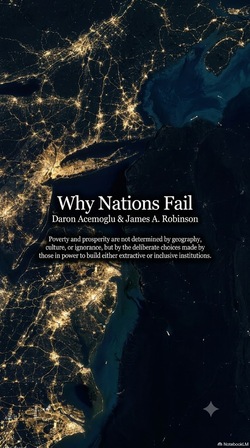
Why Nations Fail
Loading…

Why Nations Fail

Daron Acemoglu;James A. Robinson

4.6996 learners

Why Nations Fail dismantles pervasive myths about global inequality—from geographic determinism to cultural stereotypes—and argues that the root of national prosperity or poverty lies in institutional systems. Using vivid case studies, from the divided border city of Nogales (where U.S. inclusive systems drive wealth while Mexican extractive ones trap poverty) to the rise and fall of Venice, the book contrasts two core models: inclusive systems, which distribute power broadly, protect property rights, and encourage innovation, and extractive systems, which concentrate power in elite hands, exploit the majority, and stifle progress. It explores how historical path dependence amplifies small initial institutional differences over time, creating self-reinforcing cycles of prosperity or stagnation, and shows that breaking extractive cycles requires grassroots empowerment and institutional reform, not top-down fixes or foreign aid.

Path DependenceProperty RightsColonial LegacyExtractive InstitutionsEconomic inequality
Institutions, Institutional Change and Economic Performance
Loading…

Institutions, Institutional Change and Economic Performance

Douglass C. North

4.4741 learners

Douglass C. North’s seminal work redefines our understanding of economic success by centering institutions—the formal rules (laws, constitutions) and informal constraints (norms, cultural traditions) that structure human political, economic, and social interaction. Departing from neoclassical economics’ frictionless market assumptions, North argues transaction costs (which account for over 45% of U.S. national income) and institutional frameworks are the true drivers of long-term economic performance. He unpacks three core puzzles: why institutional change deeply impacts economic outcomes, why inefficient institutions persist despite competitive pressures, and why nations diverge into growth or stagnation paths due to path dependence. Using real-world examples—from 19th-century America’s rise to Latin America’s stalled development, and the QWERTY keyboard’s lock-in effect—North explains how organizations shape and are shaped by institutions, and introduces adaptive efficiency as the key to sustained prosperity. This cornerstone of new institutional economics provides a framework to explain global economic disparities and guide policy.

Path DependenceProperty RightsInstitutional changeTransaction costsFormal constraints
Insight

Carbon Lock-in Challenge

China’s industrial system is stuck in high-carbon due to existing tech/infrastructure, making transition hard.

Path DependenceIndustrial StructureTransition Barriers
Insight

Path-Dependent Industry Evolution

Countries expand industries based on existing knowledge, extending to adjacent products.

Path DependenceIndustry Evolution
Insight

Path Dependence in Salt Policy

Qing's salt policy relied on Ming's system due to path dependence. Changing it risked revenue loss and upset vested interests, so reforms were incremental.

Path DependenceInstitutional InertiaSalt Policy
Concept

Path Dependence

Initial random small events or historical choices lock in long-term system development trajectories, which do not only follow current optimal selection rules.

HistorySystem EvolutionTech Standards
Scenario

QWERTY Keyboard Case

The QWERTY keyboard layout, originally designed to slow typists and avoid typewriter jams, was locked in by path dependence, even though far more efficient layouts exist today.

Path Dependencetech historyMarket Case
No more