
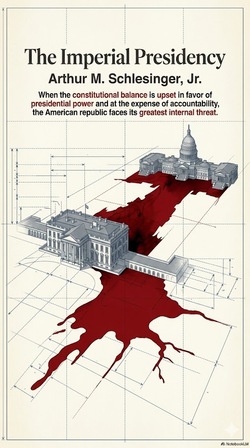
The Imperial Presidency
Loading…

The Imperial Presidency

Arthur M. Schlesinger, Jr.

4.31005 learners

Arthur M. Schlesinger Jr.’s *The Imperial Presidency* traces the dramatic erosion of America’s constitutional checks and balances, from the Founding Fathers’ careful design of shared war and foreign policy powers to the unchecked expansion of presidential authority in the 20th century. Starting with the Framers’ debates over war powers and executive limits, Schlesinger chronicles pivotal moments: Lincoln’s emergency actions during the Civil War, Franklin Roosevelt’s wartime power grabs, Truman’s unauthorized Korean War intervention, and the extreme overreach of Johnson and Nixon in Vietnam—including secret bombings, illegal surveillance, and claims of unilateral war authority. He exposes how the “imperial presidency” emerged from Cold War crises, bureaucratic secrecy, and congressional complacency, threatening democratic accountability. A landmark work of political history, it argues for restoring constitutional balance by reasserting congressional oversight, curbing executive privilege, and prioritizing transparency in foreign policy.
Imperial PresidencyWar PowersChecks and BalancesExecutive PrivilegeSecrecy System
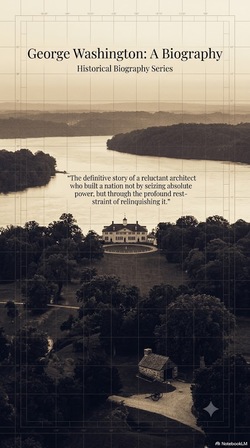
Washington: A Life
Loading…

Washington: A Life

Ron Chernow

4.1709 learners

Ron Chernow’s definitive biography of George Washington pulls back the curtain on the man behind the myth, tracing his journey from a quiet Virginia planter to the founding father of the United States. Born into a prosperous colonial family, Washington’s early years shaped his discipline and resilience—from land surveying in the wilderness to brutal lessons in the French and Indian War. When the American Revolution ignited, his steady leadership transformed ragged militias into the Continental Army, turning near-defeats at Valley Forge into triumphs at Trenton and Yorktown. Beyond the battlefield, he guided the drafting of the U.S. Constitution, served two unanimous terms as the first president, and defied calls for monarchy by voluntarily stepping down, setting a precedent for democratic leadership that endures today. Chernow humanizes Washington, exploring his personal struggles, quiet courage, and unwavering commitment to building a nation rooted in liberty.

George WashingtonAmerican RevolutionContinental ArmyU.S. ConstitutionPresidency
Quote

Servant of the People

Washington said: 'During my term, I am the people's servant—even called a slave without objection.'

HumilityPublic ServicePresidency
Insight

Vietnam War Power Imbalance

During the Vietnam War, presidents completely bypassed congressional war power, formed a routine of unilateral military decision making, and pushed the imperial presidency to its peak.

Vietnam WarWar PowerExecutive Overreach
Scenario

1970 Cambodia Invasion

Nixon ordered US troops to invade Cambodia without any congressional approval, relying solely on his commander-in-chief title, pushing the imperial presidency to its historical peak.

NixonCambodiaExecutive Overreach
Scenario

2008 Election Victory Night

On 2008 election night, when TV announced Barack won the presidency, 200,000 cheering people gathered in Grant Park Chicago, which made all their hard campaign struggles worth it.

HistoryVictorypresidential election
Concept

Imperial Presidency

A political state where the president’s war and foreign policy powers far exceed the limits set by the Founding Fathers, breaking the original checks and balances design.

US politicsPower BalancePresidency
Insight

Globalism Breeds Imperial Presidency

The US mission as global free world guardian demands fast, secret military interventions, which naturally concentrate power in the president and erode Congress’s independent authority.

Foreign PolicyGlobal InterventionPower Centralization
Insight

No One Starts War Alone

Constitutional balance’s core neutral principle is that no single person should have the right to drag the whole country into war, which the imperial presidency totally abandoned.

ConstitutionChecks and BalancesWar Power
Scenario

1868 Johnson Impeachment

Andrew Johnson was impeached for violating the Tenure of Office Act, and the Senate acquitted him by one vote, which preserved the equal status of presidency in the three-branch system.

ReconstructionSeparation of PowersImpeachment
No more