
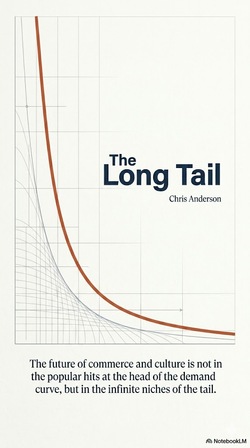
The Long Tail
In *The Long Tail Theory*, Chris Anderson unpacks how digital technology has dismantled the old blockbuster-centric business model. For decades, physical limits—limited shelf space, geographic barriers, and high distribution costs—trapped retailers in a cycle of prioritizing mainstream hits, leaving countless niche consumer demands unfulfilled. Anderson uses relatable, real-world examples to illustrate his point: the stunning comeback of Joe Simpson’s *Touching the Void*, driven by Amazon’s algorithmic recommendations and user reviews; Rhapsody’s music data showing niche tracks make up nearly 40% of its monthly downloads; and Alibris’s revival of the stagnant used book market by aggregating scattered inventory from small shops. He breaks down the three core forces powering the long tail: democratized content creation via personal computers, low-cost digital distribution, and optimized supply-demand matching through algorithms and collective intelligence. This theory proves that when enough niche products are aggregated, their combined market share rivals or even outpaces blockbusters, unlocking untapped revenue streams and reshaping how we consume and create content.