Muskets and Ledgers
Loading…

Muskets and Ledgers

Li Boyong

31303 learners

From the rise of global history as a field to the untold story of early economic globalization, *Muskets and Ledgers* redefines how we view pre-17th-century East Asia. Moving beyond traditional nation-state narratives, this book weaves together two powerful forces: the spread of firearm technology (the "muskets") and interconnected global trade networks built on silver and merchant enterprise (the "ledgers"). It debunks the myth of Ming-era Chinese isolationism, revealing China as the linchpin of early global commerce—by the 18th century, half the world’s silver flowed into its coffers. The text explores shifting East Asian cultural spheres, the crippling border crises facing the late Ming, and the mixed successes of its military reforms: innovations that later propelled the Qing Dynasty to dominance, only to stagnate and set the stage for 19th-century decline. Packed with vivid case studies, from the Manila Galleon trade to the Sino-Japanese Korean War, it offers a sharp, timely look at globalization’s dual nature of opportunity and conflict.
Qing DynastyEarly Economic GlobalizationFirearm TechnologySilver TradeLate Ming Dynasty
1901: The Back View of an Empire
Loading…

1901: The Back View of an Empire

Wang Shuzeng

2.81276 learners

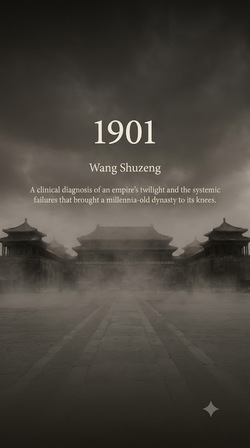
Set against the crumbling backdrop of late 19th-century China, *1901: The Back View of an Empire* pulls back the curtain on the Qing Dynasty’s final years, weaving intimate, untold stories into a vivid narrative of power, chaos, and quiet transformation. Starting with the 1899 medical exam of Emperor Guangxu—a small event that shattered the imperial court’s secrecy and exposed bitter power struggles between the emperor and Empress Dowager Cixi—the book traces the empire’s downward spiral: the catastrophic Sino-Japanese War rooted in systemic corruption, the failed Hundred Days’ Reform derailed by court intrigue, the rise of the Boxer Rebellion as a desperate outcry of impoverished peasants, and the brutal foreign invasion that led to the humiliating 1901 Boxer Protocol. Through vivid details—from Viceroy Yulu’s jade thumb ring symbolizing bureaucratic decay to Li Hongzhang’s grueling negotiations with foreign powers—author Wang Shuzeng captures the full complexity of the era: a dying empire clinging to tradition, while glimmers of modernity (Western clothing, women’s public speaking, telegraph technology) began to pierce the darkness. More than a history lesson, this book reveals how the chaos of 1901 laid the groundwork for China’s 20th-century transformation.

Boxer RebellionHundred Days' ReformQing DynastyLi HongzhangBoxer Protocol
Life Like Morning Frost
Loading…

Life Like Morning Frost

Ke Lan

3.81233 learners

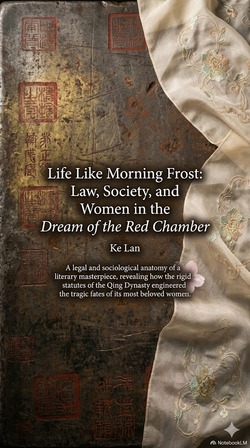
Life Like Morning Frost uses the unforgettable female characters from *Dream of the Red Chamber* as a lens to unpack the brutal realities of 18th-century Qing Dynasty China. From Zhen Yinglian (later Xiangling), a kidnapped girl sold into lifelong servitude, to Qin Keqing, a noble mistress trapped by scandal and patriarchal power, and the tragic You sisters, each woman’s story reveals how rigid social systems—unequal servant laws, forced marriage customs, collective punishment, and caste hierarchies—stripped women of autonomy, regardless of their class or talent. The book goes beyond literary analysis, diving into historical records and legal texts to show why even privileged women like Lin Daiyu and Xue Baochai couldn’t escape their fates, while marginalized figures like opera girls and servant wives faced even harsher cruelty. It’s a vivid, eye-opening exploration of how a deeply patriarchal society crushed countless lives, framing *Dream of the Red Chamber* as a searing critique of a broken system, not just a romance.

Qing DynastyDream of the Red ChamberFemale OppressionServant SystemPatriarchal Marriage
The Expensive Peace
Loading…

The Expensive Peace

Ji Chen

3.5995 learners

Dive into the tangled diplomacy, internal power struggles, and devastating aftermath of the First Sino-Japanese War in The Expensive Peace. Ji Chen unpacks the lead-up to the 1894 conflict, from the superficial cordiality between the Qing Dynasty and Meiji Japan to the eruption of war over Korea. The book lays bare the Qing court’s bitter divide between war hawks and peace advocates, tracking Li Hongzhang’s desperate, unauthorized attempts to avoid battle and the court’s fumbling efforts to seek foreign mediation as losses mounted. It chronicles the dramatic Shimonoseki negotiations—including Li’s assassination attempt that forced minor Japanese concessions—and the signing of the 1895 Treaty of Shimonoseki, which stripped China of Taiwan, the Liaodong Peninsula, and imposed crippling war reparations. Ji also explores the Three-Power Intervention that forced Japan to return Liaodong (for a hefty ransom) and the lasting scars of this 'expensive peace' on China’s national identity, urging readers to move beyond resentment to learn critical historical lessons.

Qing DynastyIto HirobumiTreaty of ShimonosekiFirst Sino-Japanese WarLi Hongzhang
The Metabolism of Modern Chinese Society
Loading…

The Metabolism of Modern Chinese Society

Chen Xulu

3.8976 learners

This book dissects the profound 'metabolism' of Chinese society from the late feudal era through the turbulent 19th and early 20th centuries. Starting with a deep dive into the rigid yet resilient structure of China’s 2,000-year feudal system—its small-scale peasant economy, centralized bureaucracy, and Confucian ideology—it contrasts China’s stagnation with Western Europe’s rapid capitalist rise. It then traces how the Opium War shattered the old order, triggering a cascade of transformations: the Taiping Rebellion’s challenge to feudal norms, the Self-Strengthening Movement’s tentative modernization efforts, the Hundred Days’ Reform’s push for institutional change, and the Xinhai Revolution’s overthrow of the monarchy. The narrative culminates in the New Culture Movement’s intellectual awakening and the eventual rise of Marxism, explaining how each wave of change interacted with foreign pressures and internal uprisings to reshape China’s social fabric. Packed with vivid historical details and sharp analysis, it reveals the complex, often contradictory forces that drove China’s transition from a traditional empire to a modern nation.

Self-Strengthening MovementXinhai RevolutionTaiping RebellionQing DynastyOpium War
Zeng Guofan's Family Letters
Loading…

Zeng Guofan's Family Letters

Zeng Guofan

4.4903 learners

More than just personal correspondence, *Zeng Guofan's Family Letters* offers an intimate window into the life of one of the Qing Dynasty's most revered statesmen. Spanning decades, these letters cover every facet of Zeng's world: his struggles as a cash-strapped Beijing official, his grueling military campaigns against the Taiping Rebellion, and his unwavering guidance for his family on self-cultivation, academic pursuit, and household management. Zeng shares timeless wisdom—from the importance of frugality and humility to the value of persistence in learning and strategic caution in power. He emphasizes core principles like avoiding arrogance and laziness, adhering to the 'eight-character family motto' centered on scholarship and farming, and maintaining balance during times of success. For readers, these letters aren't just historical documents; they're a practical guide to navigating life, career, and family with integrity and foresight.

Zeng GuofanQing DynastypersistenceHumilityfamily letters
Biography of Zeng Guofan
Loading…

Biography of Zeng Guofan

Zhang Hongjie

4.8896 learners

This biography traces the extraordinary life of Zeng Guofan, a late Qing Dynasty statesman who rose from a humble rural family to become one of China’s most revered historical figures. Starting with his grueling journey through imperial examinations—failing seven times before finally securing a position in the capital—Zeng’s story is defined by relentless self-improvement. He transformed his unruly habits through rigorous daily reflection and discipline, ascending rapidly in the imperial bureaucracy before facing political setbacks that pushed him to build the formidable Hunan Army. Leading this force, he crushed the Taiping Rebellion, saving the Qing Dynasty from collapse, yet strategically retreated from power to avoid imperial suspicion. Later, he pioneered China’s early Westernization efforts, founding military factories and launching the first student exchange program to the U.S. His life embodies the clash of traditional Confucian values and modernizing forces, offering timeless lessons on resilience, leadership, and navigating unprecedented change.

Late Qing DynastyTaiping RebellionZeng Guofanself-cultivationofficial career
The Ming-Qing Ecosystem
Loading…

The Ming-Qing Ecosystem

Chen Baoliang

3787 learners

The Ming-Qing Ecosystem delivers a comprehensive, multi-faceted deep dive into the social fabric of late imperial China, spanning official institutions, grassroots communities, cultural trends, and marginalized groups. It unpacks the inner workings and systemic flaws of the imperial inspection system—from official performance evaluations to crackdowns on local villains—while examining how rumors and false narratives spread amid government information gaps and regional gossip cultures. The book also explores the dramatic shift from a Confucian "no-litigation" ideal to a litigious society, the rise of private aides (infamous Shaoxing师爷) and professional escort services, the evolution of guild halls and secret societies like the Heaven and Earth Society, and the precarious lives of private tutors and wealthy families’ hangers-on. Additionally, it reveals the secularization of Buddhist monks and nuns, including the emergence of warrior monks who fought pirates and scandal-ridden "flower monks" who abandoned monastic rules. By weaving these threads together, it uncovers the tensions, transformations, and hidden dynamics that shaped Ming-Qing society, offering invaluable insights into traditional Chinese social structures.

Ming-Qing DynastyInspection SystemRumor PhenomenonLitigation CulturePrivate Aide System
Modern Chinese History
Loading…

Modern Chinese History

Jiang Tingfu

3.9762 learners

Jiang Tingfu’s *Modern Chinese History* is a seminal, nuanced exploration of China’s tumultuous transition from a self-isolated imperial power to a nation grappling with modernity. Spanning from 19th-century Sino-British trade conflicts and the Opium War to the fall of the Qing Dynasty, the rise and collapse of the Taiping Rebellion, the failed Self-Strengthening Movement, and the early years of the Republic, this work rejects simplistic villain-hero narratives. Instead, it frames China’s struggles as clashes between a stagnant agrarian civilization and industrializing Western powers, highlighting systemic flaws in the Qing bureaucracy, military, and worldview. It also reevaluates controversial figures like Qi Shan, arguing his diplomatic choices stemmed from impossible odds rather than treachery. More than a chronicle of wars and treaties, this book unpacks missed opportunities and deep-seated barriers that shaped China’s painful journey toward modern nation-building.

Self-Strengthening MovementXinhai RevolutionTaiping RebellionOpium WarUnequal Treaties
The Death of Nian Gengyao
Loading…

The Death of Nian Gengyao

Zheng Xiaoyou

3.5603 learners

The Death of Nian Gengyao traces the dramatic rise and catastrophic fall of one of the Qing Dynasty’s most formidable generals. Born into a prominent official family, Nian Gengyao climbed the ranks rapidly, leveraging military prowess—most notably crushing the Qinghai rebellion—to become Emperor Yongzheng’s most trusted ally, earning lavish praise and unprecedented power. Yet his arrogance, overreach in appointing loyalists (the infamous “Nian Selection”), and failure to navigate the treacherous court politics triggered the emperor’s crippling paranoia. Drawing on court records, firsthand accounts, and the prescient essay “The Plight of Loyal Heroes” by Nian’s confidant Wang Jingqi, this book dissects the brutal clash between imperial authority and military ambition, laying bare the unforgiving nature of autocratic rule and the tragic fate of those who outshine their sovereign.

Nian GengyaoEmperor YongzhengQing Dynasty Court PoliticsNian SelectionWang Jingqi
The Perils of Interpreting
Loading…

The Perils of Interpreting

Henrietta Harrison

3.8597 learners

Henrietta Harrison’s *The Perils of Interpreting* weaves the parallel, interconnected lives of two forgotten translators to unpack the high-stakes world of cross-cultural diplomacy between Qing China and Britain in the late 18th and early 19th centuries. Follow Jacob Li, a Chinese Catholic educated in Naples who served as a critical interpreter for the Macartney Embassy, navigating the risks of bridging his faith, Chinese identity, and British diplomatic goals. Contrast his journey with George Staunton Jr., the precocious British boy trained in Chinese by his father, who grew into a key figure in Sino-British trade and diplomacy, only to see his idealism crumble amid imperial tensions. Harrison reveals how translation was never just linguistic conversion—it was a battlefield of power, loyalty, and cultural compromise, where missteps could ruin careers, spark conflict, or even cost lives. Through their untold stories, the book exposes the hidden perils of connecting two empires on the brink of war.

Jacob LiGeorge Staunton Jr.Macartney EmbassyCross-Cultural TranslationCatholic Missions in China
The Art of Being Governed
Loading…

The Art of Being Governed

Michael Szonyi

4.4541 learners

Based on rare primary sources like genealogies, Wei-suo registers, and local court cases, *The Art of Being Governed* upends traditional views of rigid Ming dynasty state control. It explores how military households—families bound by hereditary military service—navigated conflicting state obligations and family interests through creative, pragmatic strategies: from redistributing property to assign service duties, using substitute soldiers, rotating service among branches, to engaging in "institutional arbitrage" by exploiting gaps between official rules and real-world realities. The book also delves into coastal military households’ entanglement with illegal maritime trade, their integration into local communities via marriage and temples, and how these households adapted their tactics into the Qing dynasty, leaving lasting social and cultural legacies. By centering ordinary people’s voices, it reveals the dynamic, two-way interaction between state systems and grassroots survival wisdom, redefining our understanding of pre-modern Chinese governance.

Military householdsWei-suo systemInstitutional arbitrageMilitary colonizationGenealogical records
Old Temple New Gods
Loading…

Old Temple New Gods

Duan Zhiqiang

3.8490 learners

Old Temple New Gods takes readers on a vivid journey through the evolving rituals of Confucian temple enshrinement during the Qing Dynasty, unpacking how this ancient institution shifted to navigate political upheaval and cultural change. Starting with the dual public-private role of Confucian temples—serving as state tools for social order and professional shrines for scholar-officials—the book traces key turning points: from Emperor Yongzheng’s massive expansion of enshrined scholars to Daoguang’s crackdown on overcrowding, and finally to the fiery late-Qing debate over honoring Ming loyalists Gu Yanwu, Huang Zongxi, and Wang Fuzhi. It reveals fierce clashes between conservatives, reformers, and revolutionaries, showing how the Qing court tried to co-opt these unorthodox thinkers to legitimize constitutional reform and preserve traditional culture, even as their ideas were weaponized by opposing factions. This isn’t just a story of rituals; it’s a window into a dying dynasty’s desperate struggle to redefine orthodoxy amid crisis.

Cultural PreservationState RitualsLate Qing DynastyGu YanwuConfucian Temple Enshrinement
The Death of Woman Wang
Loading…

The Death of Woman Wang

Jonathan Spence

4.1472 learners

Jonathan Spence’s *The Death of Woman Wang* pulls back the curtain on 17th-century rural China, using the remote Shandong county of Tancheng as a raw, intimate microcosm of chaos and resilience. Set against a relentless cycle of catastrophic earthquakes, brutal famines, warlord raids, and Qing Dynasty conquests, the book weaves together official gazettes, magistrate Huang Liuhong’s memoirs, and tales from Pu Songling’s *Strange Tales* to bring ordinary people’s struggles to life. At its core is the tragic story of Woman Wang, a young wife whose desperate elopement and eventual murder expose the suffocating constraints of gender norms, poverty, and familial violence in a society shattered by decades of crisis. Spence doesn’t just recount disasters—he explores how local officials fought to restore order, how widows clung to dignity amid systemic oppression, and how marginalized people navigated a world where survival often meant making impossible choices. This vivid narrative turns dry historical documents into a compelling portrait of human endurance, offering American readers a rare, unflinching look at a forgotten corner of early modern China.

Qing DynastyNatural DisastersLocal GovernanceRural ChinaTancheng County
Autumn in the Heavenly Kingdom
Loading…

Autumn in the Heavenly Kingdom

Stephen R. Platt

4.2427 learners

Stephen R. Platt’s *Autumn in the Heavenly Kingdom* delivers a vivid, immersive account of the 19th-century Taiping Rebellion, one of China’s deadliest civil wars. At its core is Hong Rengan, cousin of Taiping leader Hong Xiuquan, whose escape from imperial forces led him to Hong Kong, where he absorbed Western political and scientific ideas. Upon joining the Taiping in Nanjing, he drafted the *Zizheng Xinpian*—a radical modernization blueprint advocating railroads, banks, and equal foreign relations. Platt masterfully interweaves Hong’s story with the tangled role of Western powers: British officials wavered between curiosity about the Taiping’s Christian-inspired ideology, neutrality, and eventual support for the Qing Dynasty to protect trade interests. The narrative also intersects with the Second Opium War, the burning of the Summer Palace, and the rise of Zeng Guofan, the scholar-warrior who led the Xiang Army to crush the rebellion. It reveals how foreign interference and internal strife reshaped China’s trajectory, setting the stage for decades of upheaval.

Taiping RebellionHong RenganZeng GuofanBritish InterventionSummer Palace
Insight

Qing's Salt Policy Goal

The Qing Dynasty's salt regulation aimed to maximize salt tax revenue. It used licensed merchants, regional zones, and anti-smuggling measures to ensure steady tax collection.

Qing PolicyRevenue MaximizationSalt Regulation
Insight

Xu Shen's Enshrinement Reflects Textual Studies Boom

Xu Shen's enshrinement (1875) marked the start and end of Qing Dynasty's boom in 'Shuowen Jiezi' textual research, from Chen Zhan's proposal to Wang Mingluan's petition.

Xu ShenTextual StudiesLate Qing Enshrinement
Scenario

Yangzhou Massacre

When Qing troops entered Yangzhou, they killed over 800,000 people in 81 days to suppress resistance—showing foreign rule's brutality.

Qing DynastyBrutalityForeign Rule
Concept

Prostitute Nuns (Changni)

Qing dynasty nuns who violated rules—some became prostitutes. This reflected Buddhism's secularization.

Ming-Qing CultureNuns