
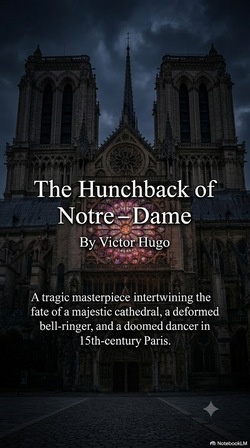
The Hunchback of Notre Dame
Loading…

The Hunchback of Notre Dame

Victor Hugo

4.4823 learners

Set against the grand, weathered spires of 15th-century Paris’s Notre-Dame Cathedral, Victor Hugo’s *The Hunchback of Notre Dame* unfolds a haunting, timeless tale of love, prejudice, and the hidden complexity of human nature. At its heart is Quasimodo, the deformed bell-ringer shunned by society yet fiercely devoted to the cathedral that’s his only sanctuary. His quiet loyalty collides with the twisted obsession of Claude Frollo, a pious archdeacon whose religious fervor curdles into destructive lust for Esmeralda—a free-spirited Romani dancer whose beauty and kindness captivate all who cross her path. Hugo doesn’t just craft a tragic romance; he paints a vivid portrait of medieval Paris, from its bustling marketplaces to the shadowy corners of the cathedral, while confronting harsh truths about social inequality, religious hypocrisy, and the chasm between outward appearance and inner goodness. This classic challenges readers to look beyond surface judgments and recognize the dignity in every soul.

EsmeraldaQuasimodoClaude FrolloNotre-Dame CathedralMedieval Paris
Scenario

Frollo’s Cathedral Fall

Frollo confronts Quasimodo and Esmeralda. In a struggle, he loses balance and plummets from Notre Dame’s top to his death.

TragedyDeathFrollo
Scenario

Esmeralda’s Execution

Despite Quasimodo’s efforts, Esmeralda is taken from the cathedral and hanged. Quasimodo watches in horror, unable to save her.

ExecutionLossEsmeralda
Scenario

Quasimodo Hides Esmeralda

When Esmeralda is sentenced to death, Quasimodo swings down from Notre Dame, grabs her, and takes her inside—claiming sanctuary under the church’s protection.

QuasimodoSanctuaryNotre Dame
Scenario

Frollo’s Obsession Push

Frollo tells Quasimodo to kidnap Esmeralda because he wants her. Quasimodo obeys but gets caught by Phoebus.

QuasimodoFrolloKidnap
Quote

Quasimodo’s Gentle Love

Hugo describes: 'He loved her like something fragile and precious.' Quasimodo’s love for Esmeralda is pure and protective.

LoveSelflessnessQuasimodo
Quote

Sanctuary’s Promise

The cathedral’s sanctuary means: 'No harm will come to you here.' Quasimodo uses this to protect Esmeralda.

SafetySanctuaryNotre Dame
Quote

True Beauty of Heart

Hugo teaches: 'True beauty isn’t in the face—it’s in the heart.' Quasimodo’s kind heart beats Frollo’s ugly soul.

CharacterbeautyHeart
Scenario

Phoebus Saves Esmeralda

When Quasimodo tries to kidnap Esmeralda, Captain Phoebus arrives and rescues her. She falls for him, not knowing his shallow nature.

EsmeraldaInfatuationPhoebus
Scenario

Quasimodo Crowned Fool King

At the Feast of Fools, Quasimodo—hunchbacked, deaf, and with a deformed face—gets picked as King of Fools. The crowd laughs and cheers, but he doesn’t realize they’re mocking him.

QuasimodoFeast of FoolsMockery
Scenario

Quasimodo’s Final Rest

After Esmeralda’s death, Quasimodo finds her body in the cemetery. He lies next to her and dies—their skeletons are later found intertwined.

LoveQuasimodoEternal Rest
Scenario

Esmeralda Gives Water

After Quasimodo is whipped for kidnapping Esmeralda, he’s tied up in the square. The crowd jeers, but Esmeralda steps forward and gives him a drink—showing rare kindness.

KindnessRedemptionEsmeralda
Quote

Soul as Dark Forest

Hugo writes: 'The soul is a dark forest.' It means our inner selves have hidden parts—like Frollo’s secret desires or Quasimodo’s quiet love.

HugoSoulMetaphor
Quote

Happiness of Being Loved

Hugo says: 'The greatest happiness is knowing we’re loved—for who we are, even despite our flaws.' This reflects Quasimodo’s longing for acceptance.

HappinessLoveAcceptance
Quote

Bells as Cathedral Voice

Hugo says: 'The bells are the cathedral’s voice.' For Quasimodo, they’re his friends and way to communicate.

CommunicationQuasimodoBells
No more