
Successes and Failures of Historical Economic Reforms
Loading…

Successes and Failures of Historical Economic Reforms

Wu Xiaobo

4.21305 learners

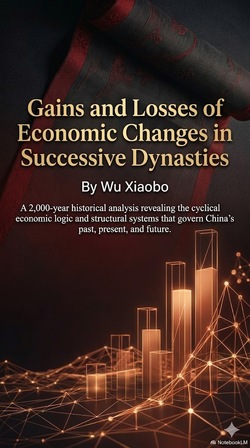
This book traces 2,000 years of Chinese economic reforms, starting with Guan Zhong’s groundbreaking pro-commerce policies in the Spring and Autumn Period and contrasting them with Shang Yang’s state-led, agriculture-focused reforms that laid the groundwork for Qin’s unification. It unpacks the enduring cycle of Chinese economic governance: balancing growth through liberalizing private sectors and maintaining stability via centralization, exemplified by Emperor Wu of Han’s state monopolies, Wang Anshi’s controversial state-led reforms, and the stagnation of Ming-Qing isolationism. Moving to modern times, it analyzes the failures of the late Qing’s Self-Strengthening Movement, the Nationalist government’s state capitalism, and the radical experiments of planned economy, before diving into the pragmatic 'crossing the river by feeling the stones' of China’s reform and opening up. Through these case studies, it reveals the recurring tensions between state control and market freedom, offering critical lessons for understanding China’s economic trajectory and its ongoing challenges.
Guan ZhongShang YangSalt-Iron FranchiseState-Owned MonopolyEconomic Governance Cycle
Deng Xiaoping and the Transformation of China
Loading…

Deng Xiaoping and the Transformation of China

Ezra F. Vogel

4.21186 learners

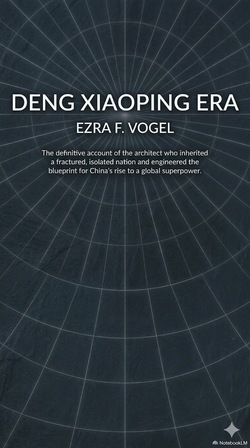
Ezra F. Vogel’s definitive biography traces Deng Xiaoping’s extraordinary journey from a young patriotic activist in 1920s France to the architect of China’s modern transformation. Detailing his political ups and downs—from purges during the Cultural Revolution to his triumphant comebacks—the book unpacks Deng’s pragmatic governance: his push for Special Economic Zones, the household contract system that revolutionized agriculture, and the bold normalization of Sino-US and Sino-Japanese relations. It explores his unyielding stance on national sovereignty, including the 'One Country, Two Systems' framework for Hong Kong’s return, and his efforts to modernize the PLA while prioritizing economic growth. Vogel also examines the tensions and trade-offs of Deng’s era: balancing reform with stability, addressing corruption risks, and navigating ideological divides. More than a political portrait, this work reveals how Deng’s leadership lifted hundreds of millions out of poverty and shifted China from a closed, stagnant state to a global economic powerhouse.

Special Economic ZonesDeng XiaopingReform and Opening UpOne Country Two SystemsSino-US Diplomatic Relations
Golden Quote

Development Is Absolute Truth

"Development is the absolute truth", the core guiding principle of China’s reform and opening up that pushed the country to rapid modernization.

ChinaReformDevelopment
No more