
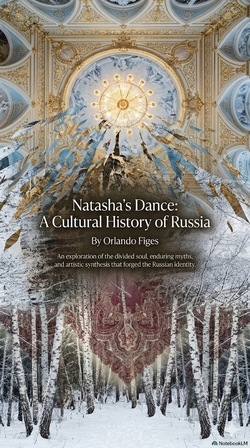
Natasha's Dance
Orlando Figes’ *Natasha's Dance* takes readers on a sweeping, intimate journey through Russia’s tangled cultural identity, spanning three centuries of ambition, rebellion, and longing. Starting with Peter the Great’s brutal construction of St. Petersburg—his audacious bid to drag Russia into European modernity—the book unpacks the nation’s eternal split: aristocrats mimicking French manners while clinging to rustic Russian traditions, writers oscillating between Western influence and Slavic roots, and artists grappling with the tension between state ideology and personal truth. Through vivid stories of serf artists, exiled Decemberists, Soviet dissidents, and displaced émigrés, Figes reveals how Russia’s soul is forged in these contradictions: from the folk-inspired masterpieces of Mussorgsky and Repin to the tragic fates of Akhmatova and Mandelstam under Stalin, and the bittersweet nostalgia of exiles like Nabokov and Stravinsky. More than a history, it’s a portrait of a nation forever caught between East and West, tradition and revolution, home and exile.