The Science of Distributing Wealth
Loading…

The Science of Distributing Wealth

Bian Zhihan

41328 learners

The Science of Distributing Wealth by Bian Zhihan demystifies the complex economic and social mechanisms shaping how wealth is divided across societies. Blending rigorous data analysis, historical case studies, and actionable policy insights, this book moves beyond ideological debates to present evidence-based approaches to balancing economic efficiency and social equity. It examines successful models from around the world—from Nordic welfare systems to targeted U.S. policy reforms—while dissecting root causes of growing wealth gaps, including inheritance structures, tax policies, and access to education. Designed for both economics enthusiasts and policymakers, it breaks down technical concepts into accessible language, offering practical strategies to build more sustainable and fair wealth distribution systems. Whether you’re curious about reducing inequality or understanding the science behind equitable growth, this book provides a comprehensive roadmap to navigate one of today’s most pressing global challenges.
Social MobilityWealth Distribution ModelsProgressive TaxationGini CoefficientInheritance Tax
The Structure of Scientific Revolutions
Loading…

The Structure of Scientific Revolutions

Thomas S. Kuhn

4.11278 learners

Thomas S. Kuhn’s seminal work upends the traditional view of science as a linear, cumulative pursuit of truth. Introducing the core concept of the 'paradigm'—a shared framework of theories, methods, and assumptions guiding scientific communities—Kuhn distinguishes between 'normal science,' where researchers solve puzzles within an established paradigm, and 'scientific revolutions,' triggered when persistent anomalies expose fatal flaws in the existing framework, sparking a crisis. When a new, incompatible paradigm emerges, it replaces the old one in a non-cumulative shift; Kuhn argues these paradigms are 'incommensurable,' meaning they can’t be directly compared due to differing standards and worldviews. He also explores how textbooks rewrite history to mask revolutionary shifts, framing science as steady progress rather than a series of paradigm overhauls. This work redefined the philosophy of science, forcing scholars to rethink how knowledge evolves in scientific fields.

Scientific ParadigmNormal ScienceScientific RevolutionParadigm ShiftIncommensurability
Adaptive Markets
Loading…

Adaptive Markets

Andrew W. Lo

41150 learners

Andrew W. Lo’s *Adaptive Markets* upends decades of financial orthodoxy by replacing the rigid Efficient Market Hypothesis with a dynamic framework rooted in evolution and neuroscience. Lo argues that financial markets aren’t governed by perfectly rational “economic men” but by humans shaped by millions of years of survival instincts—instructions that often misfire in the fast-paced, modern financial landscape. Drawing on real-world examples, from a pilot’s life-saving fear response to the 2008 financial crisis and 2007 quant crash, he explains how market efficiency shifts as investors adapt to changing environments. The book also explores how evolutionary logic applies to hedge fund evolution, regulatory design, and even using financial tools to solve global challenges like cancer research and climate change. By bridging biology, neuroscience, and finance, Lo offers a compelling new lens to decode market chaos, identify opportunities, and reimagine finance’s role in advancing human well-being.

Efficient Market HypothesisBehavioral FinanceAdaptive Market HypothesisSystemic RiskHedge Funds
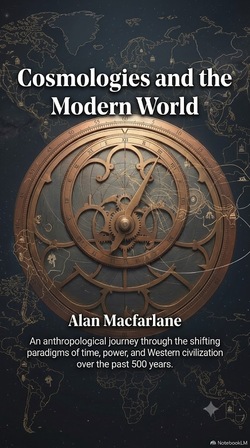
Cosmologies and the Modern World
Loading…

Cosmologies and the Modern World

Alan Macfarlane

3.11107 learners

Based on Alan Macfarlane’s 1982 Cambridge University lecture notes (updated with 30 years of new insights), *Cosmologies and the Modern World* traces 500 years of paradigm shifts in Western social science. It unpacks how changing worldviews—from cyclical time in pre-1700 Europe to Enlightenment progress, 19th-century evolutionary theory, mid-20th-century structuralism, and today’s global rebalancing—shaped disciplines like anthropology, sociology, and history. Drawing on thinkers like Thomas Kuhn, Michel Foucault, and Franz Boas, the book links time perception to technological change, political power, and colonial bias, critiquing the imperial arrogance embedded in 19th-century evolutionary frameworks. It also addresses 21st-century disruptions: AI’s rise, renewable energy innovations, and the shifting East-West power dynamic, offering a nuanced look at how intellectual paradigms reflect and drive global societal change.

GlobalizationArtificial IntelligencePower DynamicsEvolutionary TheoryParadigm Shifts
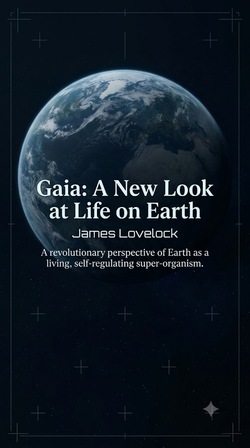
Gaia: A New Look at Life on Earth
Loading…

Gaia: A New Look at Life on Earth

James Lovelock

4.41105 learners

In *Gaia: A New Look at Life on Earth*, pioneering scientist James Lovelock introduces his revolutionary Gaia hypothesis—the radical idea that Earth functions as a single, self-regulating living superorganism. Drawing on his environmental science background and insights from space exploration, Lovelock argues that all living organisms and non-living planetary components (oceans, atmosphere, soil) interact in a complex, interconnected system to maintain stable, habitable conditions. He breaks down how processes like carbon cycling, oxygen production, and temperature regulation are controlled by the collective activity of Earth’s biosphere, not random chance. Though initially met with scientific skepticism, Lovelock’s framework has reshaped our understanding of ecology, climate science, and humanity’s role in the planet’s delicate balance. This book invites readers to rethink their relationship with Earth, offering a compelling lens to address modern environmental challenges and appreciate the planet’s remarkable resilience.

Self-RegulationPlanetary ScienceGaia HypothesisJames LovelockEarth System
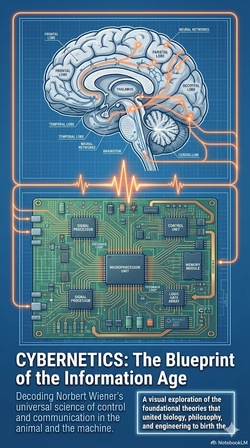
Cybernetics
Loading…

Cybernetics

Norbert Wiener

4.41045 learners

Norbert Wiener’s *Cybernetics*—the cornerstone of the information age—revolutionizes our understanding of control, communication, and order across machines, biological systems, and societies. First published in 1948 (with a revised 1961 edition), this seminal work breaks down disciplinary silos by identifying shared feedback-driven mechanisms governing everything from human motor functions to automated engineering systems. A polymath blending math, engineering, biology, and philosophy, Wiener introduces core concepts like negative entropy (information as a counterforce to disorder), black box analysis, and the statistical nature of control. The revised edition expands into cutting-edge territory, exploring learning machines (early AI prototypes that outperform their designers) and self-organizing systems, where order emerges spontaneously from nonlinear interactions. Beyond technical innovation, *Cybernetics* challenges mechanical determinism, laying the groundwork for fields like artificial intelligence, robotics, biocybernetics, and social systems theory, while prompting critical reflections on automation’s ethical and societal impacts.

CyberneticsFeedback MechanismInformation TheoryNegative EntropyLearning Machine
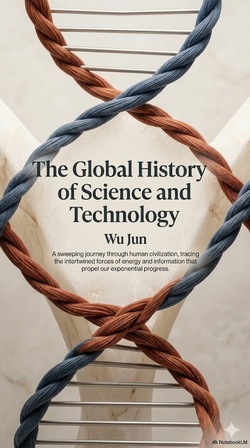
The Global History of Science and Technology
Loading…

The Global History of Science and Technology

Jun Wu

3.41039 learners

Spanning from humanity’s first stone tools to cutting-edge gene editing and quantum communication, *The Global History of Science and Technology* traces how technological breakthroughs have shaped every era of human civilization. Starting with the 1.76-million-year-old Acheulean handaxe and controlled fire use that let early humans expand beyond Africa, it moves through agricultural revolutions, the rise of metallurgy, and the birth of systematic scientific methods in ancient Greece and the Islamic Golden Age. The book highlights pivotal moments like the Industrial Revolution’s steam engines, Einstein’s relativity, the atomic age, and the digital revolution’s computers and internet. It also explores emerging technologies—CRISPR, quantum communication, artificial photosynthesis—and their ethical implications. More than a timeline, it connects tech advancements to social shifts, from early settlement to modern globalization, showing how science has always been intertwined with human survival, progress, and ambition.

Industrial RevolutionNuclear EnergyQuantum mechanicsAgricultural RevolutionQuantum Communication
The Sociological Imagination
Loading…

The Sociological Imagination

C. Wright Mills

4.41032 learners

In *The Sociological Imagination*, C. Wright Mills introduces a transformative mental framework that bridges personal struggles and the broader forces of history, society, and institutional structure. He critiques three dominant, flawed trends in mid-20th-century sociology: overly abstract grand theory, method-obsessed abstract empiricism, and bureaucratic, utility-driven research that serves power structures rather than critical inquiry. Mills argues that most people are trapped in the "trap of private life," unable to see how individual troubles—like unemployment or family strife—are rooted in public issues shaped by economic shifts, class dynamics, and political systems. The sociological imagination empowers readers to connect personal experiences to larger social contexts, distinguishing between private troubles (individual, localized) and public issues (systemic, widespread). Mills also explores the crisis of rationality and freedom in modern bureaucratic societies, urging social scientists to embrace a scholarly craftsmanship that prioritizes critical, context-rich inquiry over rigid methodologies. This classic work remains a foundational guide for anyone seeking to understand the interplay between self and society.

FreedomrationalitySociological ImaginationPersonal TroublesPublic Issues
Instructions for Practical Living
Loading…

Instructions for Practical Living

Wang Yangming

4.2989 learners

Instructions for Practical Living (Chuan Xi Lu) is the definitive collection of Wang Yangming’s transformative Neo-Confucian teachings, drawn from decades of dialogues with his disciples. Rejecting the rigid, text-focused scholarship of his era, Wang argues that moral truth isn’t found in external books or objects—it lives inherently in every person’s heart, a concept he calls 'Mind as Principle.' His core doctrines include the 'Unity of Knowledge and Action' (true knowledge demands immediate, consistent action) and 'Extend Innate Conscience' (Liangzhi), the practice of nurturing and following one’s innate moral intuition to guide daily choices. Through relatable anecdotes and sharp critiques, he teaches that self-cultivation happens not in isolated meditation but in everyday moments: resolving family conflicts, managing official duties, or even tending to garden weeds. He emphasizes that anyone can become a virtuous sage by tending to their inner conscience, not chasing external achievements, making his teachings accessible to all seeking purpose and ethical clarity in daily life.

self-cultivationInnate Conscience (Liangzhi)Unity of Knowledge and ActionMind as PrincipleInvestigate Things (Gewu)
The Demon-Haunted World
Loading…

The Demon-Haunted World

Carl Sagan

4.7961 learners

In his seminal work *The Demon-Haunted World*, Carl Sagan delivers a passionate defense of scientific thinking against the rising tide of pseudoscience, superstition, and irrationality plaguing modern society. Drawing on vivid examples—from alien abduction myths and crop circle hoaxes to faith healing scams and UFO conspiracy theories—Sagan dissects how cognitive biases, media sensationalism, and widespread scientific illiteracy allow false claims to thrive. He breaks down the core tenets of science: its self-correcting nature, reliance on falsifiability, and commitment to evidence-based inquiry, contrasting these with pseudoscience’s evasion of criticism and rejection of empirical testing. Sagan also explores the fragile, often misunderstood relationship between science and religion, arguing for mutual respect rather than conflict, and emphasizes the urgent need for improved science education to nurture critical thinking from childhood. More than a critique of irrationality, this book is a practical guide to equipping readers with the tools to distinguish fact from fiction, empowering them to navigate a world flooded with misinformation with clarity and reason.

FalsifiabilityPseudosciencescientific methodScientific ThinkingSelf-Correcting Science
Blindsight
Loading…

Blindsight

Peter Watts

4.5959 learners

In Peter Watts’ groundbreaking hard sci-fi novel *Blindsight*, a crew of biologically augmented specialists—including a genetically resurrected vampire with hyper-efficient cognition—sets out to investigate a mysterious alien signal originating near Neptune. The extraterrestrial craft, codenamed Rorschach, reveals a terrifying truth: its inhabitants possess unparalleled intelligence yet lack any form of self-awareness or consciousness. Watts merges rigorous neuroscience, evolutionary biology, and existential inquiry into a tense, thought-provoking narrative, challenging readers to reexamine humanity’s most cherished assumption: that consciousness is the pinnacle of evolution. As the crew’s mission spirals into chaos, they confront the possibility that self-awareness is not a strength, but a costly evolutionary byproduct—one that leaves humanity hopelessly outmatched by a species that operates without the burden of self-reflection. *Blindsight* isn’t just a space thriller; it’s a radical exploration of what it means to think, feel, and exist.

alien intelligenceconsciousness theorybiological augmentationRorschachvampire crew
The Nature of Technology
Loading…

The Nature of Technology

W. Brian Arthur

4.4895 learners

We’ve all grown dependent on tech—from smartphone apps to jet engines—yet rarely stop to ask: What *is* technology, really? In *The Nature of Technology*, W. Brian Arthur upends the common view of tech as just tools, arguing its core is the capture and programming of natural phenomena. He introduces the game-changing concept of combinatorial evolution: nearly all new tech emerges by combining existing technologies, not through random innovation. Using relatable examples like the F-35 jet’s recursive design or PCR’s mix of DNA tools, Arthur breaks down how tech builds itself layer by layer, with modularity and recursive structures driving efficiency and innovation. He also debunks the myth that tech is just applied science, showing the two evolve symbiotically—tech fuels scientific discovery as much as science inspires tech. Plus, he explores how tech reshapes economies, creating "recombinant economies" focused on constant combination, and even hints at tech’s life-like traits, from self-organization to adaptive growth. This book isn’t just for engineers; it’s for anyone curious about the invisible forces shaping our modern world.

combinatorial evolutionnatural phenomenon programmingrecursive structuretechnological domainsymbiotic tech-science relationship
How To Think Straight about Psychology
Loading…

How To Think Straight about Psychology

Keith E. Stanovich

4.5881 learners

This eye-opening guide dismantles pervasive myths about psychology—from the overstated influence of Sigmund Freud to the misperception that it’s just “common sense.” Keith E. Stanovich lays bare the scientific core of psychology, explaining how it relies on falsifiable theories, operational definitions, and rigorous experimental control to uncover patterns in human behavior. He breaks down critical concepts like causal inference, probabilistic thinking, and cognitive biases that distort public understanding of research. The book also equips readers to distinguish legitimate psychological science from pseudoscience, teaching them to spot red flags like untestable claims, reliance on anecdotes, and rejection of peer review. By demystifying the field’s methods and addressing long-held misconceptions, it empowers anyone to think critically about psychological claims and apply scientific reasoning to everyday life.

Cognitive BiasesProbabilistic ThinkingFalsifiabilityPseudoscienceOperationalism
On the Genealogy of Morality
Loading…

On the Genealogy of Morality

Friedrich Nietzsche

4.5865 learners

In *On the Genealogy of Morality*, Friedrich Nietzsche dismantles the naive assumptions of 19th-century British psychologists who traced moral origins to utilitarian habits or forgotten altruism. Instead, he argues that morality emerged from clashing power dynamics: the 'master morality' of ancient nobles, who defined themselves as 'good' against the 'bad' lower classes, and the 'slave morality' of oppressed groups, which revalued weakness, poverty, and suffering as 'good' out of bitter resentment toward their rulers. Nietzsche further explores the origins of bad conscience as the internalization of repressed violent instincts when humans were forced into social order, and dissects the ascetic ideal—its role as a tool of priestly power, a coping mechanism for suffering, and a hidden driver of modern intellectual life. Blending philology, history, and psychology, this radical work challenges traditional moral frameworks, exposing how power and resentment have shaped humanity’s most fundamental beliefs about good and evil.

ResentmentMaster MoralitySlave MoralityBad ConscienceAscetic Ideal
Enlightenment Now
Loading…

Enlightenment Now

Steven Pinker

4.3819 learners

In Enlightenment Now, Steven Pinker delivers a sharp, data-backed defense of the Enlightenment’s core values—reason, science, humanism, and progress—against rising pessimism and anti-Enlightenment backlash. Drawing on cross-disciplinary research, Pinker dismantles the myth of global decline, highlighting tangible improvements: eradicated diseases, plummeting extreme poverty, reduced war deaths, and expanded civil rights. He addresses critics from romanticists to religious conservatives, explaining how their rejection of rationality ignores decades of human progress. Pinker also confronts modern threats like nuclear war, populism, and climate change, arguing that doubling down on Enlightenment principles is the only way to navigate future challenges. This isn’t just a celebration of the past; it’s a blueprint for sustaining humanity’s upward trajectory by prioritizing evidence, empathy, and collective rationality.

ScienceHumanismProgressReasonEntropy
Being and Time
Loading…

Being and Time

Martin Heidegger

4.4724 learners

Martin Heidegger’s *Being and Time* upends traditional Western ontology by centering its inquiry on Dasein—human beings as "beings who question their own existence." Rejecting the long-held view of humans as fixed, ready-made entities, Heidegger argues Dasein’s essence lies in its "to-be"—its dynamic, contextual existence shaped by choices, everyday engagement, and the inescapability of death. Through rigorous existential analysis, he unpacks core concepts: "care" (Sorge) as Dasein’s fundamental structure, temporality as the hidden meaning of care, and the tension between authentic (owning one’s existence) and inauthentic (following the "they") modes of being. He also redefines truth as the disclosure of existence rather than a correspondence between thought and object, and ties human historicity to the temporal unfolding of Dasein. More than a philosophical treatise, it’s a radical invitation to confront the meaning of being by examining how we live, relate to the world, and embrace our finitude.

AuthenticityDeathConscienceDaseinCare (Sorge)
Reaching the Brink of Life
Loading…

Reaching the Brink of Life

Yang Jiang

4.5678 learners

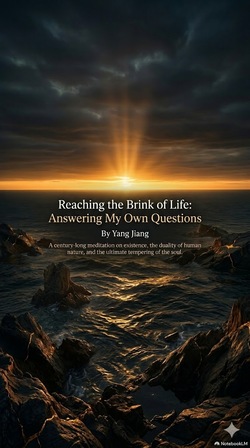
As Yang Jiang reflects on the twilight of her life, she delves into profound questions about life, death, and the essence of being human. Starting with her confusion about death—contrasting the dismissive views of urban intellectuals with the spiritual experiences of rural folks she encountered during her years in the countryside—she explores the existence of the soul, arguing it’s the invisible core that distinguishes the living from the dead. She unpacks the eternal struggle between the body’s desires and the innate moral conscience (what she calls "spiritual conscience"), drawing on daily examples, history, and Freud’s id-ego-superego theory. Further, she examines the tension between fate and free will, acknowledging life’s inherent injustices while emphasizing conscious choices can reshape one’s path. Framing suffering as a forge for the soul, she advocates lifelong self-cultivation through moral practice and introspection to transcend worldly desires. This intimate, thoughtful work invites readers to confront life’s hard truths and embark on their own journey of soul refinement.

Human Natureself-cultivationsoul nurturingspirit-body dualityfate and free will
The Chip Wave
Loading…

The Chip Wave

Yu Sheng

0671 learners

The Chip Wave tells the riveting story of how Taiwan transformed from a labor-reliant economy to a global semiconductor powerhouse, anchored by the meteoric rise of Taiwan Semiconductor Manufacturing Company (TSMC). Starting in the 1970s, visionary policymakers like Sun Yun-suan and K.T. Li laid the groundwork with the Industrial Technology Research Institute (ITRI) and Hsinchu Science Park, while a fateful 1974 breakfast meeting sparked Taiwan’s push into integrated circuits. United Microelectronics (UMC) blazed an early trail with bold market bets, but it was Morris Chang’s revolutionary pure-play foundry model—focused solely on manufacturing, not designing chips—that turned TSMC into an industry titan. The book chronicles TSMC’s fierce battles with Samsung, Intel, and domestic rivals, its breakthroughs in FinFET transistors, EUV lithography, and advanced packaging, and its critical role stabilizing global supply chains during the 2020 chip shortage. It also unpacks how Taiwan’s unique mix of government support, technical talent, and entrepreneurial grit built a supply chain that powers nearly every digital device on Earth.

Moore's LawTSMCWafer FoundrySemiconductor ManufacturingFinFET Technology
A Short History of Nearly Everything
Loading…

A Short History of Nearly Everything

Bill Bryson

4.1614 learners

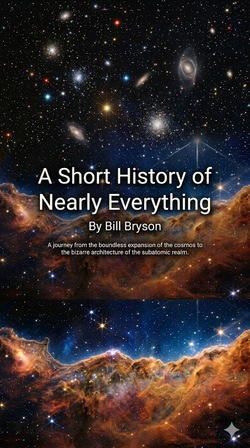
Bill Bryson’s *A Short History of Nearly Everything* transforms intimidating scientific concepts into a witty, approachable journey for every curious reader. Ditching dry textbook jargon, Bryson weaves together tales of cosmic origins, planetary formation, the rise of life on Earth, and the quirky, often overlooked stories of the scientists who unlocked these secrets. From the mind-bending physics of the Big Bang to the messy, miraculous process of evolution, he breaks down complex ideas—like quantum mechanics or plate tectonics—into relatable anecdotes and plainspoken explanations. Whether you’re a science novice or casual enthusiast, this book demystifies everything from subatomic particles to the vastness of the universe, proving science is a story of curiosity, failure, and awe that connects us all to the history of nearly everything.

EvolutionQuantum PhysicsCosmologyPlanetary ScienceBig Bang
Stories of Your Life and Others
Loading…

Stories of Your Life and Others

Ted Chiang

4.1608 learners

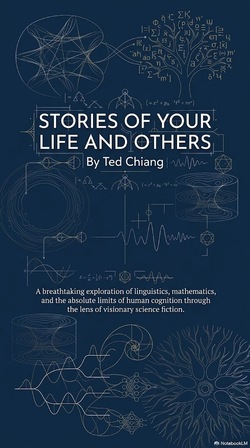
From the Hugo Award-winning 'Story of Your Life'—where a linguist’s study of alien Heptapods rewires her perception of time and fate—to the mind-bending 'Tower of Babylon' that reimagines the universe’s structure, Ted Chiang’s *Stories of Your Life and Others* is a collection of seven provocative sci-fi tales. Each story acts as a rigorous thought experiment, blending cutting-edge science, philosophy, and theology to challenge fundamental assumptions about human understanding. Whether exploring the limits of superintelligence in 'Understanding,' the collapse of mathematical logic in 'Division by Zero,' or the moral dilemmas of a world where God’s miracles are mundane in 'Hell Is the Absence of God,' Chiang crafts narratives that are both intellectually stimulating and emotionally resonant. These stories don’t just entertain; they force readers to question how we see time, truth, faith, and the very nature of existence.

Free WillSuperintelligenceHeptapod Language BNonlinear Time PerceptionMathematical Consistency