
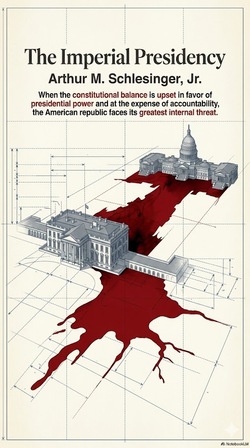
The Imperial Presidency
Arthur M. Schlesinger Jr.’s *The Imperial Presidency* traces the dramatic erosion of America’s constitutional checks and balances, from the Founding Fathers’ careful design of shared war and foreign policy powers to the unchecked expansion of presidential authority in the 20th century. Starting with the Framers’ debates over war powers and executive limits, Schlesinger chronicles pivotal moments: Lincoln’s emergency actions during the Civil War, Franklin Roosevelt’s wartime power grabs, Truman’s unauthorized Korean War intervention, and the extreme overreach of Johnson and Nixon in Vietnam—including secret bombings, illegal surveillance, and claims of unilateral war authority. He exposes how the “imperial presidency” emerged from Cold War crises, bureaucratic secrecy, and congressional complacency, threatening democratic accountability. A landmark work of political history, it argues for restoring constitutional balance by reasserting congressional oversight, curbing executive privilege, and prioritizing transparency in foreign policy.