
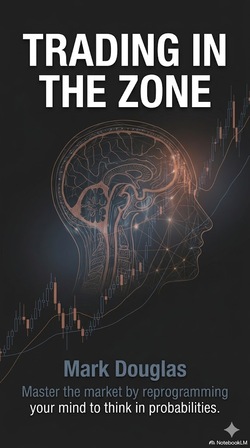
Trading in the Zone
Loading…

Trading in the Zone

Mark Douglas

4.61125 learners

For decades, traders have chased technical indicators and fundamental data in search of a market 'holy grail', only to end up trapped in cycles of loss and frustration. In *Trading in the Zone*, veteran trader and coach Mark Douglas draws on 30 years of experience to shatter the myth that analysis alone guarantees success. He reveals that the true barrier to consistent profitability isn’t market knowledge—it’s the trader’s own mind. Douglas breaks down why even skilled analysts fail: fear, greed, overconfidence, and a refusal to accept market uncertainty hijack decision-making. He contrasts this with the mindset of top traders, who embrace risk, operate with probability-based thinking, and take full responsibility for every trade outcome. The book provides actionable strategies to rebuild your belief system, neutralize emotional biases, and develop the disciplined, objective mindset needed to turn trading from a gamble into a sustainable, profitable endeavor.
Self-ResponsibilityTrading PsychologyProbability ThinkingRisk AcceptanceBelief System
The Almanack of Naval Ravikant
Loading…

The Almanack of Naval Ravikant

Eric Jorgenson

4.4552 learners

The Almanack of Naval Ravikant distills the unfiltered wisdom of tech entrepreneur and investor Naval Ravikant into a practical roadmap for building lasting wealth, mastering happiness, and living life on your own terms. Ditching the myth of grinding 80-hour weeks for a paycheck, Naval argues true wealth isn’t money or status—it’s assets that generate income while you sleep. The formula? Cultivate a unique, unteachable skill (your irreplaceable edge), scale it using permissionless levers like code, media, or written content, and own equity in your work to break free from the time-for-money trap. Beyond wealth, the book redefines happiness as a learnable skill rooted in accepting the present, letting go of envy, and quieting the restless "monkey mind." It also shares actionable insights on sharpening decision-making with mental models, prioritizing deep reading for lifelong learning, and taking full responsibility for your physical, mental, and financial well-being. Naval’s no-fluff, contrarian advice cuts through noise, offering a blueprint to thrive in the modern economy while staying true to your authentic self.

Lifelong LearningSelf-Responsibilitydecision-makingMental ModelsCompound interest
Protagonist Mode
Loading…

Protagonist Mode

Fan Deng

3.2490 learners

"Protagonist Mode" is a no-fluff playbook for ditching passive, "waiting to be saved" mindsets and stepping into intentional growth—for both individuals and leaders. Fan Deng breaks down the hidden traps holding you back: confirmation bias that locks your beliefs in closed loops, the "learning paradox" that keeps you stuck in your comfort zone, and the "ordinary person paradox" that limits your potential with self-imposed limits. Using relatable stories—from character actor Lin Xue’s decades-long rise to Dong Yuhui’s career shift from teacher to top streamer—he shows growth isn’t a copyable linear path; it’s a unique, iterative journey rooted in your own experiences. For leaders, the book lays out critical qualities (optimism, humility, fairness) and actionable tools like the GROW Model, 10x Better thinking, and intentional boundaries to unlock team creativity and drive collective success. At its core, it’s about embracing self-responsibility: becoming the author of your own story, not a side character in someone else’s.

Growth MindsetSelf-ResponsibilityConfirmation BiasProtagonist ModeGROW Model
View

Socratic Education Superior

It equalsizes teacher and student, uses questioning to awaken self-responsibility and potential, avoiding dependency on authority.

EducationSelf-ResponsibilitySocratic Method
Method

Balance Freedom & Authority

1. Respect student's free will;2. Set necessary discipline;3. Let students choose legitimate authority;4. Foster self-responsibility.

FreedomEducationAuthority
Concept

Protagonist Mode

Taking responsibility for one's life, not waiting for external rescue. Being the author of one's life story, making active choices.

Growth MindsetLeadershipSelf-Responsibility
Concept

Externalization

Blaming outside factors (others, fate) for inner issues (e.g., man blames wife for indecision). Avoids facing real self and responsibility.

Self-ResponsibilityDefense Mechanisms
Concept

External vs Internal Control

External control means blaming others for your feelings; internal control means taking responsibility for your own emotions. Choose internal control to be happy.

Self-ResponsibilityEmotional Control
Insight

Self-Responsibility Trend

Future society requires personal financial planning (pensions) and financial literacy—no more relying on the state alone.

Financial PlanningPersonal Responsibility
Insight

Feelings From Our Needs

Our feelings aren’t caused by others—they come from unmet needs. For example, anger at being ignored stems from needing attention, not their behavior.

Emotional AwarenessSelf-Responsibility
Method

Transform 'Should' to 'I Choose'

Replace 'I have to' with 'I choose to...' to take responsibility. E.g., 'I choose to work late to finish the project.'

Self-ResponsibilityNVC
No more