
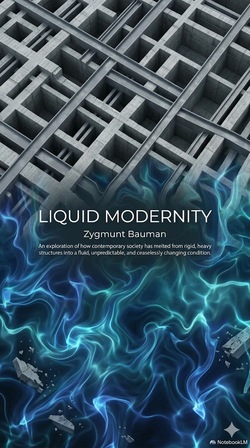
Liquid Modernity
Zygmunt Bauman’s *Liquid Modernity* redefines late modern life by contrasting our era of constant flux with the rigid, rule-bound "solid modernity" of Fordist factories, lifelong careers, and fixed social identities. Bauman frames liquid modernity as a world where every structure—jobs, relationships, even self-concepts—has melted into temporary, shifting states. He breaks down its core traits: everything operates on short-term cycles, power functions through speed and escape rather than control, individuals are forced into "involuntary nomadism" without stable anchors, and consumerism dominates as a tool for identity-building and anxiety relief. The book explores how capital’s relentless pursuit of mobility, fueled by digital technology, dismantled solid modernity’s foundations, leaving individuals grappling with precarious work, fragile communities, and pervasive uncertainty. Bauman also examines the crisis of critical theory in this new era, arguing it must shift from challenging state oppression to addressing the erosion of public space and the false freedom of consumer culture, offering a sharp, accessible analysis of life in a world where nothing stays fixed.