
Bryce Courtenay (5)
Loading…

Bryce Courtenay (5)

Bryce Courtenay

41389 learners

Bryce Courtenay’s fifth installment delivers a warm, unflinching dive into the later chapters of his extraordinary life. Drawing from his South African childhood, his transformative move to Australia, and decades as a beloved storyteller, this collection weaves intimate memoirs and reflective tales that capture the quiet triumphs and gentle heartaches of growing older. Courtenay’s signature vivid prose brings to life moments of family bonding, creative struggle, and hard-won wisdom, inviting readers to see their own life journeys through a new, compassionate lens. Whether you’re a long-time fan or discovering his work for the first time, this book offers heartfelt insights that resonate with anyone navigating change, cherishing memories, or seeking meaning in life’s unscripted moments.
life wisdomBryce CourtenaySouth African childhoodAustralian lifeFamily memoirs
Born a Crime
Loading…

Born a Crime

Trevor Noah

4.41287 learners

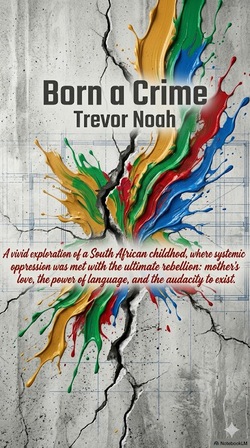
Trevor Noah’s *Born a Crime* is a raw, hilarious, and deeply moving memoir of growing up as a mixed-race child in apartheid-era South Africa—where his very existence was illegal. Born to a Black Xhosa mother and a white Swiss-German father, Trevor navigated a world that tried to box him into rigid racial categories, using language as his superpower to code-switch between communities and survive. His mother, a fiercely devout and fearless woman, defied every rule of the system: she snuck him into multiracial churches, taught him English as a ticket to opportunity, and even threw him from a moving car to escape violent bus hijackers. Through childhood mischief, teenage hustles selling bootleg CDs, and the trauma of his stepfather’s abuse, Trevor learns to turn hardship into humor, ultimately finding his voice as a comedian. This book isn’t just a story of survival—it’s a testament to the power of a parent’s love to free a child from the chains of oppression, and how laughter can be a weapon against injustice.

racial segregationApartheid South AfricaMixed-race identityMaternal resilienceLinguistic code-switching
The Story of My Experiments with Truth
Loading…

The Story of My Experiments with Truth

Mohandas K. Gandhi

4.2545 learners

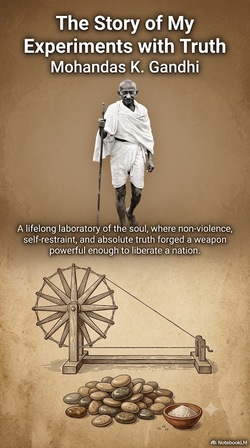
This intimate autobiography traces Mohandas K. Gandhi’s lifelong journey of moral experimentation and unwavering pursuit of truth, from his humble, flawed childhood in Porbandar to his emergence as a global leader of nonviolent resistance. Gandhi candidly recounts his early mistakes—secret meat-eating, theft, youthful marital jealousy—alongside formative moments that shaped his core beliefs: his vow of vegetarianism, encounters with texts like the Bhagavad Gita and the Sermon on the Mount, and racial injustices in South Africa that sparked his development of Satyagraha (truth force). The book details his decades organizing for Indian diaspora rights in South Africa, his return to India to lead grassroots anti-colonial movements, and his radical commitment to simplicity, celibacy, and self-purification. More than a memoir, it’s a raw, reflective record of one man’s relentless effort to align his life with his principles, offering timeless insights into nonviolence, justice, and moral courage.

Truthnonviolent resistanceSatyagrahaCelibacyVegetarianism
The Promise
Loading…

The Promise

Damon Galgut

4.2514 learners

Spanning decades of South Africa’s turbulent transition—from the final years of apartheid to the post-democracy era—Damon Galgut’s *The Promise* traces the fractured fate of the Swart family, anchored by a single unfulfilled vow. When young Amor Swart learns of her mother Rachel’s death, she overhears Rachel’s dying wish: that the family’s maid Salome be given the small Lombard house on their farm. Over the next three decades, this promise becomes a ghost haunting the Swarts: Anton, the rebellious son who deserts the army and struggles with crippling regret; Astrid, the vain daughter trapped in a cycle of infidelity and existential fear; and Amor, the quiet outsider who carries the vow like a lifelong weight. As the family navigates loss, betrayal, and the shifting tides of South African society—from Mandela’s historic rise to Zuma’s dramatic resignation—Amor finally confronts her family’s failures, choosing to honor the promise that binds them to their past, and to the woman who served them silently for years. A searing exploration of family, race, and redemption, the novel lays bare the cost of broken trust and the power of belated justice.

InheritanceRedemptionSwart FamilyThe PromiseSouth Africa
Concept

Born a Crime

Being mixed-race in apartheid South Africa was illegal. Trevor's existence violated laws banning interracial relationships, making him a 'crime' from birth.

Identityapartheidillegal existence
Scenario

2017 Wealth Inequality Stats

Oxfam 2017: 1% of people got 82% of new global wealth, while half the world got nothing. Credit Suisse noted extreme gaps in countries like South Africa.

InequalityWealthOxfam
Concept

The Unfulfilled Promise

The core agreement of the novel: white matriarch Rachel asked her husband to give their long-serving Black maid Salomi the small house she had lived in for decades, a promise dragged on for 30 years across generations.

Racial JusticeFamily VowSouth African Lit
Concept

Post-Apartheid Moral Debt

The collective moral burden white South African families carried after racial segregation ended, which most of them tried every possible way to avoid paying for decades.

ReconciliationPost-ApartheidMoral Debt
Concept

Family Curse Narrative

A classic South African literary trope: an entire family gets punished for their shared original sin of benefiting from apartheid, with every member facing early, tragic death.

South AfricaFamily CurseLiterary Trope
Scenario

Mandela’s Forgiveness Practice

South Africa’s ex-president Mandela refused to hold hatred for his prison guards, he led the whole country to reconcile peacefully instead of starting a new cycle of violence.

ForgivenessLeadershipVirtue
Scenario

South Africa Post-Apartheid Transition

South Africa built the 'Rainbow Coalition' after apartheid ended. It avoided total purge of white elites, used truth and reconciliation commission to handle historical violence, smoothly stepped into the free narrow corridor.

South Africademocratic transition
Scenario

Mandela’s Forgiving Humility

After 27 years in prison, Mandela forgave oppressors and united South Africa—humility healed a nation.

ForgivenessHumilityMandela
Scenario

Marikana Platinum Mine Strike

The 2012 South African platinum mine conflict left 34 workers dead, rooted in the gap between miners' 1000 euro monthly pay demand and mine owners' 75 euro raise offer.

Case StudySouth Africalabor conflict
Insight

Segregation Poisons Everyone

The apartheid system hurt not only Black South Africans, but also twisted the humanity of white people who benefited from it, making them selfish, cowardly, and unable to keep basic promises.

Systemic Harmapartheidracial inequality
Scenario

Anton Kills Himself

On South Africa’s public Reconciliation Day, drunk, broke, and full of regret for his wasted life, Anton walks out to the power line on his farm, and shoots himself with his old hunting rifle.

SuicideTragedycharacter ending
Scenario

South Africa Wins Rugby Cup

The whole country stops to watch the 1995 Rugby World Cup final, when Mandela hands the trophy to the Springboks captain. Every person on the farm, Black and white, cheers together in front of the TV.

National EventPost-ApartheidRugby
Scenario

Amor’s Decades Long Escape

Amor ran away from South Africa for decades, worked as an AIDS nurse in Durban, then moved to Cape Town, and cut almost all contact with her remaining family members.

EscapismNursecharacter case
Concept

Apartheid Farm Hierarchy

An unwritten rule on white-owned South African farms under apartheid: Black workers are treated as invisible, with zero legal right to own land even if they served the family for their whole life.

segregationapartheidFarm Life
Concept

Phoenix Settlement Intro

The Phoenix Settlement is a cooperative farm founded by Gandhi in South Africa. All residents work together, share equal stipends, and run the local newspaper manually without relying on paid labor.

Self-SufficiencyGandhiCommune