Democracy in America
Loading…

Democracy in America

Alexis de Tocqueville

01590 learners

First published in the 1830s after Alexis de Tocqueville’s extended field research across the United States, *Democracy in America* remains one of the most incisive, timeless accounts of how American democratic systems operate from the ground up. Starting with the grassroots New England township governance model, Tocqueville breaks down how local self-rule cultivates public participation, shared civic belonging, and collective habits that sustain a free society far more effectively than top-down state mandates. He unpacks the carefully calibrated checks and balances of the U.S. federal system, the hidden risks of "tyranny of the majority" that suppress independent thought, and the unique American tradition of voluntary associations that counter the isolating effects of individualism born from widespread social equality. He also explores underdiscussed tensions between democratic civilian priorities and military ambition, the evolution of social honor in a commercialized equal society, and deep structural divides around race and federal vs state power that still shape U.S. politics today.
IndividualismPopular SovereigntyAlexis de TocquevilleTownship self-governanceTyranny of the majority
Imagined Communities
Loading…

Imagined Communities

Benedict Anderson

4.21297 learners

Benedict Anderson’s *Imagined Communities* redefines the nation as an “imagined political community—limited and sovereign,” a groundbreaking framework that reshaped global understandings of nationalism. Anderson traces this modern cultural artifact’s origins to late 18th-century shifts: print capitalism, which forged shared linguistic bonds among dispersed readers; the decline of religious authority and dynastic legitimacy, creating a vacuum for secular collective belonging; and the rise of “homogeneous, empty time” through novels and newspapers, fostering simultaneous connection between strangers. The book dissects distinct waves of nationalism—from early American colonial movements to European linguistic nationalism, conservative official nationalism adopted by empires, and post-WWII anti-colonial struggles. It also distinguishes nationalism from racism, emphasizing the former’s rootedness in inclusive, affective belonging rather than hierarchical fear. A core text across disciplines, it offers a critical lens to unpack how imagined bonds shape global politics and identity.

SovereigntyNation-StateHistorical MemoryImagined CommunitiesPrint Capitalism
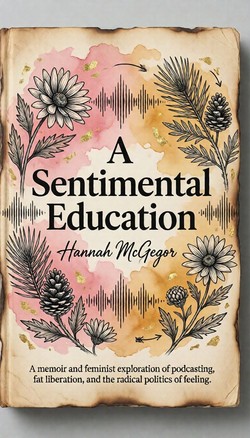
A Sentimental Education
Loading…

A Sentimental Education

Hannah McGregor

3.81174 learners

Hannah McGregor’s *A Sentimental Education* is a raw, incisive blend of memoir, cultural criticism, and feminist scholarship that confronts the tangled legacies of settler colonialism, sentimental culture, and bodily autonomy. Drawing on her experience as a white Canadian settler, McGregor unpacks her family’s complicity in colonial violence—from her Mennonite ancestors’ role in Canada’s westward expansion to the erasure of Indigenous land stewardship. She interrogates the gendered and racialized roots of sentimentalism, exposing how 19th-century narratives reinforced white supremacy and how modern iterations still marginalize queer, fat, and BIPOC voices. Weaving in her mother’s radical feminist care, her struggles with body image and fat liberation, and her groundbreaking work on podcasts like *Witch, Please*, McGregor argues for radical softness and ferocious care as acts of resistance. Rejecting academic elitism, she champions accessible, collaborative knowledge-making that centers marginalized experiences, offering a blueprint for living ethically in a world shaped by systemic injustice.

MemoirSettler colonialismSentimental cultureFeminist carePodcast scholarship
The Social Contract
Loading…

The Social Contract

Jean-Jacques Rousseau

4.4871 learners

Jean-Jacques Rousseau’s *The Social Contract* redefines the foundations of legitimate political authority by rejecting the idea that power stems from force or divine right. Starting from the iconic premise that “man is born free, and everywhere he is in chains,” Rousseau explores how people can escape the chaos of the natural state by forming a collective through a voluntary social contract. This agreement requires individuals to surrender unrestricted natural freedom to the community, in exchange for protected civil freedom and moral freedom—the ability to act rationally and autonomously under self-imposed laws. Central to his theory is the “general will,” the collective desire for the common good that guides the sovereign (the people as a whole). Rousseau critiques thinkers like Grotius and Hobbes for justifying tyranny, outlines ideal contexts for democracy, aristocracy, and monarchy, and emphasizes that sovereignty is inalienable and must be exercised directly by citizens. A cornerstone of modern political philosophy, this work lays out the principles for a free, equal, and just civil society.

SovereigntySocial ContractGeneral WillLegitimate GovernanceCivil Freedom
Life is Unfinished
Loading…

Life is Unfinished

Benedict Anderson

4.3757 learners

In *Imagined Communities*, Benedict Anderson redefines how we understand nationalism by arguing that nations are not innate, natural groups—but "imagined communities." Most members will never meet, yet they bond over shared myths, histories, and cultural symbols, viewing themselves as part of a collective whole. Anderson traces the origins of modern nationalism to 18th-century America, highlighting how print capitalism—mass-produced newspapers, books, and pamphlets in standardized vernaculars—created a shared sense of belonging across geographically dispersed people. He then explores how this model adapted across Europe, Asia, and colonial contexts, examining how anti-colonial movements reimagined these communities to challenge imperial rule. This landmark work reshapes our grasp of identity, sovereignty, and the forces that bind modern societies, offering a foundational framework for anyone seeking to unpack the complexities of nationhood and collective belonging.

Cultural IdentityNationalismColonialismSovereigntyImagined Communities
21 Lessons for the 21st Century
Loading…

21 Lessons for the 21st Century

Yuval Noah Harari

4.2516 learners

In *21 Lessons for the 21st Century*, Yuval Noah Harari cuts through the noise of modern chaos to unpack the defining crises and opportunities of our time. Starting with the collapse of liberalism’s once-dominant narrative—undermined by 2008’s financial crash, Brexit, and Trump’s rise—he explores how AI and biotech are reshaping work, widening inequality, and threatening to create a “useless class” left behind by automation. Harari dives into the battle for data sovereignty, warning that tech giants and governments alike are exploiting personal information to gain unprecedented power. He also addresses cultural clashes, terrorism’s psychological tactics, and the limits of nationalism in solving global threats like climate change. Finally, he offers actionable paths forward: reorienting education around critical thinking and adaptability, embracing secular humanism’s core values, and using mindfulness meditation to reclaim control of our minds from algorithmic manipulation. This book isn’t just a diagnosis of our era—it’s a guide to navigating uncertainty with clarity and resilience.

Liberalism CrisisArtificial IntelligenceUniversal Basic IncomeData SovereigntyPost-truth Era
Concept

US Popular Sovereignty Rule

The core rule that every individual has equal sovereignty power, people only obey social rules when they agree collective supervision benefits everyone, and stay fully independent on private matters.

US politicspeople sovereignty
Insight

Empty Land Acknowledgments

McGregor says land acknowledgments are often hollow. Settlers thank Indigenous peoples but skip real action—like respecting sovereignty or learning land history.

ColonialismLand JusticeSettler Responsibility