
Walden
Loading…

Walden

Henry David Thoreau

4.5626 learners

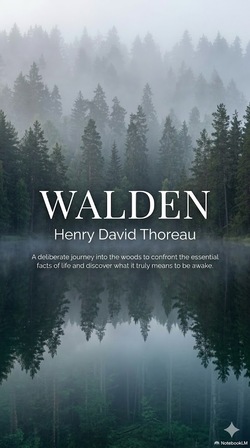
In 1845, Henry David Thoreau built a tiny cabin on the shores of Walden Pond in Concord, Massachusetts, and lived there for two years and two months—self-reliant, hands-on, and intentionally disconnected from mainstream society’s hustle. Walden is his raw, unflinching account of this simple living experiment, where he grew his own food, chopped his own wood, and rejected the consumerist trap he saw ensnaring his neighbors. Part memoir, part philosophical treatise, the book challenges readers to question the cost of chasing wealth and status, arguing true freedom comes from stripping life down to essentials: food, shelter, clothing, and fuel. Thoreau weaves vivid nature observations—from the pond’s shifting seasons to forest creatures’ antics—with meditations on solitude, self-discovery, and the quiet rebellion of living deliberately. More than a cabin life story, it’s a timeless call to wake up to the present’s beauty and truth, and live aligned with personal values, not others’ expectations.
Self-RelianceSpiritual FreedomWalden PondSimple LivingAnti-materialism
We Are All Stardust
Loading…

We Are All Stardust

Li Yinhe

3.4496 learners

Looking up at the night sky, Li Yinhe confronts humanity’s tiny, fleeting place in the universe—a realization that once plunged her into existential despair. Turning away from the dead-end comfort of philosophers like Kierkegaard and Schopenhauer, she learns to embrace her stardust-like insignificance instead of fearing it. This shift frees her from trivial worldly worries, guiding her to prioritize what truly matters: love and beauty. In this intimate collection, Li explores the full spectrum of love—from fiery, lifelong passion (using Foucault’s relationship as a counterexample to the "fading passion" myth) to pure Platonic soul connection. She celebrates writing as a creative act of beauty, advocates for minimalist living to cut through life’s noise, and argues for spiritual freedom from societal norms and power’s constraints. Blending personal anecdotes, philosophical insights, and cultural observations, Li offers a roadmap for finding meaning in life’s brevity: reject the search for universal purpose, and instead craft your own through love, creativity, and intentional, joyful living. It’s a warm, wise guide to thriving amid the universe’s vast emptiness.

Spiritual Freedomminimalist livingExistential NihilismPassionate LovePlatonic Love
Emile
Loading…

Emile

Jean-Jacques Rousseau

4.2427 learners

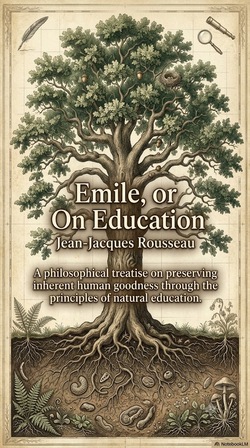
Jean-Jacques Rousseau’s *Emile* revolutionizes education with its radical naturalist philosophy, anchored in the core principle: “Everything from the Creator is good; everything in human hands turns bad.” Following the fictional boy Emile’s journey from infancy to adulthood, Rousseau outlines a stage-specific approach that rejects rigid traditional schooling. In early years, he champions “negative education”—shielding children from vice and premature moral lessons to preserve their innate goodness. As Emile matures, the focus shifts to sensory and physical training, building a robust body to lay the groundwork for rational thought. Adolescence brings moral and religious enlightenment rooted in empathy and natural religion, not dogma. For young adulthood, Rousseau guides Emile through navigating desire and social life, emphasizing respect over indulgence. He also introduces Sophie, Emile’s ideal partner, whose education aligns with feminine nature—nurturing grace, independence, and domestic responsibility. Later sections tie individual freedom to political systems via social contract theory. The appendix’s redemptive tale of Emile and Sophie underscores love’s fragility and the resilience of the free spirit. More than a manual, *Emile* is a profound exploration of human nature and what it means to raise someone true to themselves.

Spiritual FreedomSocial ContractSophieNatural EducationEmile
Golden Sentence

Calm Mind Brings Coolness

Old Chinese wisdom says: 'If you keep a calm heart, you will feel cool even in hot summer.' True freedom does not rely on outer environment, but on inner peaceful state.

MindsetSpiritual FreedomChinese Wisdom
Insight

Han-Jin Thought Transition

From Han's Confucian orthodoxy to Jin's metaphysics, Shi shifted to individual spiritual freedom.

MetaphysicsHan-Jin TransitionSpiritual Freedom
Insight

Healthy Attitude To Collectibles

The ideal attitude for enjoying collectibles is 'attach emotion to objects, not get obsessed with them'. You can love beautiful items, but never be trapped or controlled by them.

Life AttitudeSpiritual Freedomcollecting
No more