
Fire in the Valley
Loading…

Fire in the Valley

Michael Swaine;Paul Freiberger

4.21041 learners

Fire in the Valley is the definitive chronicle of the personal computer revolution that birthed Silicon Valley and transformed global technology. Starting with 19th-century visionaries like Charles Babbage and Ada Lovelace, it traces the evolution from early vacuum tube machines like ENIAC to the invention of the microprocessor, the game-changing Altair 8800, and the grassroots Homebrew Computer Club that fueled amateur innovation. The book dives into the rivalries, triumphs, and failures of iconic figures—Steve Jobs and Steve Wozniak building Apple in a garage, Bill Gates and Paul Allen launching Microsoft, and IBM’s entry that reshaped the industry. It also chronicles the shift to the post-PC era, from the iPod and iPhone to cloud computing, capturing the chaotic, passionate spirit of engineers, entrepreneurs, and tinkerers who turned a niche hobby into a global phenomenon that redefined how we work, connect, and live.
Steve JobsMicrosoftAltair 8800Silicon ValleyApple Inc.
Humility and Greatness
Loading…

Humility and Greatness

Bai Kaiyuan

3.2753 learners

In *Humility and Greatness*, author Bai Kaiyuan unpacks the counterintuitive link between humility and enduring success—arguing that true greatness isn’t rooted in arrogance, but in the quiet strength of humility. Drawing on iconic American figures and modern business leaders, he breaks down how Abraham Lincoln’s willingness to listen to political rivals shaped the nation’s recovery, how Steve Jobs’ post-failure shift to humble collaboration fueled Apple’s second golden age, and how Howard Schultz’s employee-first humility built Starbucks’ loyal global community. Beyond compelling stories, the book offers actionable frameworks: how to practice active listening in team meetings, how to admit mistakes without losing credibility, and how to center others’ growth while advancing your own. Whether you’re a startup founder, a mid-career manager, or someone striving for personal growth, this book shows that humility isn’t a sign of weakness—it’s the foundation of lasting, meaningful greatness.

personal growthSteve JobsTeam CollaborationAbraham LincolnHumble Leadership
Steve Jobs
Loading…

Steve Jobs

Walter Isaacson

4.1666 learners

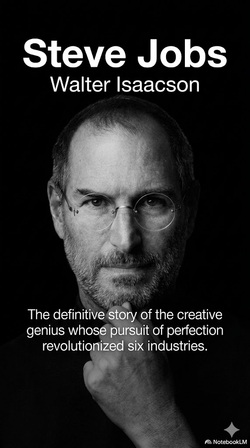
Walter Isaacson’s definitive biography of Steve Jobs pulls back the curtain on the visionary’s turbulent, extraordinary life—from his adoption by working-class parents in Silicon Valley to his rise as co-founder of Apple, ousting from the company he built, and triumphant return to reshape tech forever. This unfiltered account delves into Jobs’ obsession with perfection, forged by his father’s garage lessons and his time at Reed College, his volatile management style, and his relentless drive to merge technology with human creativity. It traces his pivotal stints at NeXT and Pixar, where he honed his craft and redefined animation, before chronicling his comeback to launch iconic products like the iMac, iPod, iPhone, and iPad. Isaacson captures the contradictions of Jobs: the genius who revolutionized industries, the demanding leader who pushed teams to impossible heights, and the man grappling with adoption, family, and mortality. More than a tech story, it’s a portrait of a man who saw the future and refused to settle for anything less than extraordinary.

Steve JobsApple Inc.NeXTPixarMacintosh
Scenario

Jobs Returns to Apple (1997)

When Jobs returned to Apple in 1997, the company was dying. He cut 70% of projects, launched colorful iMacs, and got Microsoft's $1.5M investment—saving Apple.

Steve JobsApple RevivaliMac
Insight

Jobs' Focus on Simplicity

Jobs believed great design was about removing unnecessary parts. His products (iMac, iPod, iPhone) prioritized simplicity—making tech accessible to everyone.

Steve Jobsuser experienceDesign Simplicity
Scenario

Apple I: Jobs & Woz's First Product

Woz designed Apple I (1976) after seeing 6502 chips. Jobs sold his van, Woz sold his HP calculator to fund it. They sold 200 units—starting Apple.

Steve JobsSteve WozniakApple I
Insight

Adoption Shapes Jobs' Traits

Jobs' experience of being given up by his birth parents then chosen by Paul and Clara built his extreme desire for control, and pushed him to prove he was special and worthy of being picked.

GrowthSteve JobsPersonality
Scenario

Jobs Copycat Styling

Elizabeth Holmes deliberately copied Steve Jobs’ iconic all-black turtleneck look, deepened her natural speaking voice, and marketed herself as the next revolutionary tech founder.

Steve JobsPersonal BrandingElizabeth Holmes
Scenario

Jobs Saved Apple With Intuition

When Steve Jobs returned to Apple in 1997, the company's market share dropped to 3.5%. He cut 70% of useless projects, partnered with Bill Gates, and launched the iPod, turning Apple into the most valuable company in the world in just a few years.

IntuitionLeadershipBusiness Case
Concept

Reality Distortion Field

A well-known term describing Steve Jobs' unique charisma: he used his strong will and persuasive charm to twist others' perception of reality, pushing teams to finish tasks that seemed totally impossible.

LeadershipMotivationSteve Jobs
Golden Sentence

Real Artists Ship

The famous line Jobs told his panicking Mac team before the deadline: true artists always finish their work and deliver it to the world, no matter how hard it is, no delays allowed.

TeamworkExecutionSteve Jobs
Quote

Jobs on Creativity

"Creativity is just connecting things. When you ask creative people how they did something, they feel guilty—they just saw something." — Steve Jobs

QuoteCreativityJobs
Quote

Steve Jobs On Death

"If today were the last day of my life, would I want to do what I am about to do today?" Use to prioritize what matters.

MotivationPrioritizationSteve Jobs
Insight

Japan's Education Kills Innovation

Japan’s current education system only trains homogeneous students who memorize standard answers, it cannot cultivate bold, creative talents like Steve Jobs or Elon Musk that drive new industries.

InnovationEducation ReformTalent
Concept

End-to-End Integration

Steve Jobs' core product philosophy: hardware and software should be fully controlled and developed together, instead of being separated, to deliver a seamless, top-tier user experience.

AppleProduct DesignTech Strategy
Insight

Saying No Drives Success

Steve Jobs believed that deciding what products NOT to make is far more important than deciding what to make. Cutting 70% of messy old products helped Apple get back to profitability quickly.

AppleFocusManagement
Golden Sentence

Death Clears All Noise

Jobs' most famous graduation speech line: Remembering that you are going to die soon is the best way to avoid the trap of thinking you have something to lose. You are already naked, no reason not to follow your heart.

MotivationLifeSteve Jobs