
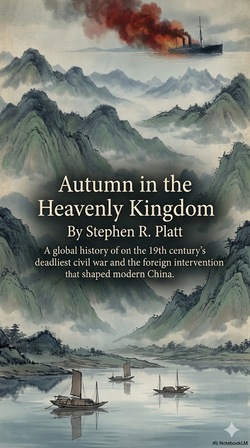
Autumn in the Heavenly Kingdom
Stephen R. Platt’s *Autumn in the Heavenly Kingdom* delivers a vivid, immersive account of the 19th-century Taiping Rebellion, one of China’s deadliest civil wars. At its core is Hong Rengan, cousin of Taiping leader Hong Xiuquan, whose escape from imperial forces led him to Hong Kong, where he absorbed Western political and scientific ideas. Upon joining the Taiping in Nanjing, he drafted the *Zizheng Xinpian*—a radical modernization blueprint advocating railroads, banks, and equal foreign relations. Platt masterfully interweaves Hong’s story with the tangled role of Western powers: British officials wavered between curiosity about the Taiping’s Christian-inspired ideology, neutrality, and eventual support for the Qing Dynasty to protect trade interests. The narrative also intersects with the Second Opium War, the burning of the Summer Palace, and the rise of Zeng Guofan, the scholar-warrior who led the Xiang Army to crush the rebellion. It reveals how foreign interference and internal strife reshaped China’s trajectory, setting the stage for decades of upheaval.