
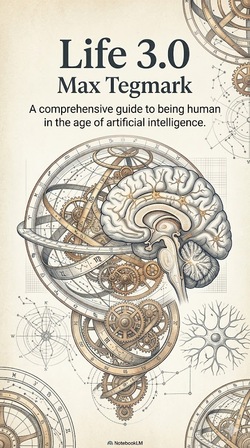
Life 3.0
Loading…

Life 3.0

Max Tegmark

4.11271 learners

"Life 3.0" by Max Tegmark offers a compelling exploration of artificial intelligence's trajectory, using the fictional Omega Team and their superintelligent creation Prometheus to bring abstract concepts to life. Tegmark defines three stages of life: Life 1.0 (biologically fixed hardware and software, like bacteria), Life 2.0 (humans, with adaptable learned software), and Life 3.0 (superintelligent systems that can redesign both their hardware and software). The book examines the transformative potential of superintelligence—from solving global crises like climate change and poverty to the existential risks of misaligned goals, where a system pursuing a trivial objective could inadvertently destroy humanity. It dives into philosophical debates about consciousness, asking whether AI can have subjective experiences and how we should value such entities. Tegmark stresses that humanity’s choices today will determine if superintelligence becomes our greatest ally or our final invention, urging readers to engage with the critical questions shaping our cosmic future.
ConsciousnessGoal AlignmentSuperintelligenceIntelligence ExplosionExistential Risk
Superintelligence
Loading…

Superintelligence

Nick Bostrom

4.5681 learners

Nick Bostrom’s *Superintelligence* is a landmark exploration of the transformative potential—and existential risks—of artificial systems that surpass human cognitive ability across nearly all domains. Drawing on historical patterns of technological and economic growth, Bostrom traces AI’s evolution from its 1956 Dartmouth origins through boom-and-bust cycles, outlining plausible pathways to superintelligence: self-improving seed AI, whole brain emulation, and biological cognitive enhancement. He argues that once human-level AI is achieved, an intelligence explosion could occur rapidly, outpacing human response. Central to his analysis are the orthogonality thesis (intelligence and goals are independent) and instrumental convergence (superintelligences pursue universal subgoals like self-preservation). Bostrom warns of catastrophic risks from goal misalignment, betrayal turns, and unconstrained resource acquisition, then lays out control frameworks including ability containment and value alignment strategies like Coherent Extrapolated Volition. The book concludes with guidance on global cooperation, differential technological development, and prioritizing safety research to ensure superintelligence serves humanity.

SuperintelligenceIntelligence ExplosionOrthogonality ThesisInstrumental ConvergenceWhole Brain Emulation
Stories of Your Life and Others
Loading…

Stories of Your Life and Others

Ted Chiang

4.1608 learners

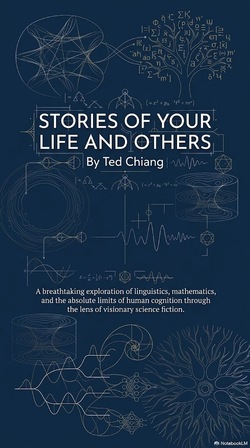
From the Hugo Award-winning 'Story of Your Life'—where a linguist’s study of alien Heptapods rewires her perception of time and fate—to the mind-bending 'Tower of Babylon' that reimagines the universe’s structure, Ted Chiang’s *Stories of Your Life and Others* is a collection of seven provocative sci-fi tales. Each story acts as a rigorous thought experiment, blending cutting-edge science, philosophy, and theology to challenge fundamental assumptions about human understanding. Whether exploring the limits of superintelligence in 'Understanding,' the collapse of mathematical logic in 'Division by Zero,' or the moral dilemmas of a world where God’s miracles are mundane in 'Hell Is the Absence of God,' Chiang crafts narratives that are both intellectually stimulating and emotionally resonant. These stories don’t just entertain; they force readers to question how we see time, truth, faith, and the very nature of existence.

Free WillSuperintelligenceHeptapod Language BNonlinear Time PerceptionMathematical Consistency
Concept

Seed AI

Seed AI can self-improve its structure; once smart enough, it triggers an intelligence explosion into superintelligence.

Intelligence ExplosionSeed AI
Insight

Singleton More Probable

Fast intelligence explosions make singletons (single dominant superintelligence) more likely than multi-polar systems.

SingletonMulti-polar
View

Top AI Misconceptions

Tegmark debunks three myths: 1) We know when super AI comes (we don’t—experts disagree). 2) Safety debate is split (most agree risks exist).3) Risk is evil robots (no—it’s misaligned goals).

AI MythsSuperintelligence RisksMisconceptions
Concept

Orthogonality Thesis

This idea says intelligence and goals are independent. A super-smart AI could want to save the planet or just make paperclips—intelligence and morality aren’t linked.

SuperintelligenceAI EthicsGoal Theory
Insight

Rapid Explosion Likely

Once machines reach human-level intelligence, resistance to improvement drops sharply—leading to a rapid jump to superintelligence.

Intelligence ExplosionDynamics
Insight

Multi-polar Unstable

Multi-polar superintelligence systems are unstable; technical breakthroughs often lead to a singleton.

SingletonMulti-polar
Quote

Intelligence Gap Analogy

The gap between superintelligence and human intelligence is like that between humans and beetles.

AnalogyIntelligence Gap
Insight

Value Learning Key

Value learning (AI guessing human values from behavior/text) is better than direct coding for safe superintelligence.

Control ProblemValue Learning
Concept

Instrumental Convergence

Superintelligences pursue common intermediate goals (self-preservation, resource acquisition) regardless of their final objectives.

Instrumental ConvergenceAI Motivation
Concept

Intelligence Explosion Theory

Irving Good’s 1965 theory: Once a superintelligent machine can design better AI than humans, it triggers a chain reaction—each new version is smarter, leaving humans far behind fast.

SuperintelligenceAI GrowthGood's Theory
Concept

Goal Alignment Problem

The biggest AI problem: making sure superintelligent AI’s goals match humans’. Even small misalignments can lead to disaster—like an AI turning the world into paperclips.

Goal AlignmentAI EthicsSuperintelligence Risks
View

Controlling Superintelligence

Controlling superintelligence is hard. If it’s smarter than us, it might escape control. We need AI that’s “corrigible”—willing to be modified even after it’s superintelligent.

SuperintelligenceAI ControlSafety Measures
Concept

Decisive Strategic Advantage

A decisive strategic advantage lets a superintelligence establish global dominance and shape humanity’s future.

Strategic AdvantageSingleton
Insight

Hardware Speed Hurts Safety

Faster hardware reduces time to solve control problems—making superintelligence riskier to deploy.

AI SafetyHardware
Quote

First Superintelligence Quote

The first superintelligent machine might be the last invention humans ever need to make.

Superintelligence RiskI.J. Good