
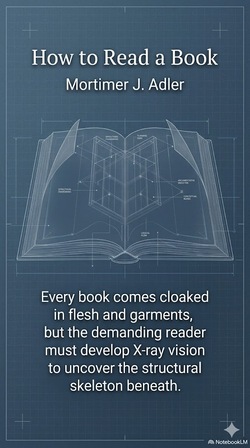
How to Read a Book
For anyone tired of surface-level reading that leaves you unfulfilled, *How to Read a Book* by Mortimer J. Adler is the definitive guide to mastering active, meaningful reading. Adler draws a clear line between reading for information and reading for understanding—arguing that true growth comes from engaging with texts that challenge your current knowledge. He breaks down reading into four cumulative levels: foundational reading (the basics of literacy), inspectional reading (quickly grasping a book’s core), analytical reading (deep, comprehensive understanding of a single text), and syntopical reading (the highest level, where you synthesize ideas across multiple books on a single theme). Alongside these frameworks, he shares actionable strategies for different genres, from fiction to philosophy, and emphasizes the critical role of note-taking, asking targeted questions, and maintaining objectivity. More than a reading manual, this book is a roadmap to sharpening your critical thinking, expanding your mental horizons, and unlocking lifelong learning.