
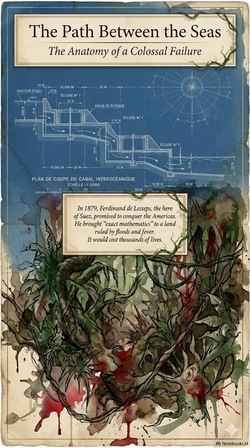
The Path Between the Seas
David McCullough’s *The Path Between the Seas* tells the sweeping, dramatic story of the Panama Canal—one of humanity’s greatest engineering feats. Spanning decades, it traces the ill-fated French attempt led by Ferdinand de Lesseps, whose hubris and disregard for Panama’s brutal climate and geology led to catastrophic failure, financial scandal, and thousands of lives lost to yellow fever. The narrative then shifts to America’s rise to the challenge, driven by Theodore Roosevelt’s unyielding commitment to sea power. Readers witness the political maneuvering that split Panama from Colombia, the groundbreaking work of William Gorgas to eradicate yellow fever, John Stevens’ transformative infrastructure overhauls, and George Goethals’ ironclad leadership that brought the project home ahead of schedule. McCullough weaves intimate personal stories with epic historical events, revealing the triumphs, tragedies, and relentless human grit that turned a 400-year-old dream into a reality reshaping global trade and U.S. geopolitical power.