
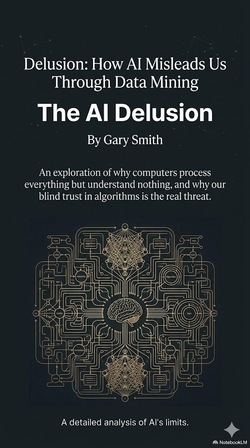
The AI Delusion
Loading…

The AI Delusion

Gary Smith

3.31112 learners

In *The AI Delusion*, economist Gary Smith dismantles the hype surrounding artificial intelligence, arguing that today’s AI systems are not truly intelligent—they’re just sophisticated tools for data matching and brute-force computation. Using vivid examples from Jeopardy!’s Watson, chess-playing programs like AlphaZero, and real-world failures in medicine, stock trading, and hiring, Smith shows that machines lack human understanding: they can’t grasp context, distinguish meaningful patterns from random coincidences, or apply common sense. He exposes the dangers of data mining, from the Texas Sharpshooter Fallacy (cherry-picking data to fit theories) to overfitting models that work perfectly on old data but fail catastrophically on new inputs. Smith also warns against blind trust in black-box algorithms, which perpetuate bias, enable unfair decisions, and risk catastrophic errors in high-stakes fields like healthcare and military operations. Ultimately, he emphasizes that human reasoning, critical thinking, and common sense are irreplaceable—we should use AI as a tool, not mistake it for a thinking, feeling counterpart.
Data MiningOverfittingTuring TestHuman IntelligenceArtificial Intelligence (AI)
The Age of Spiritual Machines
Loading…

The Age of Spiritual Machines

Ray Kurzweil

3.9933 learners

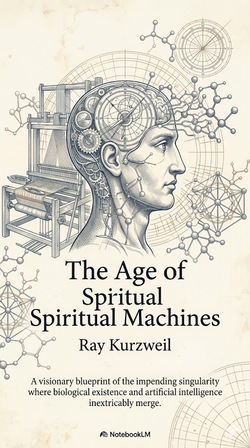
In Ray Kurzweil’s groundbreaking *The Age of Spiritual Machines*, readers explore the exponential trajectory of technological evolution, anchored by the pivotal Law of Accelerating Returns. Kurzweil frames technology as the continuation of biological evolution, tracing how computing power, AI, and emerging innovations like nanotechnology and quantum computing advance at an ever-quickening pace. The book paints vivid, data-backed portraits of future milestones: 2019’s ubiquitous invisible computers, 2029’s mainstream neural implants blurring human-machine boundaries, and 2099’s digitized consciousness and nanotech bodies redefining the very concept of "self." It delves into core AI frameworks—neural networks, recursive algorithms, evolutionary algorithms—and grapples with profound philosophical quandaries: machine consciousness, free will, and the ethical rights of intelligent machines. Kurzweil also addresses critical risks, from job displacement to AI misalignment, and offers actionable insights on balancing tech progress with human values. A visionary roadmap, it challenges readers to rethink humanity’s place in an era of merging minds and machines.

Quantum ComputingNeural NetworksTuring TestLaw of Accelerating ReturnsNanotechnology
In Our Own Image: Savior or Destroyer? The History and Future of Artificial Intelligence
Loading…

In Our Own Image: Savior or Destroyer? The History and Future of Artificial Intelligence

George Zarkadakis

3.8643 learners

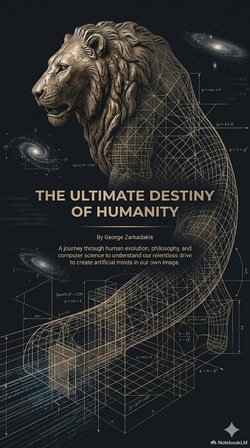
Drawing on archaeology, philosophy, neuroscience, and computer science, *The Ultimate Fate of Humanity* traces the evolution of human consciousness from the 40,000-year-old Lion Man sculpture—our earliest known artistic creation—to the cutting edge of artificial intelligence. It unpacks the cognitive revolution that unlocked human creativity, explores age-old debates about mind-body dualism and the nature of consciousness, and dives into the history of computing and AI, from Turing’s foundational tests to modern neural networks. The book also confronts pressing questions: Can AI achieve true consciousness? Will digital immortality become a reality? What does the rise of superintelligence mean for humanity’s future? By bridging ancient human origins and futuristic tech, it offers a compelling framework to understand our mental roots and navigate the uncharted territory of the AI era.

ConsciousnessArtificial IntelligenceNeuroplasticityCyberneticsCognitive Revolution
Concept

Turing Test

The Turing Test checks if a machine is intelligent: if a human can’t tell it apart from another human via chat, it passes. It’s a classic way to judge AI.

AIintelligence
Concept

Turing Test

Alan Turing’s 1950 idea: If a machine’s written answers can’t be distinguished from humans, it’s considered to 'think'.

AITuring TestAlan Turing
Insight

Computers Can Simulate Human Mind

Turing argued that a properly programmed computer could mimic any logical action a human brain takes, and eventually show true intelligent behavior.

AITuring TestComputer Theory
No more