The Science of Distributing Wealth
Loading…

The Science of Distributing Wealth

Bian Zhihan

41328 learners

The Science of Distributing Wealth by Bian Zhihan demystifies the complex economic and social mechanisms shaping how wealth is divided across societies. Blending rigorous data analysis, historical case studies, and actionable policy insights, this book moves beyond ideological debates to present evidence-based approaches to balancing economic efficiency and social equity. It examines successful models from around the world—from Nordic welfare systems to targeted U.S. policy reforms—while dissecting root causes of growing wealth gaps, including inheritance structures, tax policies, and access to education. Designed for both economics enthusiasts and policymakers, it breaks down technical concepts into accessible language, offering practical strategies to build more sustainable and fair wealth distribution systems. Whether you’re curious about reducing inequality or understanding the science behind equitable growth, this book provides a comprehensive roadmap to navigate one of today’s most pressing global challenges.
Social MobilityWealth Distribution ModelsProgressive TaxationGini CoefficientInheritance Tax
Writing is a Craft
Loading…

Writing is a Craft

Liu Junqiang

3.21305 learners

Writing Is a Craft tackles the frustrating gap between high school essay writing and college academic papers— a top source of stress for students and educators alike. It breaks down the core differences: essays are personal, formulaic, and exam-focused, while papers demand original arguments, rigorous evidence, and independent critical thinking. This book reframes writing not as an innate talent, but as a learnable skill, like driving or cooking, emphasizing mastery requires both explicit rules and silent knowledge (intuitive judgment built through consistent practice and targeted feedback). Covering a complete, practical training system, it guides readers through refining a "glass-like" clear writing style, using the hourglass method to narrow research questions, applying variable thinking for sharp analysis, structuring arguments with a tree-like framework, following the TAIMRDR academic paper structure, weaving narrative elements into scholarly work, and adopting a reader-centric approach. It equips students to transition from passive knowledge consumers to active creators, and gives professionals the tools to communicate ideas clearly and persuasively in the workplace.

Persuasive WritingTAIMRDR StructureVariable ThinkingLiterature Reviewsilent knowledge
New Structural Economics
Loading…

New Structural Economics

Justin Yifu Lin

4.41300 learners

Developed by Justin Yifu Lin, *New Structural Economics* redefines how developing nations achieve sustainable, inclusive growth by moving past failed ideologies of either heavy government intervention or unfettered market liberalization. At its core, the theory argues that a country’s optimal industrial structure is determined by its unique factor endowment structure—land, labor, capital, and infrastructure. By aligning industries with these inherent strengths, firms gain competitive viability, generate economic surpluses, and accelerate capital accumulation to drive gradual industrial upgrading. The book introduces the Growth Identification and Facilitation Framework (GIFF), a step-by-step tool for governments to identify promising industries, address bottlenecks like poor infrastructure or limited financing, and support pioneer firms without distorting markets. Real-world case studies, including Nigeria’s economic transition and East Asia’s rapid growth, illustrate how balancing market efficiency with targeted government guidance can unlock catch-up advantages, reduce poverty, and create stable employment.

Comparative AdvantageFirm ViabilityIndustrial UpgradingFactor Endowment StructureDevelopment Strategy
Small Data
Loading…

Small Data

Martin Lindstrom

4.61298 learners

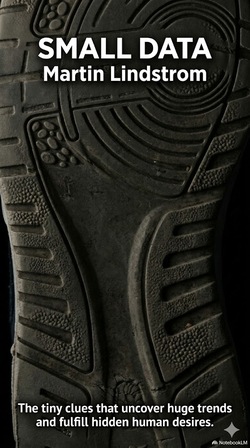
Martin Lindstrom’s *Small Data* redefines how businesses connect with consumers by zeroing in on the tiny, overlooked details of daily life—from the way Russians arrange fridge magnets to how American grocery shoppers respond to square cakes. Across case studies spanning the U.S., Russia, India, Brazil, and China, Lindstrom reveals why big data fails to capture the emotional drivers behind behavior, while small data (observations of home spaces, social rituals, and unspoken cultural norms) unlocks hidden, unmet desires. He introduces the 7C Framework, a step-by-step method to collect, connect, and convert these micro-clues into actionable brand strategies. Whether revamping a grocery store’s community vibe, repositioning a beer brand in Brazil, or designing a car for Chinese families, Lindstrom proves that the most powerful consumer insights aren’t in spreadsheets—they’re in the unscripted moments that reveal who people truly are.

Small Data7C FrameworkConsumer InsightsCultural ObservationsBrand Strategy
Blitzscaling
Loading…

Blitzscaling

Reid Hoffman;Chris Yeh

4.31279 learners

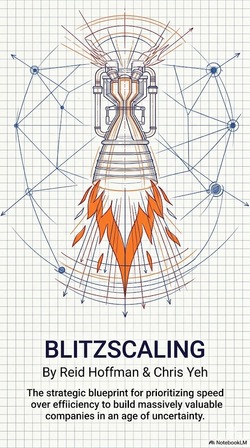
In Blitzscaling, Reid Hoffman and Chris Yeh lay out a groundbreaking growth strategy that prioritizes speed over short-term efficiency to build dominant, scalable businesses in volatile markets. Unlike traditional growth models focused on stability and optimization, blitzscaling embraces controlled chaos—accepting inefficiencies and calculated risks to rapidly hit critical mass and lock in unbeatable competitive advantages, as seen in Airbnb’s fight against Wimdu, WeChat’s explosive user surge, and Zara’s fast-fashion dominance. The book breaks down actionable frameworks: designing scalable business models with network effects and high margins, navigating five distinct organizational phases (from "Family" to "Nation"), and adopting counterintuitive management rules like hiring "good enough" talent and launching imperfect products. It extends beyond tech, demonstrating how traditional industries, nonprofits, and even political campaigns can leverage blitzscaling. Crucially, Hoffman and Yeh emphasize responsible blitzscaling, guiding readers to balance speed with ethical accountability to ensure long-term sustainability, making this playbook essential for startup founders, corporate leaders, and innovators aiming to outpace competitors and build enduring market leaders.

Corporate ResponsibilityNetwork EffectsGrowth StrategyViral GrowthBusiness Model Innovation
Nudge
Loading…

Nudge

Richard H. Thaler;Cass R. Sunstein

4.31279 learners

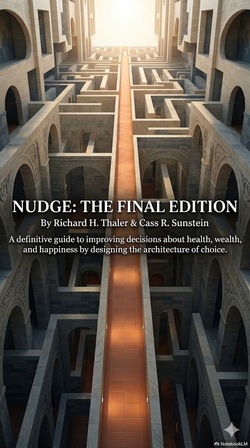
Co-authored by Nobel Prize-winning economist Richard H. Thaler and legal scholar Cass R. Sunstein, *Nudge* introduces the transformative concept of "libertarian paternalism"—a gentle, freedom-preserving approach to guiding people toward better decisions. The book breaks down how our brains rely on two thinking systems: a fast, intuitive one prone to cognitive biases (like anchoring, loss aversion, and status quo bias) and a slow, deliberate, rational one. These biases lead us to make suboptimal choices, from neglecting retirement savings to overspending on unnecessary fees. Thaler and Sunstein illustrate how small, strategic "nudges"—such as setting automatic 401(k) enrollment as the default, simplifying complex insurance plans, or using social norms to encourage eco-friendly habits—can help us avoid common pitfalls. Packed with real-world examples from finance, healthcare, education, and public policy, *Nudge* proves that thoughtful choice architecture can boost personal well-being and societal good while keeping full choice in our hands.

Cognitive BiasesLoss AversionBehavioral EconomicsStatus Quo BiasLibertarian Paternalism
Tristes Tropiques
Loading…

Tristes Tropiques

Claude Levi-Strauss

4.11259 learners

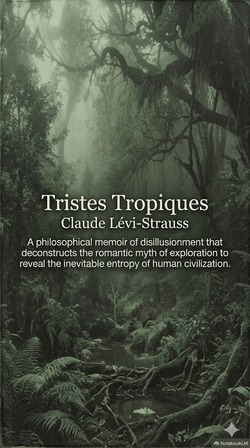
In *Tristes Tropiques*, Claude Lévi-Strauss crafts a bittersweet, introspective narrative that blends vivid anthropological fieldwork with sharp philosophical critique. Grappling with his conflicting love-hate relationship with travel, he recounts arduous journeys through Brazil’s Amazon rainforest, intimate encounters with Indigenous tribes like the Nambikwara and Bororo, and visits to ancient sites such as Takhshila. Lévi-Strauss dismantles the hollow spectacle of modern adventure tourism, while laying bare the erosion of Indigenous cultures by Western colonialism. Drawing from Marx and Rousseau, he questions the foundations of Western progress, exploring how anthropological research both illuminates and complicates our understanding of humanity. Part memoir, part academic inquiry, this book challenges readers to confront the illusions of civilization and reexamine the core of what binds all people together.

Indigenous CommunitiesTropical FieldworkCivilization CritiqueNambikwara TribeBororo Tribe
Company of One
Loading…

Company of One

Paul Jarvis

4.51250 learners

Paul Jarvis’s Company of One redefines entrepreneurial success by challenging the pervasive myth that growth is the only measure of a thriving business. Targeted at solopreneurs, small team leaders, and aspiring business owners tired of hustle culture’s endless scaling demands, this book advocates for building sustainable, profitable ventures that prioritize lifestyle, control, and purpose over expansion. Jarvis draws on real-world examples of successful small businesses that chose to stay small—from freelance designers to niche product makers—to illustrate how focusing on niche markets, setting revenue-based goals instead of headcount, and avoiding overgrowth pitfalls can lead to long-term fulfillment and financial stability. He provides actionable strategies for identifying ideal customers, optimizing operations without unnecessary complexity, and redefining success on your own terms, offering a refreshing alternative to the growth-at-all-costs model.

Work-Life BalanceCompany of OneSustainable Small BusinessProfit-First ApproachNiche Targeting
Structural Thinking
Loading…

Structural Thinking

Li Zhongqiu

3.21233 learners

Structural Thinking is an essential core skill for every professional, acting as the foundational "basic training" for navigating workplace tasks—from problem-solving and decision-making to writing reports and verbal communication. This book breaks down the core of structural thinking: the "top-down, then bottom-up" approach, and introduces practical tools like the Pyramid Structure (rooted in Barbara Minto’s work) and the MECE Principle to streamline thinking and communication. It walks readers through a 5-step actionable framework: establishing core concepts, defining goal-aligned themes, building vertical hierarchies, choosing horizontal logical orders, and crafting visual presentations. Packed with real workplace scenarios and hands-on exercises, it not only helps individuals fix messy reports, boost communication efficiency, and advance their careers but also shows how teams can unify thinking standards to cut internal communication costs. For organizations, it bridges the gap between traditional "bottom-up" communication habits and fast-paced business needs, making it a must-read for anyone looking to think more clearly and communicate more persuasively.

MECE PrinciplePyramid StructureStructural ThinkingSCQA FrameworkABCD Goal Method
Blink
Loading…

Blink

Malcolm Gladwell

4.81229 learners

In Malcolm Gladwell’s *Blink*, we dive into the hidden power of split-second decisions—the unconscious judgments we make in the blink of an eye that often outperform hours of deliberate analysis. Opening with the shocking story of the Getty Museum’s fake marble statue, where art experts’ gut reactions trumped months of scientific testing, Gladwell introduces the concept of 'thin-slicing': the ability to extract critical insights from tiny, focused snippets of information. He explores the adaptive unconscious, the brain’s fast, intuitive processor that operates below our awareness, drawing on experiments like Iowa’s card game study and John Gottman’s marriage prediction research to reveal how it shapes our choices. But Gladwell also warns of the pitfalls of rapid cognition: the 'Warren Harding Effect,' where surface biases skew judgments, and implicit prejudices that undermine fair decision-making. Through real-world examples—from orchestras using blind auditions to reduce gender bias to Chicago’s Cook County Hospital overhauling chest pain diagnoses—*Blink* teaches readers to recognize, refine, and harness their instant instincts, turning quick thinking into a reliable tool rather than a source of error.

Implicit BiasThin-slice AnalysisAdaptive UnconsciousSplit-second Decision-makingWarren Harding Illusion
Billion Dollar Loser
Loading…

Billion Dollar Loser

Reeves Wiedeman

3.91203 learners

From a utopian Israeli kibbutz to the heights of Silicon Valley hype, Billion Dollar Loser chronicles the wild rise and spectacular collapse of WeWork, the coworking giant that promised to redefine modern work. Founded by Adam Neumann, whose childhood in a socialist collective shaped his vision of a "capitalist kibbutz," WeWork exploded by selling flexible office space wrapped in a community-focused brand. Backed by SoftBank’s $44 billion investment, Neumann embarked on a reckless global expansion, diversifying into unproven ventures like WeLive shared housing and WeGrow a luxury "entrepreneurial school." But his cult of personality, lavish spending, and questionable corporate governance—including self-dealing and super-voting control—exposed fatal cracks. When WeWork’s 2019 IPO filing laid bare its $2 billion annual loss and founder excesses, investor confidence crumbled. Neumann was ousted, the company’s valuation crashed from $47 billion to $8 billion, and WeWork was forced to scale back to its core office rental roots. This gripping tale is a cautionary lesson in startup hubris, capital bubbles, and the perils of prioritizing vision over financial reality.

Corporate GovernanceAdam NeumannWeWorkSoftBankshared office space
The Well-Fed Poor
Loading…

The Well-Fed Poor

Saitō Shigeo

3.11201 learners

Against the backdrop of post-WWII Japan’s explosive economic growth, *The Well-Fed Poor* pulls back the curtain on a hidden crisis: millions trapped in a paradox of material plenty and spiritual destitution. Through intimate portraits of overworked securities salesmen drowning in debt to hit impossible quotas, insurance executives crumbling under fake contracts and endless obligations, software engineers losing their humanity to 'technical stress' and brutal overtime, and women battling life-threatening eating disorders to fill emotional voids, the book exposes how a hyper-competitive, consumer-driven society erodes individual dignity. It unpacks systemic forces—ruthless corporate metrics, normalized overwork, and a culture equating success with productivity—while delving into psychological scars from broken family bonds and unmet emotional needs. Saitō Shigeo’s searing narrative challenges readers to question if prosperity without purpose is truly prosperity at all.

Prosperity-induced povertyDebt trapsTechnical stressEating disordersWorkplace burnout
Psychology of Anxiety
Loading…

Psychology of Anxiety

Li Sha

3.21192 learners

In today’s fast-paced, high-pressure world, anxiety has become an all-too-common companion—from office workers stressing over rent and deadlines to graduates torn between career paths, no one is immune. *Psychology of Anxiety* breaks down this pervasive emotion, distinguishing between healthy, motivating anxiety and the crippling, overactive kind that drains mental energy and disrupts daily life. It dives into four core causes of chronic anxiety: societal uncertainty, the gap between ambition and action, debt from overspending, and health-related worries. The book explores specific anxiety types—social anxiety, workplace skill fears, financial stress, decision paralysis, and more—backed by relatable real-life stories, from a nurse trapped by perfectionism to a sales manager overcoming boss phobia. Most importantly, it delivers actionable strategies: from deep breathing and muscle relaxation to reframing negative thoughts, embracing imperfection, and using busyness to crowd out worry. Whether you’re struggling with daily jitters or long-term anxiety, this guide teaches you to accept, understand, and take control of your emotions to live a calmer, more fulfilling life.

MindfulnessStress ManagementCognitive ReframingAnxiety disordersSocial anxiety
Voices from Chernobyl
Loading…

Voices from Chernobyl

Svetlana Alexievich

4.31188 learners

In Svetlana Alexievich’s Pulitzer Prize-winning oral history *Voices from Chernobyl*, the world’s worst nuclear disaster isn’t just a statistic—it’s a collection of raw, unfiltered stories from those who lived through it. Drawing on hundreds of interviews with cleanup workers, displaced residents, grieving parents, scientists, and Soviet officials, Alexievich gives voice to the forgotten victims. Readers hear of elderly villagers sneaking back to their radioactive homes, soldiers forced to clean the reactor without proper protection, parents burying children born with severe birth defects, and officials covering up the disaster’s true scale to avoid panic. These stories don’t just detail the physical toll of radiation; they lay bare the psychological scars, the betrayal of government lies, and the quiet resilience of people clinging to their roots, their memories, and their humanity. More than a historical account, this book is a haunting reminder of the cost of hubris and the enduring power of human storytelling.

Soviet Unionoral historyNuclear FalloutChernobyl nuclear disasterradiation exposure
The 4-Hour Workweek
Loading…

The 4-Hour Workweek

Tim Ferriss

4.31172 learners

Forget the traditional "delay life" trap—where you trade decades of your prime for a distant retirement. In *The 4-Hour Workweek*, Tim Ferriss introduces the "New Rich" lifestyle: a radical approach to work and life that prioritizes time freedom over absolute income. Drawing on real-world examples—from Olympic gold medalists who built thriving businesses to lawyers who quit high-stress jobs for surf adventures—Ferriss breaks down actionable strategies to escape the 9-to-5 grind. Learn to use the 80/20 Principle to focus on high-impact tasks, leverage Parkinson’s Law to cut busywork, outsource routine tasks to free up your schedule, and build automated "Muse" businesses that generate cash without constant oversight. Instead of waiting for retirement, Ferriss advocates for "mini-retirements"—short, frequent breaks to travel, learn, or pursue passions throughout your life. This book isn’t just about working less; it’s about redefining success to live on your own terms, right now.

New RichMini-RetirementMuse Business80/20 PrincipleParkinson’s Law
Team of Teams
Loading…

Team of Teams

Stanley McChrystal;Tantum Collins;David Silverman;Chris Fussell

4.21146 learners

In *Team of Teams*, retired General Stanley McChrystal reveals how America’s elite Joint Special Operations Task Force (JSOTF) overhauled its rigid, hierarchical structure to defeat Abu Musab al-Zarqawi’s decentralized al-Qaeda in Iraq. Facing an enemy that outmaneuvered them with rapid, autonomous attacks, McChrystal’s team realized their decades-old Taylorist management model—built for efficiency and predictability—was obsolete in a hyper-connected, chaotic 21st-century battlefield. Drawing lessons from NASA’s Apollo program, airline crew resource management, and even ant colonies, they broke down silos with radical information sharing, embedded cross-team members to build trust, and empowered frontline operators to make critical decisions without top-down approval. This isn’t just a military memoir; it’s a playbook for any organization struggling to thrive in uncertainty, proving shared awareness and decentralized leadership can turn unwieldy teams into a unified, unstoppable force.

Network OrganizationFrontline EmpowermentTeam of TeamsShared AwarenessHierarchical Management
Out of Control
Loading…

Out of Control

Kevin Kelly

4.11144 learners

Kevin Kelly’s *Out of Control* redefines our understanding of complex systems by exploring the dynamic fusion of nature and technology. Drawing on vivid real-world examples—from bee swarms’ decentralized decision-making to the Biosphere 2 experiment, from Rodney Brooks’ insect-like robots to networked global economies—Kelly argues that the most resilient, innovative systems emerge not from top-down control, but from distributed, self-organizing components. He introduces the concept of "living systems," where machines adopt biological logic and organisms are engineered to serve human needs, and reveals how letting go of rigid control unlocks emergent intelligence, adaptability, and evolutionary potential. This seminal work challenges traditional engineering and management paradigms, offering a blueprint for a future where technology and nature coevolve, and chaos becomes a catalyst for progress.

CyberneticsCoevolutionLiving SystemsEmergent IntelligenceDistributed Systems
True Needs
Loading…

True Needs

Liang Ning

3.61124 learners

True Needs by Liang Ning is a no-nonsense guide that cuts through the noise of modern life to help you distinguish between fleeting wants and the core needs that drive genuine fulfillment. Packed with relatable real-world examples—from the professional who thinks they crave a promotion but actually longs for respect, to the person chasing luxury goods to fill a void of belonging—this book breaks down actionable frameworks to uncover what you truly need. Ning walks readers through step-by-step reflection exercises, practical conversation techniques to identify others’ true needs, and strategies to align daily choices with your core values. Whether you’re feeling stuck in your career, unfulfilled in relationships, or overwhelmed by endless consumer demands, True Needs gives you the tools to stop chasing empty desires, reduce mental clutter, and build a life that feels purposeful and authentic. It’s not about eliminating wants entirely; it’s about prioritizing the needs that actually matter, so you can live with intention rather than reaction.

decision-makingSelf-ReflectionIntentional livingTrue NeedsNeeds-Wants Framework
Value-Based Selling
Loading…

Value-Based Selling

Cui Jianzhong

31115 learners

Tired of being trapped in endless price wars and fleeting client deals? *Value-Based Selling* transforms B2B sales from a product-pushing grind into a strategic partnership focused on driving client organizational performance. Unlike traditional sales methods that react to surface-level client demands, this framework empowers sales teams to proactively uncover hidden client pain points, deliver measurable value beyond product features, and build long-term, profitable relationships. It breaks down the sales journey into actionable phases: qualifying high-value leads, converting leads into active opportunities, shaping client expectations to align with your strengths, creating performance-driven value via the Reference Framework, and closing deals by syncing with the client’s procurement process. Packed with practical tools like the MEN Model (Expectations, Needs, Motivation) and real-world strategies, this guide helps you escape commodity competition, boost profit margins, and position yourself as a trusted client performance advisor—perfect for navigating today’s informed, value-focused B2B market.

Value CreationLead QualificationValue-Based SellingMEN ModelReference Framework
Deep Work
Loading…

Deep Work

Cal Newport

4.31099 learners

In today’s digital economy, low-skill jobs are being automated, and the labor market favors two groups: elite technical workers who leverage smart machines, and superstars who dominate global niche markets. Cal Newport’s *Deep Work* argues that the ability to focus intensely without distraction is the key differentiator for those who want to thrive in this new landscape. Newport breaks down why deep work is valuable, scarce, and meaningful. He explains that corporate cultures often prioritize shallow tasks like endless emails and meetings due to the 'measurement black hole' of knowledge work, which erodes focus. Psychologically, deep work triggers flow states, boosting satisfaction, while philosophically, it fosters a craftsman mindset that gives work purpose. The book then lays out four actionable rules to build deep work habits: choosing a deep work philosophy (from monastic to journalistic), embracing boredom to strengthen focus, ditching non-essential social media, and eliminating shallow work. With practical strategies like the 4DX framework and fixed-schedule productivity, Newport shows readers how to reclaim their attention, boost productivity, and build a fulfilling career in a distracted world.

Flow StateDeep WorkDeliberate PracticeShallow Work4DX Framework