The House of Morgan
Loading…

The House of Morgan

Ron Chernow

4.41310 learners

Ron Chernow’s *The House of Morgan* tells the sweeping, century-long story of the Morgan banking dynasty—from its origins in George Peabody’s 19th-century London bond business to its evolution into a global financial colossus. Follow Junius Morgan as he secured the firm’s place in London’s elite, then his son J.P. Morgan, who dominated Wall Street by consolidating railroads, rescuing the U.S. during the 1907 financial panic, and shaping American finance for decades. Explore the dynasty’s pivotal role in world wars, its clashes with antitrust regulators, and the 1935 split into J.P. Morgan & Co. and Morgan Stanley after the Glass-Steagall Act. Later chapters trace the post-war reinvention of both firms, their growing rivalry, and the decline of traditional gentleman banking amid modern financial upheaval. Chernow lays bare the family’s triumphs, controversies, and enduring impact on global capitalism.
Morgan StanleyMorgan DynastyJ.P. Morgan & Co.Glass-Steagall Act1907 Financial Panic
The Guns of August
Loading…

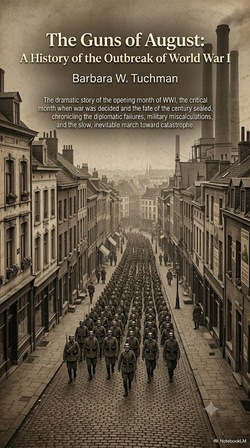
The Guns of August

Barbara W. Tuchman

4.21204 learners

Barbara W. Tuchman’s Pulitzer Prize-winning *The Guns of August* dissects the chaotic, fateful month of August 1914 that ignited World War I. Starting with the lavish funeral of Britain’s Edward VII—where European monarchs masked simmering tensions beneath pageantry—the book unravels the tangled web of military plans, diplomatic blunders, and human hubris that turned a Balkan assassination into a global cataclysm. Tuchman vividly chronicles the rigid Schlieffen Plan driving Germany’s reckless march through neutral Belgium, France’s disastrous XVII Plan rooted in misplaced offensive zeal, and the bumbling leadership of figures like Kaiser Wilhelm II and Russian Tsar Nicholas II. She also highlights pivotal moments: the stubborn defense of Liège, the catastrophic Battle of Tannenberg, and the Battle of the Marne that shattered Germany’s dream of a quick victory. More than a military history, it’s a gripping narrative of how small, avoidable choices cascaded into a war that destroyed empires and redefined the modern world.

Schlieffen PlanWorld War IBattle of the MarneBattle of TannenbergBelgian Neutrality
The Age of Extremes
Loading…

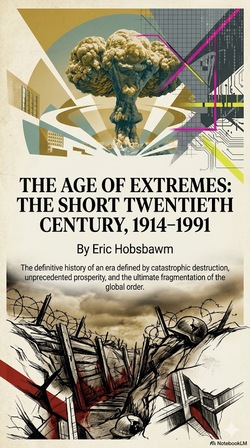
The Age of Extremes

Eric Hobsbawm

4.41177 learners

Eric Hobsbawm’s *The Age of Extremes* dissects the turbulent 'short 20th century'—a 77-year period spanning from the outbreak of World War I in 1914 to the collapse of the Soviet Union in 1991. This definitive historical work traces the era’s defining extremes: the catastrophic global wars that shattered 19th-century liberal order, the seismic revolutions that birthed socialist states, the Great Depression that upended capitalist systems, and the decades-long Cold War that divided the world into opposing camps. Hobsbawm also explores the era’s social and cultural upheavals—from decolonization and the rise of youth culture to the transformation of science and art. He analyzes how these interconnected crises reshaped global politics, economies, and societies, leaving a legacy of inequality, ideological fragmentation, and ecological challenges. A masterful synthesis of historical analysis, the book offers critical insights into the forces that defined modernity and warns of the risks of repeating the era’s violent mistakes.

Great DepressionCold WarSoviet CollapseShort 20th CenturyWorld War I
The Book Thief
Loading…

The Book Thief

Markus Zusak

4.2986 learners

Set against the brutal backdrop of Nazi Germany during World War II, *The Book Thief* is narrated by Death, who observes 9-year-old Liesel Meminger as she navigates loss, love, and survival. After her younger brother dies en route to a foster home, Liesel steals her first book—the *Gravedigger’s Handbook*—from his snowy gravesite, sparking a lifelong obsession with words. Taken in by the kind-hearted Hans Hubermann and his sharp-tongued but loving wife Rosa, Liesel finds solace in Hans’s late-night reading lessons and the books she steals from bonfires and a wealthy mayor’s library. When the Hubermanns hide Max Vandenburg, a Jewish boxer fleeing persecution, Liesel forms an unbreakable bond with him, sharing her stolen books and their shared trauma of nightmares. As the war closes in, books become a lifeline, weaving moments of warmth and humanity through the chaos of bombings and Nazi tyranny, proving that words can outlast even the darkest of times.

World War IIbook theftLiesel MemingerHans HubermannMax Vandenburg
Freedom From Fear
Loading…

Freedom From Fear

David M. Kennedy

4982 learners

David M. Kennedy’s *Freedom From Fear* delivers a sweeping, immersive account of America’s defining journey through the Great Depression and World War II. Starting with the 1920s’ simmering tensions—Jim Crow’s racial oppression, rural poverty, urban cultural upheaval, and educational progress—the book traces how unregulated capitalism and global instability ignited the 1929 stock market crash. It dissects Herbert Hoover’s failed laissez-faire responses, then chronicles Franklin D. Roosevelt’s transformative New Deal: the 100 Days of urgent legislation, the rise of labor unions, the birth of the social safety net, and the political battles that exposed its limits. The narrative shifts to America’s reluctant pivot from isolationism to war, detailing the Lend-Lease Act, the Pearl Harbor attack, and the nation’s industrial mobilization that turned it into the Allies’ "arsenal of democracy." Kennedy explores how war resolved the Depression, sparked early civil rights gains, and redefined America’s global role, revealing how a nation conquered fear to reimagine its identity and future.

Great DepressionWorld War IINew DealFranklin D. RooseveltSocial Security Act
Ernest Hemingway: A Life Story
Loading…

Ernest Hemingway: A Life Story

Carlos Baker

4.3515 learners

Carlos Baker’s definitive biography of Ernest Hemingway traces the legendary author’s turbulent journey from his Oak Park childhood—shaped by his outdoorsman father and artistic mother—to his rise as one of the 20th century’s most influential literary voices. Drawing on intimate details and firsthand accounts, Baker unpacks how Hemingway’s experiences as a Kansas City Star reporter, WWI ambulance driver, Spanish Civil War correspondent, and WWII combatant forged his iconic sparse, hard-hitting prose. The book delves into his complex personal life: his four marriages, passionate romances, friendships with literary giants like F. Scott Fitzgerald and Gertrude Stein, and the trauma that fueled classics such as *The Sun Also Rises*, *A Farewell to Arms*, *For Whom the Bell Tolls*, and *The Old Man and the Sea*. It also chronicles his later years, including his 1954 Nobel Prize win, struggles with injury and mental health, and enduring legacy as a symbol of American grit and literary authenticity.

World War IWorld War IIErnest HemingwayCarlos BakerSpanish Civil War
The Shortest History of Europe
Loading…

The Shortest History of Europe

John Hirst

4.5503 learners

This concise, engaging history unpacks Europe’s chaotic, world-shaping journey from its three foundational roots—Greek-Roman intellectual legacy, Christian faith, and Germanic warrior culture—to the modern European Union. John Hirst traces how these clashing elements fused into the medieval world, then fractured through the Renaissance, Reformation, Scientific Revolution, and Enlightenment, sparking secularization, political upheaval, and the rise of democracy. He explores feudalism’s evolution into constitutional governance, the Industrial Revolution’s social divides, and the catastrophic world wars that reshaped the continent. Hirst highlights Europe’s unique power fragmentation as the secret to its innovation, while also confronting its dark legacy of nationalism and genocide. Perfect for readers seeking a clear, accessible overview, this book reveals how Europe’s messy, contradictory past created the global systems and ideas we live with today.

Industrial RevolutionRenaissanceChristianityWorld War IWorld War II
No more