Existential Wisdom from the Sickbed
Loading…

Existential Wisdom from the Sickbed

Shi Tiesheng

41269 learners

Confined to a wheelchair for decades and battling kidney failure requiring regular dialysis, Shi Tiesheng turned his lifelong struggle with illness into a profound exploration of existential truth. In *Existential Wisdom from the Sickbed*, he shares unflinching insights: framing life as a script where each of us plays an assigned role to embrace, not resent; rejecting transactional worship to advocate for faith rooted in hope amid suffering, not material gain; redefining love as a vulnerable opening of souls, not just physical connection; and arguing disability is a universal human condition of limitation, not a marginalizing label. He also reflects on writing as a lifeline for his restless spirit, a tool to confront his identity and life’s mysteries. Beyond personal reflection, he critiques societal pitfalls: the tyranny of groupthink, hollow materialism, and the urgent need to honor life’s dignity—including the right to assisted dying. This is no tale of victimhood, but a testament to finding meaning and grace in life’s darkest corners.
life meaningExistential WisdomFate AcceptanceTrue FaithSpiritual Love
Fatelessness
Loading…

Fatelessness

Imre Kertesz

4.2988 learners

Based on Imre Kertész’s own Holocaust experiences, *Fatelessness* follows 15-year-old György Köves, a Jewish boy in WWII-era Budapest. What begins as a quiet life helping his family run a lumber shop unravels when Nazi occupation forces Jews to wear yellow stars, his father is drafted for forced labor, and György is seized mid-commute to a factory job. Sent to Auschwitz-Birkenau, then to camps like Czestochowa and Buchenwald, György navigates brutal, dehumanizing survival rules—enduring hunger, violence, and constant death threats—without the fiery anger or tragic victimhood typical of Holocaust narratives. When liberated and back in Budapest, he finds his home occupied, his father dead, and a world expecting him to grieve or rage. Kertész’s unflinching, detached prose captures György’s quiet confusion, struggle to reconnect with an alien life, and the strange 'fatelessness' of someone who survived not by fighting, but simply enduring. It’s a raw, intimate look at trauma without easy answers.

HolocaustConcentration CampsGyörgy KövesAuschwitz-BirkenauBuchenwald
Reaching the Brink of Life
Loading…

Reaching the Brink of Life

Yang Jiang

4.5678 learners

As Yang Jiang reflects on the twilight of her life, she delves into profound questions about life, death, and the essence of being human. Starting with her confusion about death—contrasting the dismissive views of urban intellectuals with the spiritual experiences of rural folks she encountered during her years in the countryside—she explores the existence of the soul, arguing it’s the invisible core that distinguishes the living from the dead. She unpacks the eternal struggle between the body’s desires and the innate moral conscience (what she calls "spiritual conscience"), drawing on daily examples, history, and Freud’s id-ego-superego theory. Further, she examines the tension between fate and free will, acknowledging life’s inherent injustices while emphasizing conscious choices can reshape one’s path. Framing suffering as a forge for the soul, she advocates lifelong self-cultivation through moral practice and introspection to transcend worldly desires. This intimate, thoughtful work invites readers to confront life’s hard truths and embark on their own journey of soul refinement.

Human Natureself-cultivationsoul nurturingspirit-body dualityfate and free will
Go or Die
Loading…

Go or Die

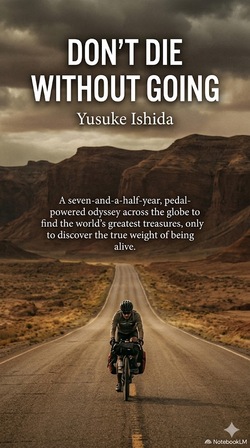
Yusuke Ishida

2.8650 learners

In Go or Die, Japanese cyclist Yusuke Ishida chronicles his unflinching seven-and-a-half-year journey pedaling across the globe—from Alaska’s sun-scorched wilderness to the windswept plains of Patagonia, from the medieval streets of Tallinn to the malaria-ridden jungles of West Africa, and finally to the sacred banks of the Ganges. Ditching his stable 9-to-5 job despite a kidney flare-up and a fortune-teller’s grim prophecy, he sets out to escape a "safe but unexciting" life, only to face brutal robberies, life-threatening illness, and crippling loneliness. Along the way, he encounters unforgettable strangers: a one-legged Polish mushroom seller who rejects pity, a 15-year-old polyglot prodigy in Estonia, and fellow travelers who become chosen family. What begins as a quest to outrun fate evolves into a profound lesson in taking control of his own story, proving that the true treasures of travel aren’t landmarks, but the connections forged and the courage found to keep moving forward.

personal growthBicycle world tourCross-continental travelTravel companionsMalaria survival
The Red and the Black
Loading…

The Red and the Black

Stendhal

4.5478 learners

Set in early 19th-century France, *The Red and the Black* follows Julien Sorel, a sharp but impoverished young man from a provincial sawmill family. Obsessed with Napoleon’s rags-to-riches story, Julien rejects his working-class roots, first securing a tutoring position with the wealthy de Rênal family in Verrières—where he sparks a forbidden affair with the kind-hearted Madame de Rênal. After a scandal forces his escape, he navigates the hypocritical, cutthroat world of a Besançon seminary, then climbs into Parisian high society as a secretary for the powerful Marquis de la Mole, winning the heart of the rebellious noblewoman Mathilde de la Mole. Caught between burning ambition, conflicting loves, and the rigid class barriers of his era, Julien’s desperate bid for status culminates in a tragic act of violence, laying bare the cruel absurdity of a society that crushes those who dare to cross its rigid lines.

class stratificationJulien SorelMadame de RênalMathilde de la MoleNapoleon Worship
The Consolation of Philosophy
Loading…

The Consolation of Philosophy

Ancius Boethius

4.3470 learners

Written by Boethius while imprisoned and facing execution, *The Consolation of Philosophy* is a timeless dialogue between the disgraced statesman and the personified Lady Philosophy. As Boethius wallows in despair over his unjust fall from power, Lady Philosophy arrives to dismantle his obsession with fleeting worldly goods—wealth, fame, and political status. She guides him through rigorous reasoning and poetic allegory to uncover that true happiness lies not in external fortunes, but in the pursuit of universal goodness rooted in divine wisdom. The text explores core philosophical questions: the illusion of fate vs. the order of divine providence, the inherent powerlessness of evil, the unshakable reward of virtue, and how human free will coexists with God’s omniscience. More than a philosophical treatise, it is a profound comfort for anyone grappling with adversity, reminding readers that inner virtue and connection to eternal truth are the only unshakable sources of peace.

VirtuefateFree WillEvilBoethius
Fate
Loading…

Fate

Cai Chongda

4.4452 learners

Set in a tight-knit coastal town in southern China, *Fate* unfolds through the eyes of the narrator’s grandmother, weaving together generations of women’s stories of struggle, loss, and quiet resilience. At the heart is Tai Tai, a sharp-witted 99-year-old who treats death like a life skill, joining a local 'death-watching club' to learn the ropes of passing well. We follow the narrator’s mother, a bound-foot widow who rages against fate after her husband vanishes at sea, and Auntie Hao, a spirit medium who bridges the living and dead, listening to ghosts’ unfulfilled wishes. Through typhoons, famines, and political upheaval, the family clings to their land, traditions, and each other—turning hardship into grit, and viewing death not as an end, but as a natural chapter in the messy, beautiful story of being alive.

Family LegacyCoastal town matriarchDeath-watching clubSpirit mediumFate resilience
Insight

Fate as Coincidences

Kundera suggests fate is a string of coincidences—Thomas and Tereza meet via the 6th room, book, music. These small chances shape their lives, but without eternal return, they feel light.

Chanceexistentialismfate
Scenario

Bai Jiaxuan's Seven Marriages

Bai Jiaxuan married seven women. The first six died one after another—some from childbirth, illness, or drowning. He feared being 'hard-fated' but kept trying for heirs. The seventh, Xiancao, stayed and gave him children.

Bai JiaxuanMarriagesHeirs
Concept

Existence Communication

Equal, open dialogue where people are bound by fate—no hierarchy. This 'I-thou' interaction is the core of human culture; without it, humanity shrinks.

EducationDialogueHuman Connection
Quote

Author's Life Philosophy

"I'm just a farmer who refused to lie down to fate, writing down my thoughts and the world I see." The author's view on his life.

ResilienceSelf-IdentityWriting Purpose
Scenario

Building Time Machine

The crew uses the ship's tech to build a time machine—they're gonna go to Earth to change their fate.

Time TravelPlot ChangeRedshirt Rebellion