The Aquariums of Pyongyang
Loading…

The Aquariums of Pyongyang

Chol-hwan Kang;Pierre Rigoulot

4.41318 learners

In The Aquariums of Pyongyang, Kang Chol-Hwan shares his searing firsthand account of growing up in 1960s Pyongyang—where his family lived in luxury as privileged Japanese-Korean returnees, revering Kim Il-sung as a god-like figure—before their world collapsed. At 11, his grandfather was falsely accused of treason, and the entire family was sent to Yodok, North Korea’s brutal political prison camp. For 10 years, Kang endured starvation, forced labor, psychological torture, public executions, and a dehumanizing system that pitted prisoners against each other to survive. He vividly describes the slow erosion of his childhood innocence and the unyielding will to live that kept him going. After his release in 1987, he navigated a broken North Korean society, eventually risking everything to escape to China and then South Korea. This memoir is a powerful testament to the horrors of totalitarian oppression and the human spirit’s relentless quest for freedom.
FreedomPolitical PersecutionTotalitarianismfamily separationYodok Concentration Camp
The Age of Intelligence
Loading…

The Age of Intelligence

Wu Jun

41263 learners

In 'The Age of Intelligence', Wu Jun breaks down the transformative power of big data driving the global shift into an era of machine intelligence. Moving past the deterministic mechanical thinking that defined the industrial age, he introduces a data-driven mindset—prioritizing strong correlations over rigid cause-and-effect to solve complex, previously intractable problems. Through iconic examples like IBM’s Deep Blue defeating chess legend Garry Kasparov, Google’s game-changing search algorithms, and Target’s pregnancy-prediction marketing strategy, he illustrates how raw data evolves into actionable intelligence. He also explores real-world applications across industries: precision agriculture in Israel, data-driven basketball tactics with the Golden State Warriors, and smart manufacturing at Tesla. Wu doesn’t gloss over challenges, diving into storage limits, parallel computing bottlenecks, and the critical issue of privacy protection. Finally, he paints a vivid picture of the future smart society, where human-machine collaboration becomes the norm, and we must adapt to new work paradigms while safeguarding individual rights.

Machine IntelligenceBig DataPrivacy ProtectionSmart ManufacturingData-Driven Approach
The Fiery Trial
Loading…

The Fiery Trial

Eric Foner

4.41237 learners

Eric Foner’s *The Fiery Trial* traces Abraham Lincoln’s evolution from a frontier boy with an instinctive hatred of slavery to the president who led America through its bloodiest conflict to dismantle the institution. Drawing on extensive primary sources, Foner reveals how Lincoln’s early experiences—witnessing slave auctions in Kentucky and New Orleans, living in free territories shaped by the Northwest Ordinance—laid the groundwork for his moral opposition. As a politician, Lincoln navigated 19th-century America’s treacherous political landscape, balancing anti-slavery convictions with the urgent need to preserve the Union. He moved from opposing slavery’s expansion as a Whig to joining the Republican Party, crafting strategies to secure border states, and eventually issuing the Emancipation Proclamation after the Battle of Antietam. Foner explores Lincoln’s compromises, like his early support for colonization, and his unwavering commitment to permanent abolition, culminating in his push for the Thirteenth Amendment. This definitive work illuminates the fiery trial that forged Lincoln’s legacy and redefined America’s promise of freedom.

SlaveryAmerican Civil WarUnion ArmyAbraham LincolnEmancipation Proclamation
Economic and Philosophical Manuscripts of 1844
Loading…

Economic and Philosophical Manuscripts of 1844

Karl Marx

4.91166 learners

Written in Paris in 1844 amid surging European worker movements, Karl Marx’s *Economic and Philosophical Manuscripts of 1844* is a groundbreaking, unpublished work that bridges philosophical rigor and economic critique. Rejecting classical political economy’s surface-level justifications for capitalism, Marx digs into the core contradictions between capital and labor, introducing his transformative theory of alienated labor. He outlines four key forms of alienation: workers’ estrangement from their products, their labor activity, their human species-being, and other people. Marx ties this alienation directly to private property, arguing that capitalism reduces workers to mere commodities while concentrating wealth in the hands of a few. The manuscript also critiques Hegel’s idealist dialectics, reorienting it toward material reality, and frames communism as the positive transcendence of private property—a path to human liberation where labor becomes a fulfilling, conscious activity. Though unfinished, it lays the foundational ideas for Marx’s later Marxist system, offering a radical lens to understand capitalism’s dehumanizing effects and the potential for collective emancipation.

CommunismAlienated LaborPrivate PropertyHegelian DialecticsClassical Political Economy
Hidden America
Loading…

Hidden America

Jeanne Marie Laskas

4.41081 learners

Jeanne Marie Laskas pulls back the curtain on America’s invisible backbone in *Hidden America*, taking readers on immersive, on-the-ground journeys with unsung workers who power daily life. From Ohio’s coal mines, where miners risk collapse and methane explosions to fuel half the nation’s electricity, to Maine’s blueberry fields, where migrant laborers harvest the state’s iconic fruit while navigating immigration fears, Laskas spends months living alongside these communities. She debunks stereotypes: NFL cheerleaders hold construction jobs to make ends meet, air traffic controllers work in crumbling towers to keep skies safe, and Alaskan oil rig workers find redemption in the frozen north. Each story captures raw humanity—pride in labor, struggles with loss, and quiet resilience—while highlighting the cultural divides and shared bonds that define these overlooked groups. This book is a powerful reminder of the people we pass by every day, whose unseen work sustains our homes, tables, and freedoms.

Waste ManagementCoal MinersMigrant Agricultural WorkersAir Traffic ControllersLong-Haul Truck Drivers
Cognitive Surplus
Loading…

Cognitive Surplus

Clay Shirky

41020 learners

In *Cognitive Surplus*, Clay Shirky unpacks how the billions of hours we once spent passively consuming TV—dubbed "cognitive surplus"—are being reclaimed as a transformative social resource via digital and social media. Using vivid real-world examples, from the Ushahidi crisis-mapping platform that tracked Kenyan election violence to viral "Lolcat" memes and South Korea’s youth-led candlelight protests, Shirky explains why people are shifting from passive consumers to active creators, collaborators, and sharers. He dives into the intrinsic motivations fueling this shift: the human desire for autonomy, competence, belonging, and generosity. Shirky also outlines four tiers of value generated by cognitive surplus—personal, communal, public, and civic—and explores how intentional governance and cultural norms can turn scattered individual efforts into meaningful collective impact. This book is both a sharp analysis of media evolution and a practical guide to leveraging shared free time to solve problems, build communities, and reshape society.

Social MediaIntrinsic MotivationWikipediaCognitive SurplusCollective Collaboration
The Inevitable
Loading…

The Inevitable

Kevin Kelly

4.11019 learners

In The Inevitable, tech visionary Kevin Kelly outlines 12 irreversible technological trends shaping the next 30 years of human civilization. Rejecting utopian and dystopian extremes, he introduces "Protopia"—a state of continuous, incremental progress where small daily improvements bring new challenges yet collectively build a better world. Kelly explores how artificial intelligence will evolve into a distributed, ubiquitous force that augments human capabilities rather than replacing them. He breaks down shifting value systems: from ownership to access-driven sharing economies, static content to fluid, remixable digital media, and passive reading to interactive screen-based learning. The book also covers emerging phenomena like the quantified self, attention economy, and the rise of "Holos"—a global superorganism formed by interconnected humans, machines, and data. Urging readers to embrace being "perpetual novices," Kelly argues that adapting to constant change and actively participating in technological evolution is the only path to thriving in the coming era.

Attention EconomyAccess Over OwnershipProtopiaArtificial Intelligence (AI)Remix Culture
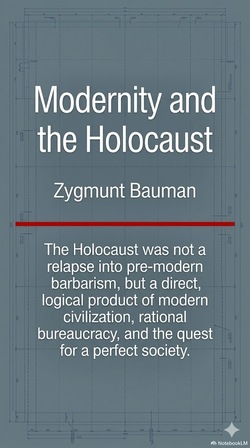
Modernity and the Holocaust
Loading…

Modernity and the Holocaust

Zygmunt Bauman

4.1902 learners

In *Modernity and the Holocaust*, sociologist Zygmunt Bauman dismantles two flawed mainstream interpretations of the Holocaust: framing it as either a unique product of European anti-Semitism or a burst of primal human aggression. Instead, he argues the Holocaust wasn’t a failure of modernity—it was a direct outcome of its core traits. Bauman exposes how the Nazi regime leveraged modern bureaucracy’s division of labor, rational efficiency, and dehumanizing systems to turn ordinary people into complicit perpetrators. He explores how anti-Semitism merged with modern racial science and social engineering, and how victims’ rational attempts at self-preservation inadvertently aided their own destruction. The book also challenges traditional sociological views of morality, arguing that true moral responsibility lies in individual judgment, not blind obedience to social norms. Most urgently, Bauman warns that the structural conditions that enabled the Holocaust—unaccountable state power, bureaucratic detachment, and dehumanization—still persist in modern societies, making similar atrocities possible.

Anti-SemitismbureaucracyHolocaustmodernitydehumanization
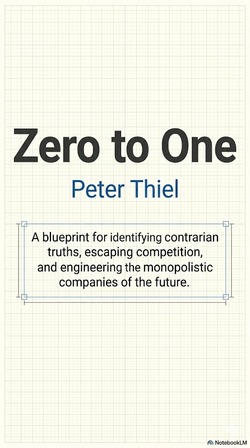
Zero to One
Loading…

Zero to One

Peter Thiel;Blake Masters

4.1901 learners

In *Zero to One*, PayPal co-founder Peter Thiel upends conventional business wisdom by arguing that true progress doesn’t come from copying existing models (scaling from 1 to n via globalization)—it stems from zero-to-one innovation: creating something entirely new that reshapes markets. Thiel breaks down why monopolies, not cutthroat competition, drive sustainable profits and societal advancement, using real-world examples like Google and PayPal to illustrate his points. He explores the power law’s transformative role in investing and life, urging readers to focus on high-impact opportunities rather than spreading efforts thin. The book also dives into critical startup fundamentals: building cohesive, mission-driven teams (like the legendary PayPal Mafia), mastering sales (even for tech-focused founders), leveraging human-machine collaboration, and avoiding pitfalls seen in the 2000s clean tech bubble. Thiel’s unorthodox insights offer a playbook for entrepreneurs and thinkers to reimagine the future by uncovering hidden truths and building lasting, unique businesses.

Power LawStartup StrategyHuman-Machine CollaborationZero-to-One InnovationMonopoly Business Model
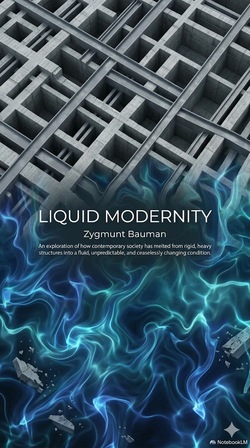
Liquid Modernity
Loading…

Liquid Modernity

Zygmunt Bauman

4.2896 learners

Zygmunt Bauman’s *Liquid Modernity* redefines late modern life by contrasting our era of constant flux with the rigid, rule-bound "solid modernity" of Fordist factories, lifelong careers, and fixed social identities. Bauman frames liquid modernity as a world where every structure—jobs, relationships, even self-concepts—has melted into temporary, shifting states. He breaks down its core traits: everything operates on short-term cycles, power functions through speed and escape rather than control, individuals are forced into "involuntary nomadism" without stable anchors, and consumerism dominates as a tool for identity-building and anxiety relief. The book explores how capital’s relentless pursuit of mobility, fueled by digital technology, dismantled solid modernity’s foundations, leaving individuals grappling with precarious work, fragile communities, and pervasive uncertainty. Bauman also examines the crisis of critical theory in this new era, arguing it must shift from challenging state oppression to addressing the erosion of public space and the false freedom of consumer culture, offering a sharp, accessible analysis of life in a world where nothing stays fixed.

ConsumerismCritical TheoryLiquid ModernitySolid ModernityFordism
The Razor's Edge
Loading…

The Razor's Edge

W. Somerset Maugham

3.9892 learners

W. Somerset Maugham’s *The Razor's Edge* breaks traditional novel conventions to chronicle the unorthodox journey of Larry Darrell, a disillusioned American WWI veteran. Rejecting the expected path of wealth and social prestige, Larry ends his engagement to the glamorous Isabel Bradley and sets out to pursue spiritual fulfillment. His quest takes him from book-filled garrets in Paris, to backbreaking work in French coal mines, to wandering across Europe as a farmhand, and finally to India, where he finds enlightenment under a revered yogi. Interwoven with Larry’s story are the lives of those around him: Eliot Templeton, a snobbish yet generous social climber obsessed with European high society; Isabel, who chooses luxury and stability with wealthy businessman Gray Maturin; and Sophie MacDonald, a tragic figure undone by grief and addiction. Maugham’s intimate, semi-fictional narrative invites readers to confront the timeless question: what does it mean to live a truly meaningful life?

Larry DarrellEliot TempletonIsabel BradleySophie MacDonaldspiritual quest
On Death and Dying: What the Dying Have to Teach Doctors, Nurses, Clergy and Their Own Families
Loading…

On Death and Dying: What the Dying Have to Teach Doctors, Nurses, Clergy and Their Own Families

Elisabeth Kübler-Ross

0884 learners

Based on groundbreaking interviews with terminally ill patients, *On Death and Dying* explores the universal fear of death in modern society, tracing its roots to medical advancements that have distanced death from daily life and normalized avoidance. The book introduces the five pivotal stages of end-of-life psychological adjustment—denial, anger, bargaining, depression, and acceptance—offering profound insights into how patients navigate grief, fear, and hope. It also examines the toll of terminal illness on families, the barriers to honest communication between doctors and patients, and the critical need for interdisciplinary, compassionate care. Through real-world case studies and reflections from medical professionals, it challenges the medical field to prioritize patient dignity and emotional support over purely technical interventions, urging doctors to learn from the dying to transform end-of-life care into a humane, respectful experience.

AcceptancedenialAngerdepressionDeath anxiety
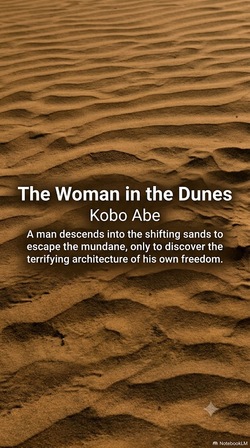
The Woman in the Dunes
Loading…

The Woman in the Dunes

Kobo Abe

4.8867 learners

When schoolteacher and amateur entomologist Niki Jumpei travels to a remote coastal village to hunt for rare sand-dwelling beetles, he never imagines he’ll be trapped in a nightmarish cycle of survival. Lured into a sunken cave home by a mysterious widow, he wakes to find the rope ladder gone—villagers have kidnapped him to help fight the endless sand that threatens to bury their homes. For weeks, Jumpei struggles to escape, plotting daring attempts that end in humiliation and despair. But as he watches the widow’s quiet resilience and discovers a hidden way to collect water from the sand’s capillary action, his perspective shifts. What begins as a prison becomes a place of unexpected insight: he starts to question the 'freedom' of his old life, finding purpose in mastering the sand’s secrets instead of fleeing them. Kōbō Abe’s existential masterpiece explores the thin line between captivity and autonomy, and how survival can redefine what it means to be free.

Sand entomologyCoastal village captivitySurvival laborCapillary water collectionPsychological adaptation
Humility and Greatness
Loading…

Humility and Greatness

Bai Kaiyuan

3.2753 learners

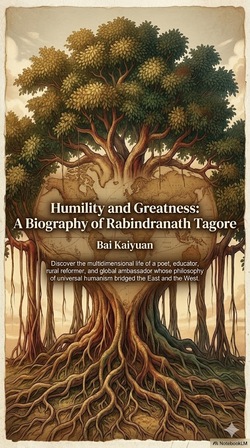
In *Humility and Greatness*, author Bai Kaiyuan unpacks the counterintuitive link between humility and enduring success—arguing that true greatness isn’t rooted in arrogance, but in the quiet strength of humility. Drawing on iconic American figures and modern business leaders, he breaks down how Abraham Lincoln’s willingness to listen to political rivals shaped the nation’s recovery, how Steve Jobs’ post-failure shift to humble collaboration fueled Apple’s second golden age, and how Howard Schultz’s employee-first humility built Starbucks’ loyal global community. Beyond compelling stories, the book offers actionable frameworks: how to practice active listening in team meetings, how to admit mistakes without losing credibility, and how to center others’ growth while advancing your own. Whether you’re a startup founder, a mid-career manager, or someone striving for personal growth, this book shows that humility isn’t a sign of weakness—it’s the foundation of lasting, meaningful greatness.

personal growthSteve JobsTeam CollaborationAbraham LincolnHumble Leadership
The Courage to Be Happy
Loading…

The Courage to Be Happy

Ichiro Kishimi;Fumitake Koga

4.2736 learners

In *The Courage to Be Happy*, Ichiro Kishimi continues the engaging dialogue between a skeptical young educator and a wise philosopher, unpacking Adlerian psychology’s transformative insights for happiness and growth. Frustrated by pushback against Adler’s ideas in his teaching, the youth challenges the philosopher to defend its validity, sparking deep dives into core concepts: teleology (rejecting the myth that past trauma defines the present), task separation, and the critical role of respect over praise or criticism in education. The book dismantles the fantasy of "destined love," framing love as an active, collaborative choice rather than a passive feeling, and emphasizes community connection over cutthroat competition. Packed with actionable advice for educators, professionals, and anyone seeking meaningful relationships, it teaches readers to embrace self-acceptance, take initiative in connections, and find the courage to choose happiness in every present moment.

Independenceself-acceptanceAdlerian PsychologyTeleologyTask Separation
The Human Condition
Loading…

The Human Condition

Hannah Arendt

4688 learners

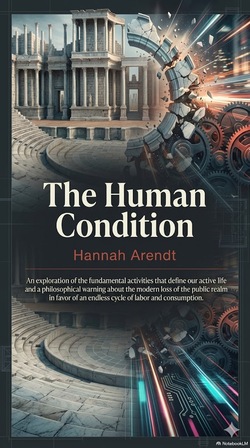
Hannah Arendt’s seminal work *The Human Condition* dissects the three core activities of vita activa—labor, work, and action—and their role in shaping human existence. Labor, tied to biological survival, fuels the endless cycle of consumption; work creates the durable, man-made world that anchors our lives; and action, rooted in human plurality, fosters the public sphere where we reveal our unique identities. Arendt traces how modernity upended this hierarchy: labor rose to dominate public life, eroding the distinction between work and consumption, while the public sphere shrank, leaving individuals isolated in a consumer-driven society. She also explores the tension between contemplation and action, the collapse of ancient public-private boundaries, and the critical roles of forgiveness and promise in mitigating action’s unpredictable consequences. A landmark in political philosophy, this book offers a searing critique of modernity’s erosion of meaningful human connection and purpose, urging readers to rethink what it means to be fully human.

ActionForgivenessWorklabormodernity
Capital in the Twenty-First Century
Loading…

Capital in the Twenty-First Century

Thomas Piketty

4.1669 learners

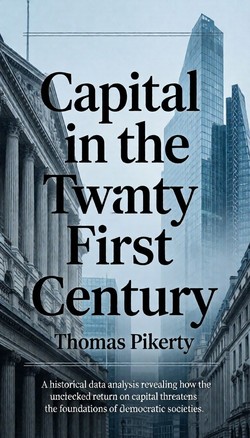
Thomas Piketty’s *Capital in the Twenty-First Century* upends mainstream views on inequality by analyzing 300 years of global economic data, from 19th-century European aristocracies to 21st-century U.S. super-executives. At its core is the pivotal formula: when the rate of return on capital (r) outpaces overall economic growth (g), inherited wealth accumulates faster than earned income, widening the gap between the haves and have-nots. Piketty contrasts Europe’s legacy of inherited wealth concentration with America’s surge in sky-high executive pay, showing both systems fuel systemic inequality. He debunks myths about "natural" market balance, arguing unregulated capitalism will revert to a "patrimonial" system where birth determines fortune. The book’s bold prescription? A global progressive capital tax to rein in extreme wealth, boost financial transparency, and reframe capitalism to serve the many, not just the few—offering a roadmap for a more equitable future.

Wealth InequalityInherited wealthCapital-income ratioPublic debtCapital Return Rate
Leaving Liang Village
Loading…

Leaving Liang Village

Liang Hong

5663 learners

In *Leaving Liang Village*, author Liang Hong returns to her rural hometown in central China to document the quiet crises and unspoken struggles of its people. Through intimate interviews and on-the-ground observations, she follows Liang Village’s residents as they scatter across China’s cities—Xi’an, Beijing, Shenzhen, Qingdao—chasing jobs, money, and a shot at a better life. From underpaid rickshaw drivers enduring police harassment to factory workers breathing toxic fumes, from college-educated migrants stuck in dead-end jobs to left-behind villagers grappling with loss and apathy, each story lays bare the harsh realities of China’s migrant labor system. Hong doesn’t just highlight the physical toll of long hours and dangerous work; she captures the emotional weight of fractured families, lost identities, and the impossible choice between clinging to village roots and surviving in unforgiving cities. A raw, unflinching portrait of a community caught between tradition and modernity, this book gives voice to millions of invisible workers shaping China’s rise.

Identity CrisisMigrant Workersurban-rural dividelabor exploitationInformal Labor
Addicted to Thinking
Loading…

Addicted to Thinking

Takashi Saito

2.2623 learners

From his 15 years as a lead producer for NHK’s educational programs to his decades of teaching, Takashi Saito knows the critical difference between mindless rumination and productive thinking. In *Addicted to Thinking*, he breaks down how many people confuse worrying or vague “daydreaming” with focused, output-driven work—especially vital in an AI-dominated world where routine jobs are fading fast. Saito walks readers through actionable steps to build a sustainable thinking habit: rejecting mindless tasks, defining clear thinking goals, and keeping a physical thinking journal. He also shares advanced strategies to elevate your thinking, like debating with a creative partner, practicing self-dialogue, and using comparison and recombination to spark innovation. Beyond practical skills, he explores how true thinking addiction triggers beta-endorphin releases, bringing lasting joy and fulfillment, and profiles iconic figures like Balzac and Hideyoshi Toyotomi who turned relentless thinking into extraordinary success.

Problem-SolvingHabit FormationProductive ThinkingRuminationBeta-Endorphin
The Education of Children
Loading…

The Education of Children

Alfred Adler

3.8614 learners

Based on Alfred Adler’s groundbreaking individual psychology, *The Education of Children* demystifies how childhood experiences shape lifelong personality and behavior. Adler argues that cognitive biases formed in early years, paired with the universal drive for superiority and inherent feelings of inferiority, can derail a child’s growth—especially for three high-risk groups: kids with organ defects, those raised with harsh discipline, and overindulged children. He emphasizes that social interest, measured by a child’s first-day school performance, is the barometer of healthy development, and schools should act as a bridge between home and the real world, not just academic institutions. The book also explores adolescent challenges, family dynamics like birth order impacts, and practical strategies for parents and teachers to nurture confidence, correct misaligned goals, and collaborate effectively to guide kids toward socially beneficial growth.

Individual PsychologyInferiority ComplexSuperiority StrivingSocial InterestChildhood Cognitive Bias