The End of Illusions
Loading…

The End of Illusions

Andreas Reckwitz

4.5920 learners

In *The End of Illusions*, sociologist Andreas Reckwitz dismantles the outdated myths of late modern society—from the false promise of universal Western modernization to the illusion of a stable, flat middle class. He dissects the fierce clash between two competing cultural systems: hyperculture, driven by cosmopolitan urban elites who curate global identities through diverse cultural resources, and cultural essentialism, embraced by disenfranchised groups clinging to rigid collective identities to cope with status loss. Reckwitz also maps the seismic shift in Western class structures, replacing the post-war egalitarian middle class with a polarized hierarchy of knowledge-focused new elites, struggling traditional middle classes, and a precarious new underclass. He explores the rise of cognitive-cultural capitalism, where intangible assets and symbolic value dominate economic activity, and unpacks the paradox of late modern self-realization—how the relentless pursuit of personal fulfillment fuels burnout, disillusionment, and social division. Finally, he diagnoses the crisis of open liberalism and outlines a path toward embedded liberalism, a regulatory framework that balances individual freedom with social cohesion, offering a way out of the era’s deepening rifts.
Cultural EssentialismLate ModernityCognitive-Cultural CapitalismEmbedded LiberalismHyperculture
Modernity and the Holocaust
Loading…

Modernity and the Holocaust

Zygmunt Bauman

4.1902 learners

In *Modernity and the Holocaust*, sociologist Zygmunt Bauman dismantles two flawed mainstream interpretations of the Holocaust: framing it as either a unique product of European anti-Semitism or a burst of primal human aggression. Instead, he argues the Holocaust wasn’t a failure of modernity—it was a direct outcome of its core traits. Bauman exposes how the Nazi regime leveraged modern bureaucracy’s division of labor, rational efficiency, and dehumanizing systems to turn ordinary people into complicit perpetrators. He explores how anti-Semitism merged with modern racial science and social engineering, and how victims’ rational attempts at self-preservation inadvertently aided their own destruction. The book also challenges traditional sociological views of morality, arguing that true moral responsibility lies in individual judgment, not blind obedience to social norms. Most urgently, Bauman warns that the structural conditions that enabled the Holocaust—unaccountable state power, bureaucratic detachment, and dehumanization—still persist in modern societies, making similar atrocities possible.

Anti-SemitismbureaucracyHolocaustmodernitydehumanization
Liquid Modernity
Loading…

Liquid Modernity

Zygmunt Bauman

4.2896 learners

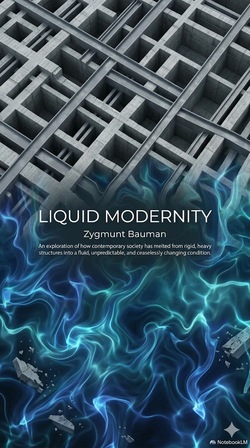
Zygmunt Bauman’s *Liquid Modernity* redefines late modern life by contrasting our era of constant flux with the rigid, rule-bound "solid modernity" of Fordist factories, lifelong careers, and fixed social identities. Bauman frames liquid modernity as a world where every structure—jobs, relationships, even self-concepts—has melted into temporary, shifting states. He breaks down its core traits: everything operates on short-term cycles, power functions through speed and escape rather than control, individuals are forced into "involuntary nomadism" without stable anchors, and consumerism dominates as a tool for identity-building and anxiety relief. The book explores how capital’s relentless pursuit of mobility, fueled by digital technology, dismantled solid modernity’s foundations, leaving individuals grappling with precarious work, fragile communities, and pervasive uncertainty. Bauman also examines the crisis of critical theory in this new era, arguing it must shift from challenging state oppression to addressing the erosion of public space and the false freedom of consumer culture, offering a sharp, accessible analysis of life in a world where nothing stays fixed.

ConsumerismCritical TheoryLiquid ModernitySolid ModernityFordism
My Liangshan Brothers
Loading…

My Liangshan Brothers

Qiu Dongmao

3.7691 learners

In *My Liangshan Brothers*, anthropologist Qiu Dongmao takes readers deep into remote Lim Township in Sichuan’s Liangshan region, where the Nuosu people (officially categorized as Yi) have weathered a century of dizzying modern upheaval—from autonomous tribal life to socialist collective communes, then to unregulated market capitalism. Over 20 months of immersive fieldwork starting in 2005, Qiu uncovers how rapid, externally driven modernization spawned a devastating dual crisis of heroin addiction and HIV, which ravaged Nuosu communities by the late 1990s. Through intimate stories of local leaders, former addicts, and struggling youth (like his trusted assistant Qubi Muga), he explores the Nuosu’s grassroots clan-led anti-drug efforts, the failed top-down Sino-UK HIV prevention program, and how well-meaning external interventions inadvertently created HIV stigma where none existed. This raw, compassionate account reveals how marginalized groups bear the brunt of conflicting modernity forces, while highlighting the Nuosu’s quiet resilience amid loss and cultural erasure.

Nuosu PeopleHIV StigmaLiangshanheroin epidemicHIV crisis
The Human Condition
Loading…

The Human Condition

Hannah Arendt

4688 learners

Hannah Arendt’s seminal work *The Human Condition* dissects the three core activities of vita activa—labor, work, and action—and their role in shaping human existence. Labor, tied to biological survival, fuels the endless cycle of consumption; work creates the durable, man-made world that anchors our lives; and action, rooted in human plurality, fosters the public sphere where we reveal our unique identities. Arendt traces how modernity upended this hierarchy: labor rose to dominate public life, eroding the distinction between work and consumption, while the public sphere shrank, leaving individuals isolated in a consumer-driven society. She also explores the tension between contemplation and action, the collapse of ancient public-private boundaries, and the critical roles of forgiveness and promise in mitigating action’s unpredictable consequences. A landmark in political philosophy, this book offers a searing critique of modernity’s erosion of meaningful human connection and purpose, urging readers to rethink what it means to be fully human.

ActionForgivenessWorklabormodernity
Insight

Holocaust as Modern Product

The Holocaust isn't an anomaly—it's a product of modernity's rationality, bureaucracy, and social engineering, not just anti-Semitism.

rationalityHolocaustmodernity
Insight

Work as a Prison

Kafka critiques modern work: Gregor’s salesman job traps him in exhaustion, missed trains, no personal life—all to pay his parents’ debt. He hates it but can’t quit.

WorkObligationmodernity
View

Modernity's Double-Edged Sword

Modernity brought Nuosu both opportunities (market access) and disasters (drugs, HIV). Their forced transition from tribal to socialist to market economy caused social disarray.

Social ChangemodernityNuosu
Concept

Bureaucratic Genocide

Modern bureaucracy splits mass murder into routine tasks. No one feels fully responsible, enabling large-scale atrocities.

bureaucracyGenocidemodernity
Insight

Nation as Cultural Artefact

Anderson says nations aren’t natural—they’re modern creations from 18th-century forces: print, capitalism, secularization.

modernityNationCultural Creation
Insight

Three Nationalism Paradoxes

Nationalism is modern but seen as ancient; universal form but unique content; politically powerful but philosophically poor.

NationalismmodernityParadoxes
Concept

Rationality Crisis

Modern society's bureaucratic rationality (efficiency, rules) replaces individual rationality, leading to loss of freedom and critical thinking.

Freedomrationalitymodernity
Golden Sentence

Delay Gratification No Virtue

Delay gratification is no longer a virtue—people want instant satisfaction since waiting for the future is risky.

ValuesmodernityInstant Gratification
Concept

World Alienation

World alienation is losing connection to lasting things we build. Modern science/consumerism focus on temporary stuff—we feel disconnected from our world.

StabilitymodernityWorld Alienation
Concept

What Is Culturalization?

Culturalization expands cultural meaning into non-cultural areas—like assigning value to yoga or Nordic design, or stripping it from others. It’s a key late modernity feature.

Late ModernitySociologyCulturalization
Quote

Exhausted Self Quote

“Overload and over-effort are late modern individuals’ hallmarks—depression and burnout are typical time diseases.” Sums up self-realization’s cost.

Mental HealthLate ModernityBurnout
View

Migration as Distorted Rite

Nuosu youth migration to cities (work/drugs) became a distorted coming-of-age ritual. It reflected their modern life desire but led to addiction and HIV.

modernityYouth MigrationRite of Passage