
Urban and Rural China
Loading…

Urban and Rural China

Qiren Zhou

3.5598 learners

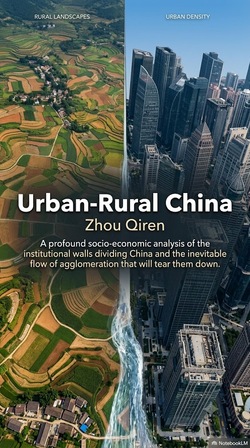
Zhou Qirun’s *Urban-Rural China* delivers a rigorous, accessible exploration of the historical, systemic, and economic forces shaping China’s urban-rural divide. Starting with a comparative analysis of global urbanization drivers—using Tokyo and Seoul as benchmarks—it unpacks why China’s industrialization outpaced its urbanization, fueled by mid-20th century policies restricting rural migration. The book traces the evolution of migration rights, from the 1954 Constitution’s initial recognition of free movement to the 1958 hukou system that entrenched a rigid, hereditary urban-rural hierarchy. It further examines the lopsided "land urbanization" phenomenon, where city expansion outpaces rural-to-urban population integration, rooted in state-controlled land ownership and compulsory land acquisition. Through on-the-ground case studies of Chengdu’s "empowerment through property rights" reform, Chongqing’s innovative land ticket system, and Shenzhen’s urban renewal efforts, Zhou illustrates grassroots and policy-driven solutions. He also debunks common misconceptions about land supply, property rights, and urban governance, arguing that balanced, sustainable development hinges on market-oriented land reform and restoring equitable property rights for rural residents.
Land ReformProperty RightsHukou Systemrural-urban migrationLand Urbanization
Factory Girls
Loading…

Factory Girls

Leslie T. Chang

4.2521 learners

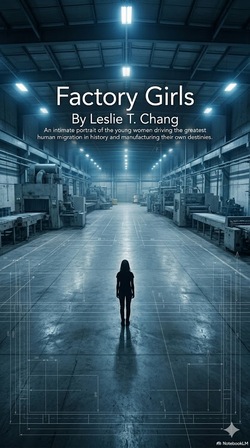
Follow the raw, unfiltered journeys of young rural Chinese women like Lü Qingmin and Wu Chunming as they trade quiet village lives for the chaotic, promise-filled streets of Dongguan—China’s sprawling factory capital. Leaving behind poverty and limited futures, these “factory girls” navigate 12-person dorms, 14-hour assembly line shifts, and meager wages, yet refuse to be defined by their circumstances. From sneaking English lessons after work to enrolling in white-collar training programs, testing direct sales schemes, and even launching small businesses, they chase every chance to climb the social ladder. The book also lays bare Dongguan’s stark contradictions: glitzy malls standing beside muddy construction sites, strict factory hierarchies clashing with fleeting upward mobility, and traditional rural values colliding with urban individualism. Through their triumphs, heartbreaks, and unyielding grit, these women reveal what it means to fight for autonomy and rewrite your destiny in a rapidly changing world.

Dongguan factoriesrural migrant workersfactory girlswhite-collar vocational trainingdirect sales schemes
No more