
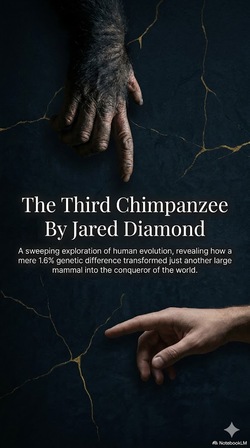
The Third Chimpanzee
Loading…

The Third Chimpanzee

Jared Diamond

4.8661 learners

Jared Diamond’s *The Third Chimpanzee* redefines humanity by framing us as the third species of chimpanzee, rooted in groundbreaking molecular biology evidence revealing our 98% genetic similarity to chimps and bonobos. Beyond our evolutionary origins, Diamond dives into the quirks of human behavior that set us apart: hidden ovulation, menopause, complex language, and art—all traced to evolutionary pressures. He also confronts the darker side of our species’ journey: the agricultural revolution’s hidden costs (health decline, inequality), Neanderthal extinction, colonial-era genocide, and the ongoing ecological crisis threatening our planet. Blending anthropology, biology, and history, this eye-opening book challenges human exceptionalism, urging readers to confront our animal roots and take responsibility for our shared ecosystem’s future.
sexual selectionMolecular ClockAgricultural RevolutionHuman-chimp genetic similarityNeanderthals
The Blind Watchmaker
Loading…

The Blind Watchmaker

Richard Dawkins

4.8625 learners

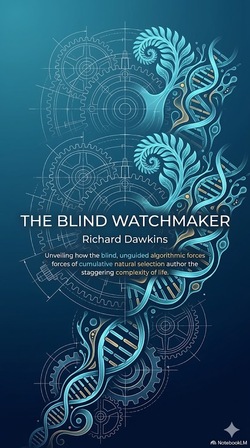
In Richard Dawkins’ seminal work *The Blind Watchmaker*, he dismantles the argument for intelligent design by framing natural selection as the “blind watchmaker”—an unguided, iterative process that crafts life’s most complex adaptations without a predetermined plan. Drawing on vivid examples from across the natural world, Dawkins explains how incremental, heritable mutations accumulate over millions of years to shape intricate structures like eyes, bat echolocation systems, and snake venom. He explores key evolutionary concepts: convergent evolution (where unrelated species develop similar traits to solve shared challenges), sexual selection’s role in driving exaggerated male features, and the Red Queen Effect’s explanation of evolutionary arms races. The book also delves into genetic mechanisms, highlighting DNA’s role as a stable information carrier, and addresses competing theories like Lamarckism and punctuated equilibrium, reinforcing natural selection as the only scientifically valid explanation for life’s diversity and complexity.

natural selectiongradual evolutionconvergent evolutionsexual selectionDollo's Law
Why Evolution Is True
Loading…

Why Evolution Is True

Jerry A. Coyne

4.3509 learners

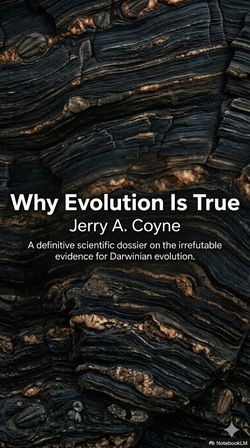
In Jerry A. Coyne’s *Why Evolution Is True*, readers get a rigorous, accessible defense of evolution as an undeniable scientific fact, not just a theoretical guess. Drawing on decades of cross-disciplinary research—from paleontology and genetics to biogeography and ecology—Coyne systematically dismantles common myths, from the "perfect design" argument to misunderstandings about what a "scientific theory" actually means. He breaks down core evolutionary mechanisms: natural selection, genetic drift, sexual selection, and speciation, using vivid examples like antibiotic-resistant bacteria, Galápagos finches, and transitional fossils such as Tiktaalik and Archaeopteryx. The book also traces human evolution from African hominids to modern humans, and addresses ethical concerns about evolution’s perceived impact on morality. By weaving together interconnected evidence, Coyne shows that evolution isn’t just a concept—it’s the foundational framework for understanding all life on Earth, spanning 3.5 billion years of extraordinary, unplanned change.

natural selectionconvergent evolutionsexual selectionFossil RecordHuman Evolution
Scenario

Peacock Tail Sexual Selection

Peacock's elaborate tail is for mating—females prefer males with more eye spots, even though it hinders survival. This is sexual selection at work.

Adaptationsexual selection
Scenario

Long-tailed Widowbird Test

Researchers artificially lengthened male long-tailed widowbirds' tail feathers, and these modified males attracted 4 times more females than males with cut short tails, proving sexual selection drives extreme traits.

Experimentsexual selectionBird
Concept

Sexual Selection

Sexual selection drives traits enhancing mating success (e.g., peacock's tail, male elephant seal size). It can conflict with survival.

Evolutionsexual selectionMating Traits
No more