Best Books on 2008 Financial Crisis

2008 Financial Crisis Total 4 books

The Unwinding summary and key insights by George Packer
Loading…

The Unwinding

George Packer

4.6632 learners

George Packer’s *The Unwinding* traces America’s slow, quiet collapse from the late 1970s to the early 2010s, weaving intimate stories of ordinary people and power players to expose the fraying of the nation’s social fabric, economic systems, and political norms. Through figures like Dean Price, a North Carolina farmer turned biofuel entrepreneur fighting to revive his rural community; Tammy Thomas, a laid-off Rust Belt factory worker who becomes a grassroots organizer; Newt Gingrich, the polarizing politician who reshaped Washington’s partisan landscape; and Peter Thiel, the Silicon Valley visionary who both profited from and criticized the tech boom, Packer reveals how old institutions crumbled, inequality exploded, and the American promise slipped out of reach for millions. The book doesn’t just document decay—it captures the gritty, hopeful efforts of individuals to rebuild, offering a raw, human portrait of a nation in transition.
The Global Minotaur summary and key insights by Yanis Varoufakis
Loading…

The Global Minotaur

Yanis Varoufakis

4.4733 learners

In *The Global Minotaur*, economist Yanis Varoufakis uses the Greek myth of the half-man, half-bull beast to unpack the U.S.-led global economic system that dominated from 1971 to 2008. He argues that America’s twin deficits (fiscal and trade) acted as the Minotaur, sucking in excess goods from surplus nations like Germany, Japan, and China, while those countries’ profits flowed back to Wall Street to fund U.S. consumption, debt, and financial speculation. Varoufakis dismantles simplistic explanations for the 2008 crash—from greed to bad regulation—framing it instead as the inevitable collapse of this unsustainable, debt-fueled cycle. He explores the crisis’s aftermath: Wall Street’s taxpayer-funded bailout, soaring inequality, the eurozone’s self-defeating austerity, and China’s struggle to shift from export-led growth. Finally, he outlines the urgent need for a new global surplus-recycling mechanism to replace the fallen Minotaur, warning that without coordinated reform, the world faces permanent economic stagnation.

Too Big to Fail summary and key insights by Andrew Ross Sorkin
Loading…

Too Big to Fail

Andrew Ross Sorkin

4.31320 learners

Andrew Ross Sorkin’s *Too Big to Fail* pulls back the curtain on the 2008 global financial crisis, delivering a gripping, minute-by-minute account of the high-stakes battles unfolding on Wall Street and in Washington. From Bear Stearns’ fire-sale collapse to Lehman Brothers’ historic bankruptcy, the book follows key players—Treasury Secretary Henry Paulson, Lehman CEO Dick Fuld, New York Fed President Timothy Geithner, and Goldman Sachs’ Lloyd Blankfein—as they scramble to contain a system on the brink of total meltdown. It exposes the infighting, tough choices, and moral dilemmas faced by bankers and policymakers: Paulson’s struggle between free-market principles and government intervention, Fuld’s desperate attempts to save his firm, and last-minute deals that saved Merrill Lynch and AIG while letting Lehman fall. With unprecedented access to private conversations and closed-door meetings, this definitive narrative reveals how close the U.S. economy came to collapse and the controversial measures that prevented it.

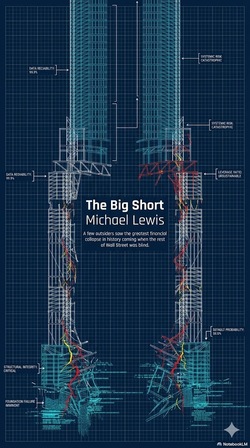
The Big Short summary and key insights by Michael Lewis
Loading…

The Big Short

Michael Lewis

4.4928 learners

Michael Lewis’ *The Big Short* pulls back the curtain on the 2008 financial crisis, following a ragtag group of misfit investors who saw what Wall Street, regulators, and rating agencies refused to acknowledge: the U.S. subprime mortgage market was a ticking time bomb. From the socially awkward doctor-turned-investor Michael Burry, who first used credit default swaps (CDS) to bet against overvalued mortgage bonds, to the fiery Steve Eisman, who spent years exposing the industry’s systemic fraud, and the small-time Cornwall Capital team that turned a $30 million stake into $800 million, these outsiders navigated a rigged system to profit from the crash. Lewis lays bare the greed, corruption, and collective denial that fueled the bubble—from banks packaging toxic loans into AAA-rated CDOs to rating agencies rubber-stamping garbage assets—while capturing the hollow victory of those who won, even as ordinary Americans bore the brunt of the crisis.