
Best Books on Agricultural Revolution

Agricultural Revolution Total 3 books

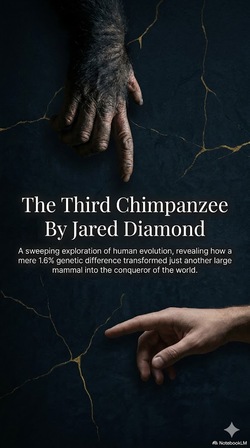
The Third Chimpanzee summary and key insights by Jared Diamond
Loading…

The Third Chimpanzee

Jared Diamond

4.8661 learners

Jared Diamond’s *The Third Chimpanzee* redefines humanity by framing us as the third species of chimpanzee, rooted in groundbreaking molecular biology evidence revealing our 98% genetic similarity to chimps and bonobos. Beyond our evolutionary origins, Diamond dives into the quirks of human behavior that set us apart: hidden ovulation, menopause, complex language, and art—all traced to evolutionary pressures. He also confronts the darker side of our species’ journey: the agricultural revolution’s hidden costs (health decline, inequality), Neanderthal extinction, colonial-era genocide, and the ongoing ecological crisis threatening our planet. Blending anthropology, biology, and history, this eye-opening book challenges human exceptionalism, urging readers to confront our animal roots and take responsibility for our shared ecosystem’s future.
The Global History of Science and Technology summary and key insights by Jun Wu
Loading…

The Global History of Science and Technology

Jun Wu

3.41039 learners

Spanning from humanity’s first stone tools to cutting-edge gene editing and quantum communication, *The Global History of Science and Technology* traces how technological breakthroughs have shaped every era of human civilization. Starting with the 1.76-million-year-old Acheulean handaxe and controlled fire use that let early humans expand beyond Africa, it moves through agricultural revolutions, the rise of metallurgy, and the birth of systematic scientific methods in ancient Greece and the Islamic Golden Age. The book highlights pivotal moments like the Industrial Revolution’s steam engines, Einstein’s relativity, the atomic age, and the digital revolution’s computers and internet. It also explores emerging technologies—CRISPR, quantum communication, artificial photosynthesis—and their ethical implications. More than a timeline, it connects tech advancements to social shifts, from early settlement to modern globalization, showing how science has always been intertwined with human survival, progress, and ambition.

Big History, Small World summary and key insights by Cynthia Stokes Brown
Loading…

Big History, Small World

Cynthia Stokes Brown

3.81271 learners

Spanning 13.8 billion years, *Big History, Small World* delivers a sweeping, interdisciplinary narrative that weaves cosmic origins, biological evolution, and human civilization into a single cohesive story. Starting with the Big Bang and the formation of stars and planets, it traces life’s emergence on Earth—from the first single-celled organisms to cyanobacteria that oxygenated the atmosphere. The book follows human evolution from early hominids like Lucy to the global spread of Homo sapiens, exploring pivotal shifts: the Agricultural Revolution, the rise of ancient civilizations, and the Industrial Revolution. It delves into globalization’s impacts, from interconnected supply chains to cultural fusion, and concludes with a forward-looking examination of 21st-century challenges: climate change, biotech ethics, and AI’s role in shaping our future. Framing humanity as both a product of cosmic chance and a steward of the planet, this book invites readers to see their place in history’s grand tapestry and how small choices ripple across time and space.