Best Books on Artificial Intelligence

Artificial Intelligence Total 10 books

Models of My Life summary and key insights by Herbert A. Simon
Loading…

Models of My Life

Herbert A. Simon

4.3480 learners

Models of My Life is the compelling autobiography of Herbert A. Simon, a Nobel Prize-winning polymath whose work redefined economics, psychology, computer science, and management. From his curious Milwaukee childhood—where he devoured encyclopedias, explored wilderness, and nurtured interdisciplinary thinking—to his transformative years at the University of Chicago, Simon’s journey reveals how he shattered academic silos. He introduced the groundbreaking theory of bounded rationality, challenging neoclassical economics’ perfect rationality assumption with the pragmatic concept of 'satisficing' (seeking good-enough solutions). Alongside Allen Newell, he co-founded artificial intelligence, creating the Logic Theorist program and pioneering cognitive science research. The memoir also chronicles his role in building Carnegie Mellon’s innovative business school, his engagement in social and political issues, and his international collaborations. More than a career retrospective, it offers insights into Simon’s life philosophy: embracing limited rationality as a guide for both scientific inquiry and everyday decision-making. This book is a must-read for anyone interested in the intersection of science, innovation, and human behavior.
Out of The Exclusive Truth summary and key insights by Chen Jiaying
Loading…

Out of The Exclusive Truth

Chen Jiaying

3.5499 learners

Against the backdrop of a modern world saturated with fragmented information and utilitarian demands, Chen Jiaying’s *Out of The Exclusive Truth* offers a refreshing, grounded exploration of philosophy’s role in guiding us through life’s most pressing questions. Rejecting the long-held dogma of a single universal truth, Chen argues that multiple valid perspectives shape our understanding of reality, rooted in diverse life experiences and cultural traditions. Drawing on his own rural upbringing and deep engagement with thinkers like Heidegger and Wittgenstein, Chen bridges abstract philosophy and everyday life. He delves into timely topics: the essence of good life beyond material success, the fundamental difference between human intelligence and AI, how to distinguish education from brainwashing, and the importance of meaningful dialogue in a divided society. More than just theoretical discourse, this collection reminds us that philosophy isn’t confined to academic circles—it’s a tool to cultivate critical thinking, embrace diversity, and find our footing in an increasingly complex world, urging readers to move beyond black-and-white thinking toward a more inclusive, authentic way of living.

Cosmologies and the Modern World summary and key insights by Alan Macfarlane
Loading…

Cosmologies and the Modern World

Alan Macfarlane

3.11107 learners

Based on Alan Macfarlane’s 1982 Cambridge University lecture notes (updated with 30 years of new insights), *Cosmologies and the Modern World* traces 500 years of paradigm shifts in Western social science. It unpacks how changing worldviews—from cyclical time in pre-1700 Europe to Enlightenment progress, 19th-century evolutionary theory, mid-20th-century structuralism, and today’s global rebalancing—shaped disciplines like anthropology, sociology, and history. Drawing on thinkers like Thomas Kuhn, Michel Foucault, and Franz Boas, the book links time perception to technological change, political power, and colonial bias, critiquing the imperial arrogance embedded in 19th-century evolutionary frameworks. It also addresses 21st-century disruptions: AI’s rise, renewable energy innovations, and the shifting East-West power dynamic, offering a nuanced look at how intellectual paradigms reflect and drive global societal change.

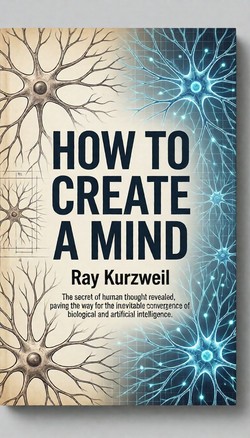
How to Create a Mind summary and key insights by Ray Kurzweil
Loading…

How to Create a Mind

Ray Kurzweil

4.2920 learners

In How to Create a Mind, visionary Ray Kurzweil demystifies the human brain’s inner workings using iconic thought experiments—from Darwin’s evolutionary parallels to Einstein’s relativity insights—as a framework to unpack the neocortex’s core role as a hierarchical pattern-recognition machine. He breaks down how 300 million interconnected pattern recognizers drive memory, learning, creativity, and consciousness, drawing parallels between biological neural structures and cutting-edge AI technologies like hidden Markov models, neural networks, and evolutionary algorithms. Kurzweil addresses contentious debates: he defends the accelerating returns law against skeptics, argues that consciousness is an emergent property of complex systems, and explores the feasibility of building human-level artificial intelligence. He also shares practical tools like his dream-thinking method to unlock creativity, and paints a compelling vision of a future where human and non-biological intelligence merge to transcend biological limits and embrace the technological singularity.

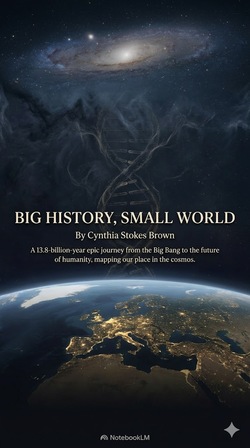
Big History, Small World summary and key insights by Cynthia Stokes Brown
Loading…

Big History, Small World

Cynthia Stokes Brown

3.81271 learners

Spanning 13.8 billion years, *Big History, Small World* delivers a sweeping, interdisciplinary narrative that weaves cosmic origins, biological evolution, and human civilization into a single cohesive story. Starting with the Big Bang and the formation of stars and planets, it traces life’s emergence on Earth—from the first single-celled organisms to cyanobacteria that oxygenated the atmosphere. The book follows human evolution from early hominids like Lucy to the global spread of Homo sapiens, exploring pivotal shifts: the Agricultural Revolution, the rise of ancient civilizations, and the Industrial Revolution. It delves into globalization’s impacts, from interconnected supply chains to cultural fusion, and concludes with a forward-looking examination of 21st-century challenges: climate change, biotech ethics, and AI’s role in shaping our future. Framing humanity as both a product of cosmic chance and a steward of the planet, this book invites readers to see their place in history’s grand tapestry and how small choices ripple across time and space.

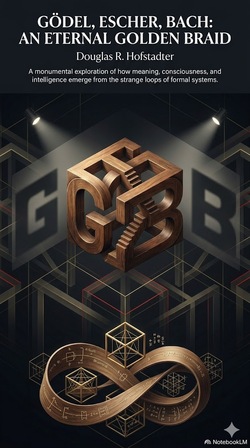
Gödel, Escher, Bach summary and key insights by Douglas R. Hofstadter
Loading…

Gödel, Escher, Bach

Douglas R. Hofstadter

4.2539 learners

Starting with Bach’s iconic *The Musical Offering*, Douglas Hofstadter’s *Gödel, Escher, Bach* weaves a groundbreaking cross-disciplinary narrative uniting logician Kurt Gödel, artist M.C. Escher, and composer Johann Sebastian Bach. At its core, the book explores “strange loops”—self-referential, tangled hierarchies that appear in logic, art, music, and human cognition. Hofstadter breaks down formal systems like the WJU and pq systems to explain how meaning emerges from abstract rules, then dives into Gödel’s incompleteness theorems, showing how self-reference undermines perfect logical consistency. He extends these ideas to the human brain, linking neural networks to symbolic thought and framing consciousness as a product of layered loops, while exploring implications for artificial intelligence, from the Church-Turing Thesis to early programs like SHRDLU. Blending rigorous logic, playful dialogues, and vivid examples, the book reveals how disparate fields converge on universal truths about understanding’s limits and possibilities.

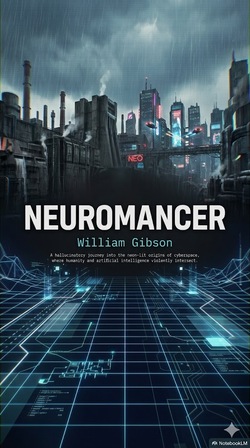
Neuromancer summary and key insights by William Gibson
Loading…

Neuromancer

William Gibson

4.4845 learners

Case, a washed-up cyberspace cowboy, has lost everything—his ability to jack into the matrix, his reputation, and his will to live—after his former employer poisoned his neural system. Stranded in the gritty, neon-lit streets of Chiba City, Japan, he’s given a second chance by the mysterious Armitage, a man with a hidden past tied to a botched military mission called Screaming Fist. Teaming up with Molly Millions, a lethal “razor-girl” with retractable blades in her fingernails, Case agrees to pull off an impossible heist: infiltrate the impenetrable data fortress of Tessier-Ashpool, a reclusive corporate clan, to merge two rogue AIs—Wintermute and Neuromancer. As they navigate the dark underbelly of the Sprawl, space stations, and the clan’s surreal private estate, Case uncovers the truth about Armitage’s identity, the AIs’ hidden agenda, and his own chance at redemption. William Gibson’s cyberpunk classic redefined the genre, exploring blurred lines between humanity, technology, and consciousness in a dystopian future where data is the ultimate currency.

In Our Own Image: Savior or Destroyer? The History and Future of Artificial Intelligence summary and key insights by George Zarkadakis
Loading…

In Our Own Image: Savior or Destroyer? The History and Future of Artificial Intelligence

George Zarkadakis

3.8643 learners

Drawing on archaeology, philosophy, neuroscience, and computer science, *The Ultimate Fate of Humanity* traces the evolution of human consciousness from the 40,000-year-old Lion Man sculpture—our earliest known artistic creation—to the cutting edge of artificial intelligence. It unpacks the cognitive revolution that unlocked human creativity, explores age-old debates about mind-body dualism and the nature of consciousness, and dives into the history of computing and AI, from Turing’s foundational tests to modern neural networks. The book also confronts pressing questions: Can AI achieve true consciousness? Will digital immortality become a reality? What does the rise of superintelligence mean for humanity’s future? By bridging ancient human origins and futuristic tech, it offers a compelling framework to understand our mental roots and navigate the uncharted territory of the AI era.

AI Superpowers: China, Silicon Valley, and the New World Order summary and key insights by Kai-Fu Lee
Loading…

AI Superpowers: China, Silicon Valley, and the New World Order

Kai-Fu Lee

4.51113 learners

From Kai-Fu Lee’s 40 years at the forefront of AI research and industry, *AI·Future* unpacks the revolution reshaping our world. Starting with AlphaGo’s historic 2017 win over Go champion Ke Jie—China’s 'Sputnik moment' for AI—the book breaks down the divergent paths of US and Chinese AI development: America leads in foundational research and top talent, while China leverages massive real-world data and aggressive government policies to dominate AI applications. Lee outlines four waves of AI evolution, from internet recommendation engines to autonomous robots, and warns of urgent challenges: job displacement hitting white-collar workers first (per Moravec’s Paradox), widening wealth gaps, and overhyped fears of superintelligence. Drawing on his battle with lymphoma, Lee reframes the conversation: AI can’t replicate human empathy, love, or creativity. He proposes solutions like social contribution stipends to build a human-centric future where AI serves as a tool, not a threat, and we prioritize connection over efficiency.

21 Lessons for the 21st Century summary and key insights by Yuval Noah Harari
Loading…

21 Lessons for the 21st Century

Yuval Noah Harari

4.2516 learners

In *21 Lessons for the 21st Century*, Yuval Noah Harari cuts through the noise of modern chaos to unpack the defining crises and opportunities of our time. Starting with the collapse of liberalism’s once-dominant narrative—undermined by 2008’s financial crash, Brexit, and Trump’s rise—he explores how AI and biotech are reshaping work, widening inequality, and threatening to create a “useless class” left behind by automation. Harari dives into the battle for data sovereignty, warning that tech giants and governments alike are exploiting personal information to gain unprecedented power. He also addresses cultural clashes, terrorism’s psychological tactics, and the limits of nationalism in solving global threats like climate change. Finally, he offers actionable paths forward: reorienting education around critical thinking and adaptability, embracing secular humanism’s core values, and using mindfulness meditation to reclaim control of our minds from algorithmic manipulation. This book isn’t just a diagnosis of our era—it’s a guide to navigating uncertainty with clarity and resilience.