Best Books on Cognitive Bias

Cognitive Bias Total 4 books

Public Opinion summary and key insights by Walter Lippmann
Loading…

Public Opinion

Walter Lippmann

4.2651 learners

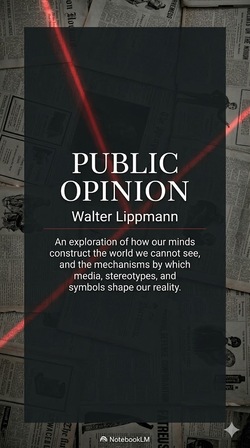
First published in 1922, Walter Lippmann’s *Public Opinion* remains a landmark work exploring how humans perceive the world and form collective judgments. Lippmann argues that we don’t engage with the real world directly—instead, we navigate a "pseudo-environment": a simplified, biased mental construct shaped by limited information, stereotypes, social cues, and media framing. Using vivid examples from World War I political scandals, military propaganda, and everyday misperceptions, he demonstrates how these mental models distort our understanding of events, leading to flawed public opinions and misguided political decisions. He critiques traditional democratic theory, which assumes citizens can make informed choices about distant or complex issues, pointing out most people lack the time, access, or expertise to grasp full truths. Finally, Lippmann proposes a pragmatic solution: an organic intelligence system of independent experts to gather and analyze factual data, bridging the gap between the public’s limited knowledge and the complex realities of modern society.
Don't Be a Normal Fool summary and key insights by Christopher Hsee
Loading…

Don't Be a Normal Fool

Christopher Hsee

3.5722 learners

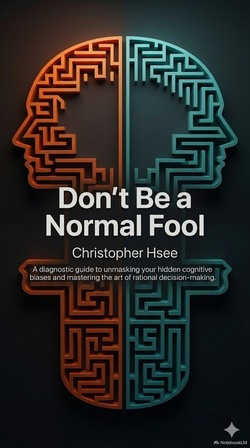
Drawing on behavioral economics and real-world case studies, *Don't Be a Normal Fool* exposes the hidden cognitive biases that drive irrational decisions in finance, career, and daily life. Author Christopher Hsee breaks down core mental traps: mental accounting (how we categorize and spend money differently based on its source), transaction bias (fixating on deals over utility or percentages over actual savings), sunk cost fallacy (chasing lost investments), overconfidence (overestimating our abilities), and adaptive bias (misjudging long-term emotional impacts of events). Through relatable examples—from splurging windfalls to clinging to failing projects—Hsee explains how these biases skew judgment, then offers practical strategies to overcome them. Readers learn to recognize these traps, shift to rational decision-making, and optimize their choices to avoid common pitfalls that hinder financial stability and intentional living.

Fooled by Randomness summary and key insights by Nassim Nicholas Taleb
Loading…

Fooled by Randomness

Nassim Nicholas Taleb

4.31089 learners

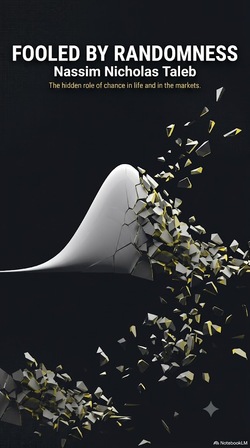
In *Fooled by Randomness*, Nassim Nicholas Taleb dismantles the myth that success equals skill through vivid, relatable stories—like cautious trader Nero Tulip, who survives market crashes, and flashy John, whose luck-fueled wealth collapses overnight. Taleb exposes how our brains are wired to misinterpret randomness: we confuse luck with talent, fall prey to survivorship bias (ignoring hidden failures), and underestimate catastrophic "black swan" events. He breaks down cognitive flaws, from our inability to grasp probability to our obsession with linear cause-and-effect, while offering practical frameworks like the Monte Carlo method to visualize alternative outcomes. Rooted in philosophy (Popper’s falsification, Stoic resilience), this book isn’t just for traders—it’s a wake-up call for anyone navigating an unpredictable world, teaching us to prioritize long-term survival over short-term glory and embrace skepticism as a shield against randomness’s hidden traps.

Dark Time summary and key insights by Liu Weipeng
Loading…

Dark Time

Liu Weipeng

3.8481 learners

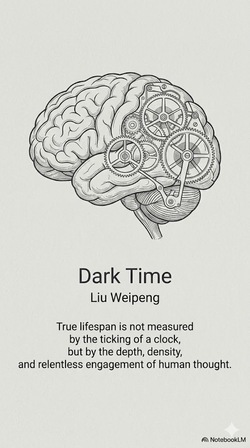
Unlock your brain’s hidden potential with *Dark Time*, a practical guide to maximizing mental efficiency and accelerating learning. Written by Liu Weipeng, this book introduces the concept of "dark time"—the untapped mental hours spent waiting, commuting, or doing routine tasks where your subconscious can keep processing deep thoughts. You’ll learn how to cut down on context-switching costs, build sustained focus, and turn passive learning into active knowledge retention. Weipeng also dives into cognitive pitfalls like self-serving attribution and the clash between primitive emotional brains and rational thinking, offering actionable strategies to overcome bias and make better decisions. Packed with real-life anecdotes, research-backed techniques, and insights from his own tech and academic journey, this book teaches you to leverage every minute of mental energy, master problem-solving heuristics, and use Bayesian thinking to navigate uncertainty. Whether you’re a student, professional, or lifelong learner, *Dark Time* gives you the tools to outperform by working smarter, not harder.