Best Books on Cold War

Cold War Total 4 books

The Spy and the Traitor summary and key insights by Ben Macintyre
Loading…

The Spy and the Traitor

Ben Macintyre

4.4482 learners

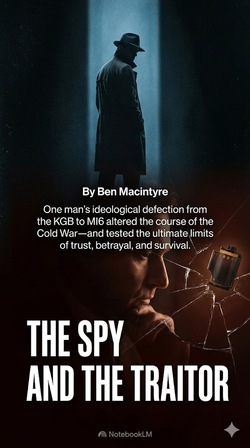
Oleg Gordievsky grew up steeped in the KGB’s shadow—his father was a loyal officer, and Soviet privilege came with constant surveillance and ideological control. But the 1968 Prague Spring invasion shattered his faith in the USSR: as his brother helped crush Czechoslovakia’s reforms, Gordievsky watched from Denmark, horrified by his regime’s brutality. He turned to MI6, becoming one of the Cold War’s most valuable double agents. For years, he leaked top-secret KGB intel, exposing Soviet paranoia during Operation RYAN and warning the West that the USSR believed NATO’s 1983 'Able Archer' exercise was a nuclear strike prelude—defusing a crisis that could have sparked Armageddon. When Aldrich Ames betrayed him to the KGB, Gordievsky executed a daring escape across the Finnish border, leaving his family behind. This gripping true story reveals how one man’s courage altered the course of the Cold War, at the cost of his homeland and years of family separation.
The Silk Roads summary and key insights by Peter Frankopan
Loading…

The Silk Roads

Peter Frankopan

4.3662 learners

Spanning millennia, Peter Frankopan’s *The Silk Roads* redefines global history by shifting focus from Europe to Eurasia’s interconnected heart. Far more than a commercial network, these routes were the crucible where civilizations collided, empires rose and fell, and ideas reshaped the world. From the Persian Empire’s rise and Alexander the Great’s eastward expansion to the spread of Buddhism, Christianity, and Islam, the book traces medieval trade booms, Mongol conquests that linked continents, the Age of Exploration that shifted power westward, 19th-century British-Russian geopolitical rivalries, the oil-driven transformation of the Middle East, and Cold War proxy conflicts. It concludes with the modern revival of the Silk Roads via initiatives like China’s Belt and Road, arguing this historic crossroads remains key to understanding today’s global power dynamics and cultural shifts.

The Age of Extremes summary and key insights by Eric Hobsbawm
Loading…

The Age of Extremes

Eric Hobsbawm

4.41177 learners

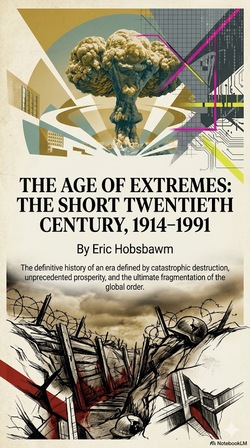
Eric Hobsbawm’s *The Age of Extremes* dissects the turbulent 'short 20th century'—a 77-year period spanning from the outbreak of World War I in 1914 to the collapse of the Soviet Union in 1991. This definitive historical work traces the era’s defining extremes: the catastrophic global wars that shattered 19th-century liberal order, the seismic revolutions that birthed socialist states, the Great Depression that upended capitalist systems, and the decades-long Cold War that divided the world into opposing camps. Hobsbawm also explores the era’s social and cultural upheavals—from decolonization and the rise of youth culture to the transformation of science and art. He analyzes how these interconnected crises reshaped global politics, economies, and societies, leaving a legacy of inequality, ideological fragmentation, and ecological challenges. A masterful synthesis of historical analysis, the book offers critical insights into the forces that defined modernity and warns of the risks of repeating the era’s violent mistakes.

Diplomacy summary and key insights by Henry Kissinger
Loading…

Diplomacy

Henry Kissinger

4860 learners

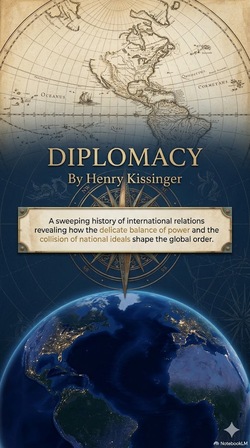
In *Diplomacy*, legendary statesman Henry Kissinger delivers a sweeping, authoritative exploration of global statecraft spanning centuries. Drawing on his firsthand experience shaping U.S. Cold War policy, he contrasts Europe’s centuries-old tradition of realpolitik—rooted in balance of power and national interest, exemplified by figures like Richelieu and Bismarck—with America’s enduring idealism, from Washington’s isolationism to Wilson’s vision of collective security and Reagan’s moral crusade against communism. Kissinger dissects pivotal moments: the rise and fall of European equilibrium, the catastrophic failures of interwar diplomacy, the Cold War’s nuclear standoffs, and Nixon’s groundbreaking China opening. He reveals how U.S. foreign policy has oscillated between its exceptionalist moral mission and the harsh realities of global power dynamics, offering timeless insights into the art of negotiation, alliance-building, and maintaining stable world order. This masterwork is essential reading for anyone seeking to understand the forces that shape international relations.