Best Books on Cultural Revolution

Cultural Revolution Total 6 books

Life and Death Are Wearing Me Out summary and key insights by Mo Yan
Loading…

Life and Death Are Wearing Me Out

Mo Yan

4.21289 learners

In Mo Yan’s sweeping, darkly humorous epic *Life and Death Are Wearing Me Out*, Ximen Nao, a wealthy landowner wrongfully executed during China’s 1950s land reform, refuses to let go of his anger—even when the King of Hell sends him back to Earth not as a man, but as a series of animals. Over five reincarnations, he becomes a donkey, ox, pig, dog, and monkey, each time retaining memories of his past life. Through his animal eyes, he witnesses the turbulent decades of 20th-century China: the rise of collective farming, the chaos of the Cultural Revolution, and the dizzying shifts of the reform era. He watches his former servants, enemies, and family members navigate love, betrayal, and survival in his hometown of Gaomi Northeast Township. By the time he is finally reborn as a human boy, Lan Qianshui, he confronts the weight of his lifelong grudges—and discovers that letting go might be the only way to find peace.
Upside Down Years summary and key insights by Xu Xiaodi
Loading…

Upside Down Years

Xu Xiaodi

3.21071 learners

Upside Down Years is a raw, unflinching memoir by Xu Xiaodi that chronicles her coming-of-age amid China’s turbulent Cultural Revolution and its aftermath. From her childhood in Beijing—marked by lost opportunities, kind mentors, and the sudden cruelty of political upheaval—to her years as an educated youth (zhiqing) in the Inner Mongolia Production Corps, Xu lays bare the chaos, hardship, and quiet humanity of an era defined by ideological fervor. She grapples with guilt over betraying a beloved teacher, the trauma of family separation and political persecution, and the resilience of ordinary people who clung to kindness amid despair. Through intimate anecdotes of friends, teachers, and strangers, she illuminates how the "upside down" years shaped her identity, forcing her to confront the cost of conformity and the enduring power of memory. This memoir is not just a personal story; it’s a testament to the untold struggles of a generation silenced by history.

Floating Wood summary and key insights by Yang Benfen
Loading…

Floating Wood

Yang Benfen

3.1452 learners

Floating Wood, by Yang Benfen, delivers raw, intimate first-person narratives of life in rural China spanning decades. Through unflinching, vivid storytelling, it chronicles the author’s family’s brutal struggles: her mother’s relentless labor to raise six children, the heart-wrenching loss of infant brother Yang Rui to untreated illness, and her older brother’s persecution during the Cultural Revolution for standing against corruption. It also weaves in tales of neighboring villagers—from a disfigured mother who rejects her daughter to a childless woman’s tragic end—painting a rich portrait of ordinary people clinging to hope amid hardship. Later chapters shift to the author’s own journey: raising her kids through financial strain, caring for her ailing husband, and finding quiet joy in her golden years with her granddaughter and elderly partner. These stories aren’t just about suffering; they’re a testament to the quiet resilience, deep love, and unbreakable bonds that sustain people through life’s darkest tides.

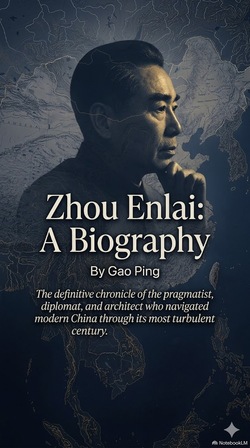
Biography of Zhou Enlai summary and key insights by Gao Ping
Loading…

Biography of Zhou Enlai

Gao Ping

4.3506 learners

This comprehensive biography chronicles Zhou Enlai’s remarkable journey from a patriotic youth in turn-of-the-century China to the revered Premier who guided the nation through decades of upheaval and progress. Raised amid national crisis, Zhou embraced Marxism during the 1919 May Fourth Movement, helped found the Chinese Communist Party (CCP), and led pivotal revolutionary efforts—from organizing the 1927 Nanchang Uprising to negotiating united front alliances against Japanese invaders. As China’s first Premier (1949–1976), he stabilized the post-war economy, spearheaded the nuclear program to secure national defense, and elevated China’s global standing through landmark diplomacy at the Geneva and Bandung Conferences, where he championed the Peaceful Coexistence Principles. Even during the chaotic Cultural Revolution, Zhou courageously protected fellow leaders, maintained state functions, and laid groundwork for future reforms. His life embodies unwavering dedication to China’s independence, unity, and modernization, making this biography a definitive account of one of the 20th century’s most influential statesmen.

The Sea of Life summary and key insights by Mai Jia
Loading…

The Sea of Life

Mai Jia

4.2526 learners

Set in a remote mountain village in Zhejiang, *The Sea of Life* unfolds the extraordinary, tangled life of the enigmatic 'Colonel'—a man haunted by wartime secrets, shamed by small-town gossip, and bound by quiet, unyielding resilience. Once a celebrated military surgeon nicknamed 'Golden Knife' for his masterful work with gold-plated tools, he returns home to live in seclusion, only to be labeled a 'eunuch' by narrow-minded villagers. As the Cultural Revolution erupts, his hidden past catches up: a forced tattoo on his abdomen, a legacy of torture by the Japanese, turns him into a target of public humiliation and persecution. Through decades of betrayal, escape, and eventual redemption, we see him find solace in the lifelong love of Lin Ayi, a former army nurse who stands by him even as his mind fades. This sweeping tale weaves together village politics, wartime trauma, and the quiet courage of ordinary people, ultimately exploring the universal truth: no life is perfect, and it’s our flaws that make us fully human.

We Three summary and key insights by Yang Jiang
Loading…

We Three

Yang Jiang

4.1605 learners

Yang Jiang’s *We Three* is a tender, intimate memoir that weaves together vivid memories and haunting dreams of her lifelong bond with her husband Qian Zhongshu and their daughter Qian Yuan (Yuan Yuan). From their early days studying abroad in Oxford—where they fumbled through cooking experiments and celebrated small joys like perfectly braised pork—to navigating the chaos of war-torn Shanghai and the brutal trials of the Cultural Revolution, the trio’s quiet resilience and unwavering support for one another shine through every page. Yang captures the mundane magic of daily life: shared meals, inside jokes, and quiet moments of companionship, alongside the searing pain of losing her daughter and husband in quick succession. More than a family story, it’s a testament to love that transcends loss, as she holds onto their memories, turning an empty home into a sanctuary of shared history and enduring warmth.